The Senate of Nigeria has expressed deep concern over the country’s worsening security situation, warning that the increasing abduction and killing of retired military officers by terrorists and criminal gangs signals a dangerous escalation of Nigeria’s security crisis.
The lawmakers said the growing pattern of attacks targeting both serving and retired members of the armed forces poses a significant threat to national stability, undermines public confidence in the nation’s security institutions and raises fresh concerns about the ability of security agencies to protect citizens.
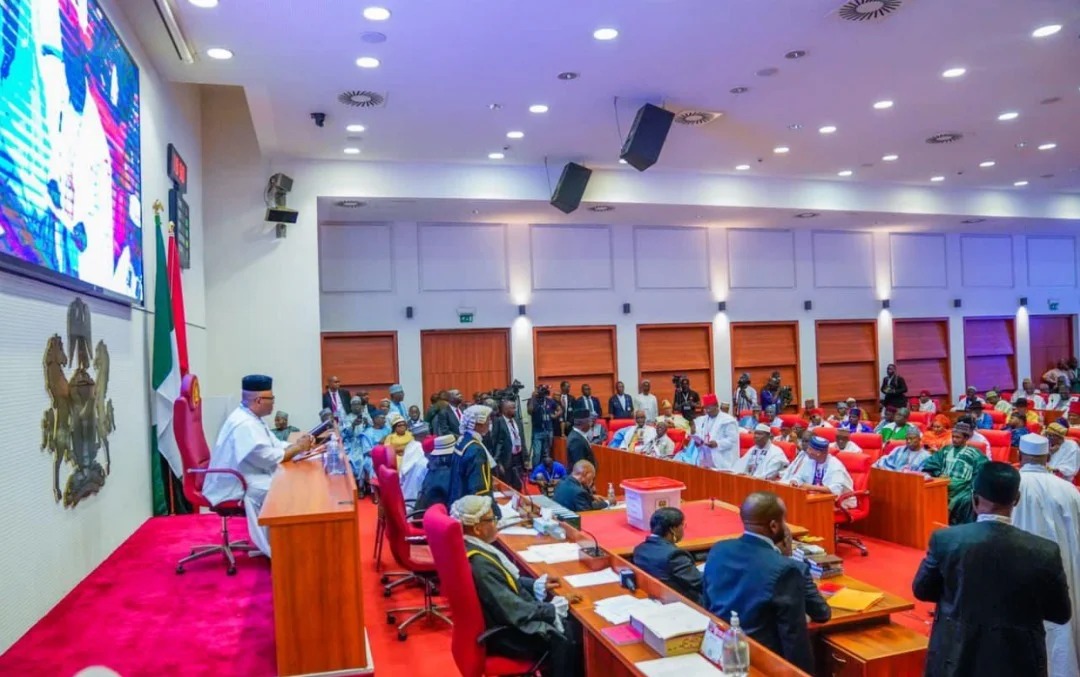
The concerns were raised during Tuesday’s plenary following a motion sponsored by Senator Abdulaziz Musa Yar’Adua, who called the attention of the Red Chamber to the tragic death of retired Major General Alkali Abubakar.
According to the motion, the late retired military officer, who previously served as the Director of Defence Information, was abducted alongside his wife by armed criminals in Katsina State on May 30, 2026.
The kidnappers reportedly held the couple in captivity for several days before the retired general eventually died while still in the custody of his abductors, a development that has sparked widespread outrage and renewed calls for stronger action against insecurity across the country.
Presenting the motion, Senator Yar’Adua described the incident as a painful reminder of the deteriorating security environment, stressing that if retired senior military officers who had dedicated their lives to defending Nigeria could become victims of violent criminals, ordinary citizens were even more vulnerable.
He argued that the incident highlighted the urgent need for a comprehensive review of Nigeria’s security strategy and stronger collaboration among security agencies to confront terrorism, kidnapping and other violent crimes.
The senator further noted that attacks on retired military personnel carry broader implications because they affect the morale of serving officers while also creating fears among veterans who have devoted decades of service to protecting the country.
Following deliberations on the motion, senators unanimously adopted the resolution and expressed sympathy to the bereaved family and the Nigerian military.
The Red Chamber observed a minute’s silence in honour of the late Major General Alkali Abubakar, paying tribute to his years of service to the nation and his contributions to Nigeria’s defence and security sector.
Lawmakers also resolved to formally convey their condolences to the deceased’s family as well as the Nigerian Armed Forces over what they described as a painful national loss.
During the debate, several senators lamented the persistent wave of insecurity affecting different parts of the country, including terrorism, banditry, kidnapping and communal violence.
They warned that the continued targeting of military personnel, both active and retired, reflects the increasing boldness of criminal elements and underscores the need for more decisive measures to tackle insecurity.
The lawmakers maintained that protecting those who have served the nation in uniform should remain a priority, noting that retired military officers possess valuable experience and have made enormous sacrifices in safeguarding Nigeria’s territorial integrity.
They stressed that attacks on such individuals not only represent personal tragedies for affected families but also constitute attacks on the nation’s security institutions.
The Senate further urged security agencies to intensify efforts to track down those responsible for the abduction and death of the retired general, insisting that the perpetrators must be brought to justice.
Lawmakers also called for renewed investment in intelligence gathering, surveillance technology and inter-agency cooperation to strengthen the country’s capacity to prevent kidnappings and violent attacks.
The death of Major General Alkali Abubakar has added to growing concerns over the frequency of kidnappings across several states, where armed groups continue to target commuters, rural communities, traditional rulers, business owners and even security personnel despite ongoing military operations against criminal networks.
Security experts have repeatedly warned that improving intelligence-sharing, strengthening community policing and enhancing coordination among the armed forces and other security agencies are essential to reversing the current trend.
For many Nigerians, the Senate’s latest intervention reflects increasing concern within the National Assembly over the country’s security challenges and the urgent need for more effective measures to protect lives and property.
As the country continues to grapple with terrorism, banditry and kidnapping, lawmakers say the protection of citizens, including those who once served in the armed forces, must remain a top national priority to restore public confidence and preserve Nigeria’s security architecture.