By Fred Chukwuelobe,FNIPR .
“These people self” has become a tired cliché, repeated so often that it now passes for ordinary conversation.
Igbo people say, “These Yoruba people self.” Yoruba people say, “These Omo Igbo self.” Some take it even further. “Igbo people like money too much.” Others counter, “Yoruba people are too tribalistic.” We have extended the same stereotypes to the Hausa/Fulani, completing what many describe as the three legs of Nigeria’s political tripod.
These generalisations are not new, but they have gained greater traction since the 2023 presidential election, when Bola Tinubu ran for office and was declared president following a highly controversial contest. An Igbo man defeated him in Lagos and Abuja. To some, this appeared to be an unforgivable affront. How dare an Omo Igbo defeat an Omoluabi in the Centre of Excellence and even in the Federal Capital Territory?
For many, that political outcome became a mortal sin for which Igbo people have continued to pay. They face discrimination and hostility that, in some respects, seem even more intense than the marginalisation they have complained about since the end of the civil war in 1970.
“These people self” has become the default refrain whenever a member of another ethnic group commits a wrong. Yet the rhetoric changes when the offender belongs to one’s own tribe. Then excuses are found, contexts are supplied, and the individual suddenly becomes just that – an individual.
This mindset has permeated even official circles. Crimes are often reported differently depending on the ethnicity of those involved. We may read a headline that says, “20 Igbo people arrested for drug trafficking in Malaysia.” Yet when people from another ethnic group are involved in similar offences, the headline becomes, “20 Nigerians arrested for drug trafficking in London.”
Consider the allegation that “Igbo people like money too much.” I have examined the list of looters and thieves produced by Nigeria since independence. I did not find only Igbo names. Because Igbo people have historically had less access to federal power, they may have had fewer opportunities to loot on the same scale. But where they have held power, some have looted just as others from different ethnic groups have looted their states. Corruption is not tribal. It is Nigerian.
Then there is the accusation that Igbo people dominate the drug trade. Again, a look at the records reveals offenders from virtually every ethnic group in Nigeria. Some individuals who were once linked to drug-related allegations later rose to occupy influential positions in society and government. Yet those determined to stereotype the Igbo conveniently ignore these facts.
As we approach the 2027 general elections, the tendency to tar entire ethnic groups with one brush appears to be gaining momentum. Social media has made matters worse. It has become a powerful vehicle for spreading hatred, jealousy, fear, and suspicion.
Some people seem convinced that they alone have the right to lead Nigeria. Whether they govern well or poorly is secondary. What matters to them is that nobody should challenge their preferred leaders. Criticism becomes treachery, and political competition becomes ethnic warfare.
The situation has become so troubling that some social miscreants, encouraged by influential figures within their ethnic groups, openly campaign against their own brothers and sisters who marry people from communities they consider enemies.
One might think these are isolated incidents. They are not. The sentiment is spreading. Businesses owned by perceived outsiders are quietly targeted. Land allocations are revoked. Citizens are told to “go back to your state and vote.” The message is clear: some Nigerians are considered less Nigerian than others.
The 2023 elections, particularly the presidential election, caught many by surprise. Some appear determined to ensure that such a surprise happens only once.
And all this is taking place in the year of our Lord 2026.
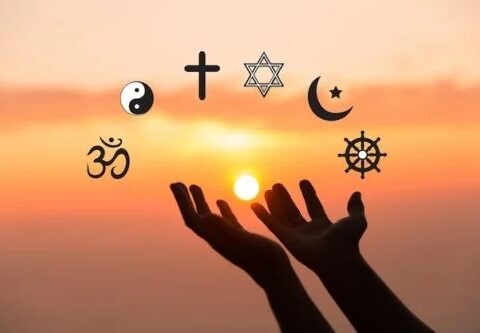
It is happening in a country with more than 34,000 churches and an estimated population of 250 million people, a country that often struggles to rise above primordial loyalties and sustain the values of a modern, civilised society. It happens even in our places of worship. Churches are casually labelled according to the ethnicity of their founders or dominant membership. One hears references to an “Igbo church” or a “Yoruba church,” as though faith itself has become tribalised. The stereotyping is endless.
Frankly, I am tired of hearing about “these people.”
Unfortunately, I am forced to live with “these people.”