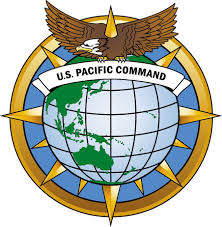
The United States Department of Defense has announced plans to restore the name of one of its most strategically important military commands, reverting the current US Indo-Pacific Command back to its former designation, the US Pacific Command.
The decision marks a reversal of a major rebranding effort undertaken in 2018 and has attracted attention from military analysts, diplomats and regional partners because of the command’s crucial role in overseeing American military operations across a vast and strategically significant region.
The Pentagon disclosed the change in a statement issued on Tuesday, emphasizing that while the name will revert to the US Pacific Command, the command’s responsibilities, operational scope and strategic commitments will remain unchanged.
According to the Department of Defense, the command will continue to oversee one of the largest geographical areas of responsibility in the world, stretching from the western reaches of India across Asia and the Pacific Ocean to the western coastline of the United States.
Officials stressed that the renaming is largely symbolic and should not be interpreted as a shift in America’s security posture, military strategy or regional priorities. “The command’s fundamental mission and its unwavering commitment to maintaining a free and open theatre alongside regional allies and partners remain unchanged,” the department stated.
The announcement effectively rolls back a decision made in 2018 when the command’s name was changed from US Pacific Command to US Indo-Pacific Command. At the time, the renaming was widely viewed as a reflection of Washington’s growing recognition of the strategic importance of the Indian Ocean and the increasing interconnectedness of the Indian and Pacific regions.
The addition of “Indo” to the command’s title was intended to signal broader American engagement with countries across South Asia, Southeast Asia and the Indian Ocean region, while also acknowledging shifting geopolitical realities and emerging security challenges. Since then, the term “Indo-Pacific” has become deeply embedded in the foreign and security policies of the United States and many of its allies, including nations such as Japan, Australia and India.
However, Pentagon officials indicated that the latest decision is aimed at reconnecting the command with its historical identity rather than altering its strategic focus. In its statement, the department explained that restoring the Pacific Command name would honour the organisation’s long-standing heritage and traditions.
“The name change honours the command’s deep historical roots, fostering a sense of pride and collective spirit among all who serve in the Pacific,” the department said. Although officials did not provide extensive details regarding the reasons behind the decision, analysts believe the move reflects an effort to reinforce institutional continuity and preserve the legacy of a command that has played a central role in American military operations for decades.
Established shortly after the Second World War, the Pacific Command became one of the United States military’s most important unified combatant commands, overseeing operations, alliances and security partnerships across a region that includes some of the world’s largest economies and most sensitive geopolitical flashpoints.
The command has historically been responsible for coordinating military cooperation with allies and partners throughout Asia and the Pacific while monitoring developments in areas ranging from the Korean Peninsula to the South China Sea and beyond. Over the years, the region has emerged as a focal point of global strategic competition, particularly amid rising tensions involving major powers and disputes over maritime territory, trade routes and regional influence.
Military experts note that despite the restoration of the Pacific Command name, the command’s responsibilities will remain extensive and highly significant. Its area of responsibility includes dozens of nations, vast maritime territories and critical international shipping routes that are essential to global commerce and economic stability.
The Pentagon was careful to reassure allies and partners that the renaming would not affect ongoing military cooperation, joint exercises, security agreements or regional commitments. Officials reiterated that the United States remains committed to working alongside partner nations to promote stability, deter aggression and maintain freedom of navigation throughout the region.
The announcement has generated discussion among foreign policy observers, some of whom see the change as an administrative adjustment rather than a substantive policy shift. Others argue that names carry symbolic importance in international relations and that the decision may influence perceptions of American strategic priorities, even if operational realities remain unchanged.
For regional allies and security partners, the Pentagon’s message was clear: the restoration of the Pacific Command name does not signal a retreat from the broader Indo-Pacific concept that has shaped American policy in recent years. Instead, it represents a return to a historic identity while preserving the command’s existing mission, partnerships and responsibilities.
As the transition moves forward, military personnel serving under the command are expected to adopt the restored title while continuing their work across one of the world’s most strategically vital regions.
With geopolitical tensions continuing to shape international affairs across Asia and the Pacific, the newly renamed US Pacific Command will remain at the centre of American military engagement, maintaining its longstanding role as a key pillar of regional security and international cooperation.