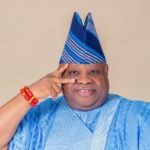
If Nigerian politics were a Roman amphitheatre, Imo State would be one of its most fiercely contested arenas. At the centre of this extraordinary political spectacle stand two men whose rivalry has come to define much of the struggle for power in the state. Governor Hope Uzodimma and his predecessor, Owelle Rochas Okorocha.
Their political relationship, once shaped by the calculations of party alliances and succession arrangements, has deteriorated into a prolonged contest involving government authority, party machinery, property disputes and courtroom battles. What began as a disagreement over who would inherit political influence in Imo has become a struggle over who gets to determine its future.
To understand the depth of this rivalry, one must return to 2019, when Okorocha was approaching the end of his eight-year tenure as governor. Having occupied Government House since 2011, he was determined to retain considerable influence over the political succession.
His preferred successor was his son-in-law, Uche Nwosu, whose emergence would have extended the former governor’s political influence beyond his departure from office. Okorocha also secured a seat in the Senate to represent Imo West, popularly known as Orlu Zone. It was a carefully calculated political arrangement, one that appeared to offer him influence both within and outside the state government.
But Nigerian politics rarely respects the permanence of another man’s calculations. Hope Uzodimma emerged as the APC’s governorship candidate, defeating the succession arrangement favoured by Okorocha. Uche Nwosu subsequently contested under the Action Alliance, while the political relationship between the two camps deteriorated. When the Supreme Court declared Uzodimma the duly elected governor in January 2020, following its decision to overturn Emeka Ihedioha’s election, the political balance in Imo changed dramatically.
The man who had once been Okorocha’s political associate was now occupying the very Government House from which the former governor had exercised power for eight years.
The consequences soon became visible.
One of the most dramatic confrontations occurred on February 21, 2021, at Royal Spring Palm Estate along Akachi Road in Owerri, a property linked to Okorocha’s family. The Uzodimma administration had sealed the premises following the recommendations of a judicial commission of inquiry into land and property acquisitions by previous administrations. The government maintained that it was acting on the commission’s findings and recovering properties belonging to the state. Okorocha, however, arrived at the premises with his entourage and personally unsealed the property.
What followed was an extraordinary confrontation. Security operatives intervened, violence erupted, vehicles were damaged and the former governor was arrested. The incident was captured on camera, turning what might ordinarily have been an administrative dispute into a national political spectacle. A former governor was now confronting the authority of his successor in public, while the sitting governor’s administration was demonstrating that its authority would not be easily challenged.
The significance of that encounter went beyond the property itself. It exposed the extent to which the relationship between the two political establishments had collapsed. The dispute had become a contest in which neither side appeared willing to concede ground. In the political theatre of Imo, even a government property-recovery exercise had acquired the atmosphere of a confrontation between rival power centres.
For a while, the rivalry appeared to settle into a familiar pattern of political hostility, with both camps maintaining their positions and watching for the next opportunity to gain an advantage. That opportunity arrived with the APC senatorial primary for Imo West on May 18, 2026.
As Uzodimma pursued the party’s ticket for the senatorial district, Okorocha emerged as his principal challenger. The contest was particularly consequential because Imo West was the same senatorial district Okorocha had represented before his return to the political battlefield. The prospect of Uzodimma moving from Government House to the Senate also meant that the former governor’s political future was once again directly entangled with that of his successor.
Okorocha challenged the outcome of the primary in court, insisting that he had won the contest. His case relied substantially on documentary evidence, including reports relating to the monitoring of the exercise by the Independent National Electoral Commission. The APC’s declared result had recognised Uzodimma as the winner, but Okorocha maintained that the official records of the exercise told a different story.
On October 29, 2026, Justice Obiora Egwuatu of the Federal High Court in Abuja delivered a judgment that dramatically altered the political calculations. The court held that the evidence before it established that Okorocha had secured the majority of lawful votes cast in the May 18 primary.
It consequently set aside the recognition of Uzodimma as the APC candidate, ordered the party to forward Okorocha’s name to INEC and directed the electoral commission to recognise him as the party’s candidate for Imo West in the 2027 senatorial election. Uzodimma was also ordered to stop presenting himself as the party’s candidate for the district.
In a single judgment, the political equation that had favoured the sitting governor was thrown into uncertainty. Okorocha, whose influence Uzodimma had spent years attempting to displace, had secured a significant judicial victory against him. It was a remarkable reversal: the former governor was now using the courts to challenge the political authority of the man occupying the office he once held.
But the battle is not over. The Imo APC has rejected the judgment and maintained that Uzodimma remains its authentic candidate. The state government has also indicated that it intends to challenge the decision at the Court of Appeal. The party has raised objections concerning the timing of Okorocha’s suit, the evidence presented and the legal questions surrounding the proceedings. These are matters that must now be subjected to the appropriate judicial process. Until the appellate courts have had their say, neither side can reasonably claim that the entire contest has reached its final destination.
Yet the significance of this dispute extends beyond the immediate fortunes of the two politicians. It raises an important question about the nature of political power in Nigeria: does control of a state government automatically translate into control of the political party through which that government was elected? And what happens when the authority of a sitting governor collides with the rights of party members and the jurisdiction of the courts?
Uzodimma commands the considerable advantages of incumbency: access to executive authority, political patronage and the machinery of government. Okorocha, on the other hand, remains an experienced political actor with a history of electoral victories, an established political network and the determination to remain relevant in the affairs of the state. Their strengths are different, but their ambitions increasingly intersect.
Neither appears willing to surrender the political space to the other. For Uzodimma, the contest concerns more than securing a senatorial ticket; it also involves consolidating the political influence of his administration beyond his tenure. For Okorocha, the opportunity to return to the Senate through the same political structure that once appeared to have moved beyond him is a chance to reassert his relevance. Their disagreement is therefore not simply about a primary election. It is about influence, succession and the ownership of political power.
But there is a constituency in this contest that should never be forgotten: the people of Imo State.
Political rivalry is legitimate. Former governors have the right to remain politically active, sitting governors have the right to pursue future ambitions, and party members have the right to challenge electoral outcomes through lawful channels. What should never become acceptable is the transformation of public institutions into extensions of personal disagreements. Government property, security agencies, political parties and the courts must serve purposes larger than the ambitions of individual politicians.
Imo State has problems that demand the attention of its leadership. Its citizens need functioning hospitals, properly equipped schools, good roads, employment opportunities and an environment in which businesses can thrive. They should not have to watch their political leaders expend so much energy contesting influence while the ordinary business of governance competes for attention. A state cannot become a permanent arena for settling political scores.
There is also a larger lesson for Nigerian democracy. Political parties must be governed by rules, not merely by the preferences of their most powerful members. Executive authority must operate within constitutional limits, and judicial decisions must be respected while remaining open to lawful appellate review. When political actors begin to treat institutions as instruments of personal survival, the damage extends beyond their immediate rivalry. It weakens public confidence in the very structures meant to regulate political competition.
The bulldozers may clear disputed properties, political machinery may determine party fortunes, and courtroom judgments may rearrange the balance of power. But none of these should become more important than the responsibility to govern.
The gladiators may return to their respective camps, prepare fresh legal arguments and mobilise their political allies for another round. Yet the real question is whether Imo State can build political institutions strong enough to outlive the ambitions of the men who currently dominate its politics.
In Imo State, the contest has moved beyond who governs. It is now about who controls the political future of the man who governs, and who retains the power to determine what comes after him.
That is the real war for the Eastern Heartland. And until the people of Imo become more important to their political leaders than the preservation of personal power, the gladiators may keep fighting, but the state will remain the arena.
Shaakaa can be reached on: shaakaastephanie@yahoo.com