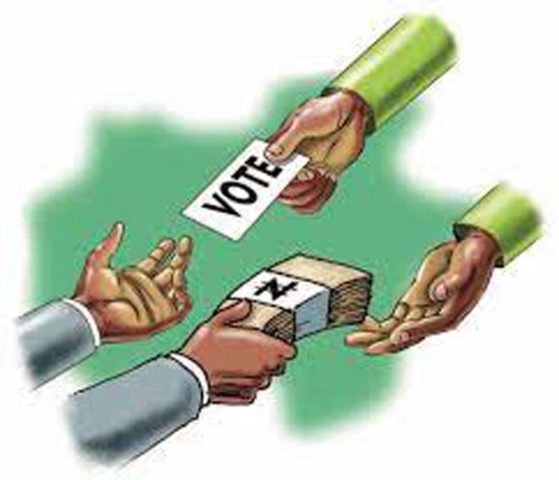
If INEC, EFCC and the other security agencies sincerely want to confront the vote-buying cankerworm, the time to start it is now. There is reason to believe that the marketing of votes has already started as voters are being lured to submit their account number and NIN to designated party agents working across the rural communities and then wait for transfer of between N2k and N10k. The wretched rural folks are lured to this insult due to the biting/ravaging poverty and lack.
Some unpatriotic defiant fellows, who promote vote-buying despite the ban and the fact that it is a treasonable offense, need to be arrested and used to set example. This is more critical now that INEC has said that for 2027, vote-buying is the number one threat-bigger than BVAS or IReV. This is why it is their loudest warning now. If nothing is done to halt the menace, vote-buying is capable of truncating the 2027 elections, among other things. INEC can tackle vote-buying by initiating the following actions:
First is to track the money before the Election Day. It is good enough that INEC Chairman Amupitan recently announced a joint financial monitoring mechanism two weeks ago comprising INEC, EFCC, ICPC, NFIU and Federal Ministry of Justice.
This will involve unleashing joint teams to track suspicious bank transfers, bulk withdrawals 48hrs to election, and campaign spending over legal limit. Under Electoral Act 2026, Presidential limit is N5b, Governorship N1b, but enforcement was zero in 2023. They will audit party accounts from Oct 28, 2026 to Jan 1, 2027. According to INEC Chairman, “Elections must be decided by the conviction of the voter, not the depth of a candidate’s pocket’.
Two, redesign of inside the Polling Unit: Vote-buying in 2023 was not envelope in pocket. It was show your thumb-printed ballot, get transfer. INEC’s fix for 2027 is to rearrange polling unit layout to protect secrecy – cubicle facing away from party agents, no phone/ballot photo allowed. Osun 2022 was used as pilot.
Undercover surveillance with EFCC agents in plain clothes at polling units nationwide. In 2023 they arrested 25 in Lagos, Oyo, Akwa Ibom but prosecution failed. That is the problem. Not until some culprits are used to set example, vote-buying won’t stop. Enforce the ban phones in cubicle as already in guidelines.
Three, punishment must work this time around. Electoral Act 2026 says: Vote-buying attracts up to 12 months in prison, N500,000 fine, and candidate disqualification. But since 2019, there have been zero convictions. INEC said this time “attempt to trade cash or gifts for votes; you will face immediate arrest and prosecution under Electoral Act 2026”.
However, there are things that INEC alone cannot do, especially, on the electorate’s side. For instance, poverty is the fuel. When party agents offer N5k-N20k where there is mass unemployment, people collect. The NOA campaign theme for 2027 is “Your Vote, Your Voice, Our Future: Say No to Vote Buying”
Electronic transfer killed cashless policy fix. In 2023 CBN cashless made cash hard, but politicians switched to transfers with code words. NFIU now must flag mobile money bulk transfers in real-time. If INEC prosecutes 2-3 party chairmen who fund it, not 1000 voters who collect, it stops.
As a voter in 2027, you can report through EFCC Eagle Eye app, NFIU anonymous line, or INEC Citizen Hotline. Take video from outside Polling Unit, not inside. If they offer money, collect evidence but vote your conscience – ballot is secret now if layout is correct.
As Nigeria inches toward January 16, 2027, another election ritual inches with it – vote-buying. In 2023, it graduated from brown envelopes in the corner to instant bank transfers beside the ballot box. In Ekiti, Bayelsa and even in Lagos, voters queued not just to vote, but to verify payment. We watched democracy auctioned at N5,000 per thumbprint. If 2023 was transactional, 2027 threatens to be industrial. INEC knows it.
Chairman Prof. Joash Amupitan, did not mince words when he said, “Elections must be decided by the conviction of the voter, not the depth of a candidate’s pocket.” For the first time, INEC has set up a joint financial war-room with EFCC, ICPC, NFIU and the Federal Ministry of Justice. Their mandate is simple: follow the money before it reaches the polling unit. That is a good start, but history teaches us that announcements do not cube vote-buying; consequences do.
We must be honest as to why vote-buying persists. Vote-buying thrives on two legs – elite impunity and mass poverty. When a jobless graduate or a market woman is offered N10,000 on election morning, moralising about civic duty sounds like mockery. She knows that N10,000 will feed her children for a day, while the promise of good governance may never come. The buyer knows it too. That is why in 2023, vote-buying was highest where poverty and unemployment were highest.
But the more dangerous leg is the supply side. Politicians buy votes because it works and because no one goes to jail. Section 121 of the Electoral Act 2022 prescribed 12 months imprisonment and N500,000 fine. How many convictions? Zero. EFCC made arrests in 2023, cameras flashed, but files disappeared. When the financier knows he will not be prosecuted, the market only expands.
What INEC must do differently in 2027 include, first, the polling unit itself must be redesigned for secrecy. INEC’s decision to adopt the Osun 2022 model nationwide is commendable. If the voter cubicle faces away from party agents and phone cameras are banned inside the cubicle, the buyer cannot verify the sale. No verification, no market. This simple architecture saved Osun. It must be enforced in all 176,846 polling units, not just on paper.
Second, financial intelligence must be real-time. In 2023, CBN’s cash scarcity forced politicians to pivot to transfers with code words like “lunch money.” The NFIU and EFCC must flag bulk transfers of N2,000 to N10,000 from single accounts to hundreds of accounts within 48 hours to election. Banks and fintechs must be compelled to freeze and report them before January 16, not after.
Third, prosecute the sponsor, not the hungry voter. Arresting a 22-year-old who sold his vote for N5,000 is theatre. Arresting and prosecuting the party chairman who withdrew N200 million in cash three days to election is deterrence. The Electoral Act 2026 must be tested early: disqualify one major offender and the message will travel faster than any voter education jingle.
INEC cannot win this alone, the citizens have a role to play. The National Orientation Agency’s new campaign, “Your Vote, Your Voice, Our Future,” must move from billboards to churches, mosques, motor parks and WhatsApp groups. Civil society must deploy parallel citizen observers whose only job is to document trading with time-stamped video from outside the 300-metre radius. And voters must internalise a hard truth: selling your vote for N10,000 is mortgaging four years of roads, hospitals and schools that money would have built. The 2027 elections will cost Nigeria N873 billion to conduct. If we allow N10,000 to determine its outcome, we would have wasted both money and hope.
Cubing vote-buying is not about moral lectures on Election Day. It is about making buying impossible to verify, risky to finance, and costly to attempt. If INEC, EFCC and citizens do those three things, January 16 can still be a contest of ideas, not wallets. We owe ourselves that much.
Dr. Onyekakeyah, a former member of The Guardian Editorial Board, is a public affairs commentator and columnist for Daily Query.