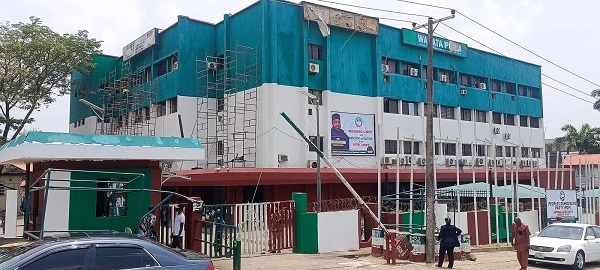
A new chapter appears to be unfolding within the Peoples Democratic Party (PDP) as the faction aligned with the Minister of the Federal Capital Territory, Nyesom Wike, has commenced the renovation of the party’s national secretariat, Wadata Plaza, in Abuja.
On Monday, activity returned to the once-restricted premises at Zone 5, as workers and engineers were seen carrying out repair and refurbishment work across sections of the complex. The development follows the recent unsealing of the building by security authorities, effectively restoring access to the Wike-backed National Working Committee.
The renovation efforts were already in progress ahead of the full resumption of administrative activities. The atmosphere within the secretariat reflected a mix of cautious optimism and quiet urgency, as workers moved materials and supervised ongoing structural adjustments.
Though the barricades that previously restricted entry into the main office building had been removed, a visible security presence remained. A number of police vehicles were stationed within the premises, while officers maintained watch, underscoring the sensitivity of the situation and the need to prevent any breakdown of law and order.
The unsealing of Wadata Plaza marks a significant moment in the internal dynamics of the PDP, which has in recent times been embroiled in leadership disputes and factional disagreements. The move to renovate the secretariat is widely seen as both symbolic and strategic, an attempt by the Wike-backed leadership to assert control and reestablish operational authority within the party’s national structure.
Political observers note that beyond the physical facelift, the renovation represents a broader effort to reset the party’s image and reposition it ahead of future political contests. For a party that once dominated Nigeria’s political landscape, the state of its headquarters has often been viewed as a reflection of its internal cohesion and readiness.
Supporters of the Wike-aligned faction argue that restoring the secretariat is a necessary step toward stabilizing the party and moving past lingering disputes. They believe that a functional and unified national headquarters will help facilitate better coordination, planning, and engagement with party members across the country.
However, critics warn that the underlying tensions within the PDP may not be resolved by infrastructure upgrades alone. They emphasize that genuine reconciliation among party stakeholders remains critical to achieving lasting unity.
As the sound of construction echoed through the halls of Wadata Plaza, it became clear that the building itself is now a stage for a larger political narrative, one that reflects the struggle for control, legitimacy, and direction within one of Nigeria’s major opposition parties.
For now, the gates of the secretariat are open once again, and with them, a renewed push to rebuild, not just the structure, but the party’s internal strength and public confidence.
Whether this effort will lead to lasting cohesion or deepen existing divides remains to be seen. But as renovation work continues under the watchful eyes of security personnel, one thing is certain: the PDP is entering another decisive phase in its evolving political journey.