The United States Department of State has announced a five-year bilateral health Memorandum of Understanding (MOU), with Angola under the Trump Administration’s America First Global Health Strategy. This agreement commits $121 million in joint funding to strengthen Angola’s health systems, with emphasis on infectious diseases, laboratory capacity, and private-sector engagement.
While the agreement is bilateral, its broader significance lies in the expanding network of 27 such MOUs—including one with Nigeria—which signals a shift in U.S. global engagement toward co-investment, national ownership, and strategic health security.
Key Features of the Angola MOU
The Angola agreement reflects several defining pillars of the America First Global Health Strategy:
Co-Investment Model
U.S. contribution: $71 million
Angolan contribution: $50 million
Emphasis on shared financial responsibility
Disease Priorities
HIV/AIDS
Malaria
Broader global health security (pandemic preparedness)
Health Systems Strengthening
Workforce development
Data systems
Supply chain improvements
Laboratory Capacity Expansion
$5 million dedicated to diagnostics and pathogen detection
Focus on rural and underserved regions
Private Sector Integration
Encourages partnerships with U.S. and local companies
Aims to improve efficiency and sustainability
Strategic Context: U.S. Global Health Policy Shift
The America First Global Health Strategy represents a departure from traditional donor-heavy models toward:
- Burden-sharing with recipient countries
- Health system independence rather than aid dependency
- Alignment with U.S. national security interests (preventing cross-border disease spread)
With over $20.5 billion committed across 27 countries, this initiative marks a significant restructuring of global health financing.
Nigeria’s Position in the MOU Framework
Nigeria as a Key Strategic Partner
Nigeria is one of the largest and most strategically important participants in the MOU network due to:
- Largest population in Africa (220+ million)
- High burden of infectious diseases (HIV, malaria, TB)
- Regional economic and political influence
Health System Challenges in Nigeria
Nigeria faces persistent systemic issues:
- Weak primary healthcare infrastructure
- Limited laboratory and diagnostic capacity in rural areas
- Heavy reliance on donor funding (e.g., for HIV programs)
- Supply chain inefficiencies and stock-outs
Existing U.S.–Nigeria Health Collaboration
Historically, U.S. engagement in Nigeria has included:
- HIV/AIDS programs (e.g., PEPFAR)
- Malaria initiatives
- Immunization and disease surveillance support
The new MOU framework likely builds on these foundations but with stricter expectations for Nigerian co-investment and accountability.
Implications for Nigeria
- Increased Financial Responsibility
- Like Angola, Nigeria is expected to:
- Increase domestic health spending
- Co-finance major programs
Implication:
This may strain public finances but could improve long-term sustainability.
Shift Toward Health Sovereignty
The strategy emphasizes:
Reduced dependency on foreign aid
Strengthened national ownership
Implication for Nigeria:
Opportunity to build resilient systems
Risk of funding gaps if domestic investment falls short
Strengthening Health Security
Focus on early detection of pathogens aligns with Nigeria’s needs, especially after experiences with:
- COVID-19
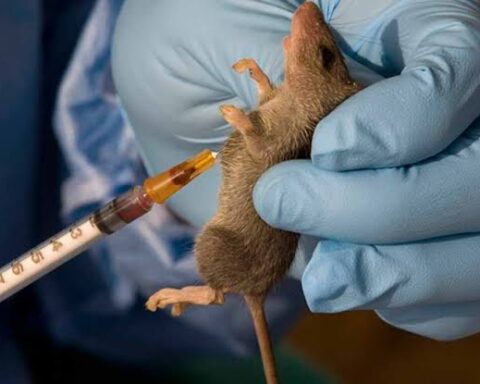
- Lassa fever outbreaks
Implication:
Improved surveillance and lab capacity could:
- Prevent future epidemics
- Enhance regional leadership in disease control
Private Sector Opportunities
The MOU model promotes private-sector participation.
In Nigeria, this could:
- Expand pharmaceutical manufacturing
- logistics and supply chains
- Attract U.S. healthcare investment
Challenge:
- Regulatory bottlenecks
- Market fragmentation
Equity and Access Concerns
While efficiency may improve, risks include:
- Urban bias in investments
- Exclusion of low-income populations
- Over-reliance on market-driven solutions
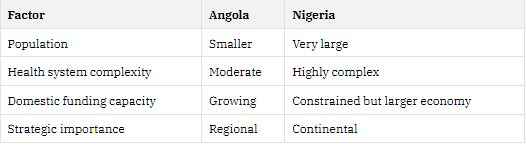
Comparative Insight: Angola vs Nigeria
Key takeaway:
Nigeria’s scale makes implementation more difficult but also more impactful.
Risks for Nigeria
- Fiscal pressure from co-investment requirements
- Policy inconsistency or weak implementation
- Overdependence on external technical support despite funding shifts
- Inequality in health access
- Political instability affecting continuity
Opportunities for Nigeria
- Health system modernisation
- Improved disease surveillance and response
- Growth of local healthcare industries
- Stronger global health leadership role in Africa
- Long-term reduction in donor dependency
Policy Recommendations for Nigeria
To maximise benefits from this strategy, Nigeria should:
Increase Domestic Funding
Meet or exceed Abuja Declaration targets (15% of budget to health)
Strengthen Governance
Improve transparency and accountability in fund utilization
Invest in Primary
Focus on rural and underserved communities
Build Local Manufacturing Capacity
Encourage pharmaceutical and medical supply production
Enhance Data Systems
Digitise health records and surveillance systems
Conclusion
The Angola MOU under the America First Global Health Strategy reflects a broader transformation in global health cooperation—shifting from aid dependency to shared responsibility and national ownership.
For Nigeria, this model presents both significant opportunities and serious challenges. If effectively implemented, it could lead to a stronger, more independent system. However, success will depend heavily on Nigeria’s ability to mobilise domestic resources, strengthen institutions, and ensure equitable access to care.
Ultimately, Nigeria’s response to this evolving framework will shape not only its own health outcomes but also the future of public health across West Africa.