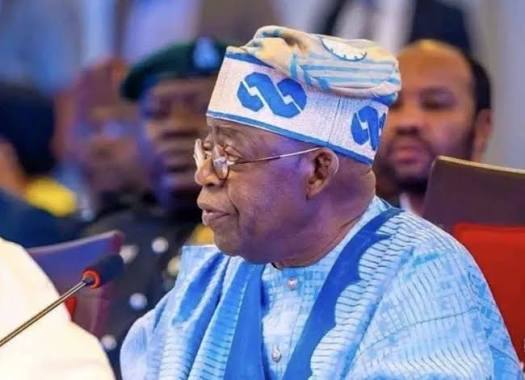
African Development Studies Centre (ADSC) says President Bola Tinubu presently maintains the strongest pathway toward securing victory in the 2027 presidential elections.
President of the centre, Dr Victor Oluwafemi, made the assertion in a statement issued on Thursday in Abuja.
Oluwafemi said the assertion was based on ADSC META Report which focused on extensive review of governance performance, political structures, coalition dynamics, voter behaviour, economic indicators, institutional influence and leadership capacity.
He said that the report was not based on political preference but derived from a comparative assessment of the current political environment.
Oluwafemi said the report also assessed leadership capacity from the perspective of governance experience, political management, institutional influence and national coalition building.
He said that it also highlighted the power of incumbency which enjoys visibility, access to state institutions, policy influence, extensive media attention and a level of national presence which opposition candidates usually struggle to match.
The centre’s president said that beyond incumbency, Tinubu remained arguably the most experienced coalition builder in contemporary Nigerian politics.
He noted that the political architecture that contributed to the emergence of All Progressives Congress (APC) as a governing party remained one of the most significant political achievements of the Fourth Republic.
Oluwafemi said that regardless of the economic hardship occasioned by the removal of fuel subsidy, floating of the exchange rate and inflation, Tinubu stood a good chance of being re-elected.
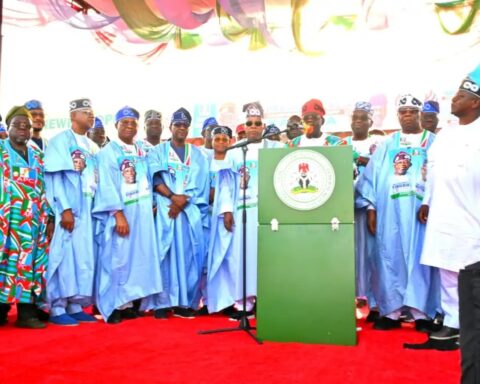
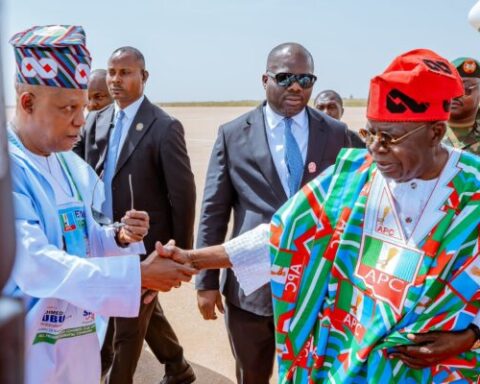
“APC today possesses extensive structures across the federation, including governors, legislators, local government networks, political stakeholders, traditional institutions and strategic alliances.
“Regardless of public opinion regarding the administration’s policies, these structures provide a formidable electoral foundation”.
Oluwafemi, however, stated that the central political question confronting the Tinubu administration was whether the ongoing reforms would begin to produce visible benefits before the country enters the final phase of the election cycle.
“Should inflation decline, infrastructure delivery improve, foreign investment increase, employment opportunities expand and economic confidence strengthen, the administration may successfully transform what currently appears to be political liabilities into electoral advantages”.
Oluwafemi said that the Nigeria Democratic Congress (NDC) presidential candidate, Mr Peter Obi, remained one of the most compelling political figures in Nigeria’s contemporary political environment.
According to him, Obi’s reputation for fiscal prudence, administrative discipline, accountability and modest leadership style continues to resonate strongly among young voters.
He said that professionals, entrepreneurs, members of the diaspora community and citizens seeking a different model of governance had found Obi ‘very attractive’.
“His greatest political asset remains credibility; unlike many politicians whose support is largely dependent on traditional structures, Peter Obi has successfully cultivated a movement-driven political following.
“He has become a symbol of reform for many Nigerians who believe that governance can be more transparent, efficient and accountable,” he said.
Oluwafemi, however, said that national elections demanded more than popularity, as Nigeria’s electoral reality required extensive organisational capacity, nationwide penetration and grassroots mobilisation.
He said that coalition management, regional acceptance, vote protection systems and political structures capable of operating effectively in thousands of wards and polling units eas also required.
He said that the challenge confronting Obi is not visibility but that of conversion, adding that the ability to convert public enthusiasm into a nationwide electoral machine remained one of the defining questions surrounding his candidacy.
On former Vice President Atiku Abubakar of African Democratic Congress (ADC), Oluwafemi said he remained one of the most experienced political figures in Nigeria.
He said that Atiku’s understanding of governance, economic management, public administration and national politics was extensive, with only a few contemporary politicians possessing a political résumé as broad as that of the former vice-president.
“Atiku’s greatest strengths remain experience, national reach, political relationships and policy familiarity.
“However, repeated presidential contests have created a different challenge.
“A growing segment of the electorate increasingly associates his candidacy with the old political establishment at a time when younger voters are demanding generational renewal and alternative leadership models”.
The ADSC helmsman argued that if opposition forces remained divided between multiple platforms, Tinubu’s pathway toward re-election would become significantly clearer.
He said that while Tinubu’s strengths were most visible in political organisation, coalition engineering, strategic negotiation and institutional management, Obi’s strengths were most visible in fiscal discipline, administrative efficiency, public accountability and reform-oriented governance.
According to him, though Atiku’s strengths are most visible in executive experience, economic policy familiarity and national political engagement, each candidate possesses significant leadership qualities.
“However, elections are not won solely by competence. They are won through a combination of competence, structure, alliances, timing, public sentiment and organisational strength.
“Based on the evidence available today, ADSC META concludes that President Bola Tinubu remains the candidate with the clearest institutional pathway to victory in 2027.
“This assessment should not be interpreted as a declaration of inevitability. Elections remain dynamic. Economic conditions can change. Political alliances can shift,” he submitted.