By Chidorum Nwakanma PAU/SMC/PT/090026
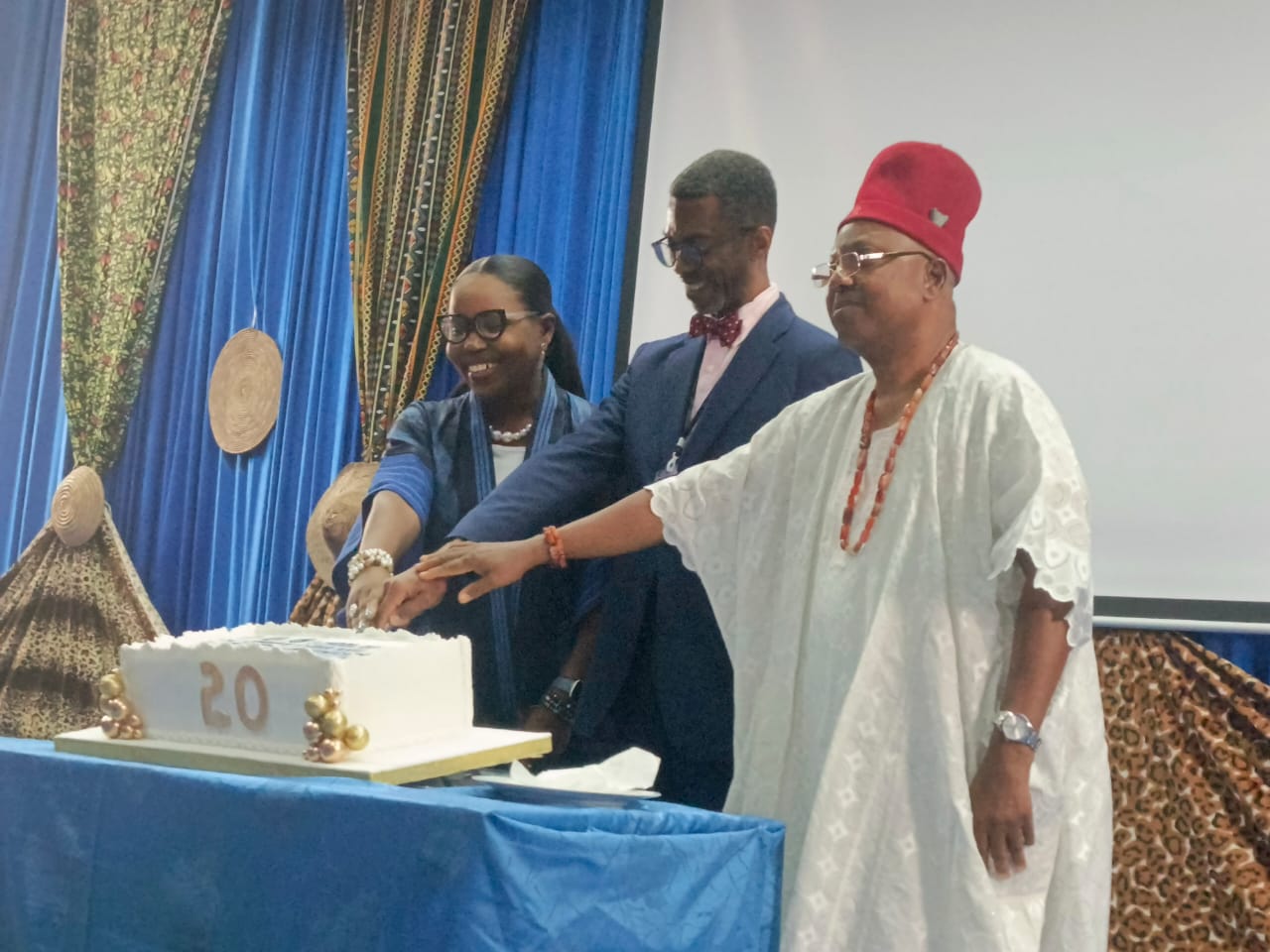
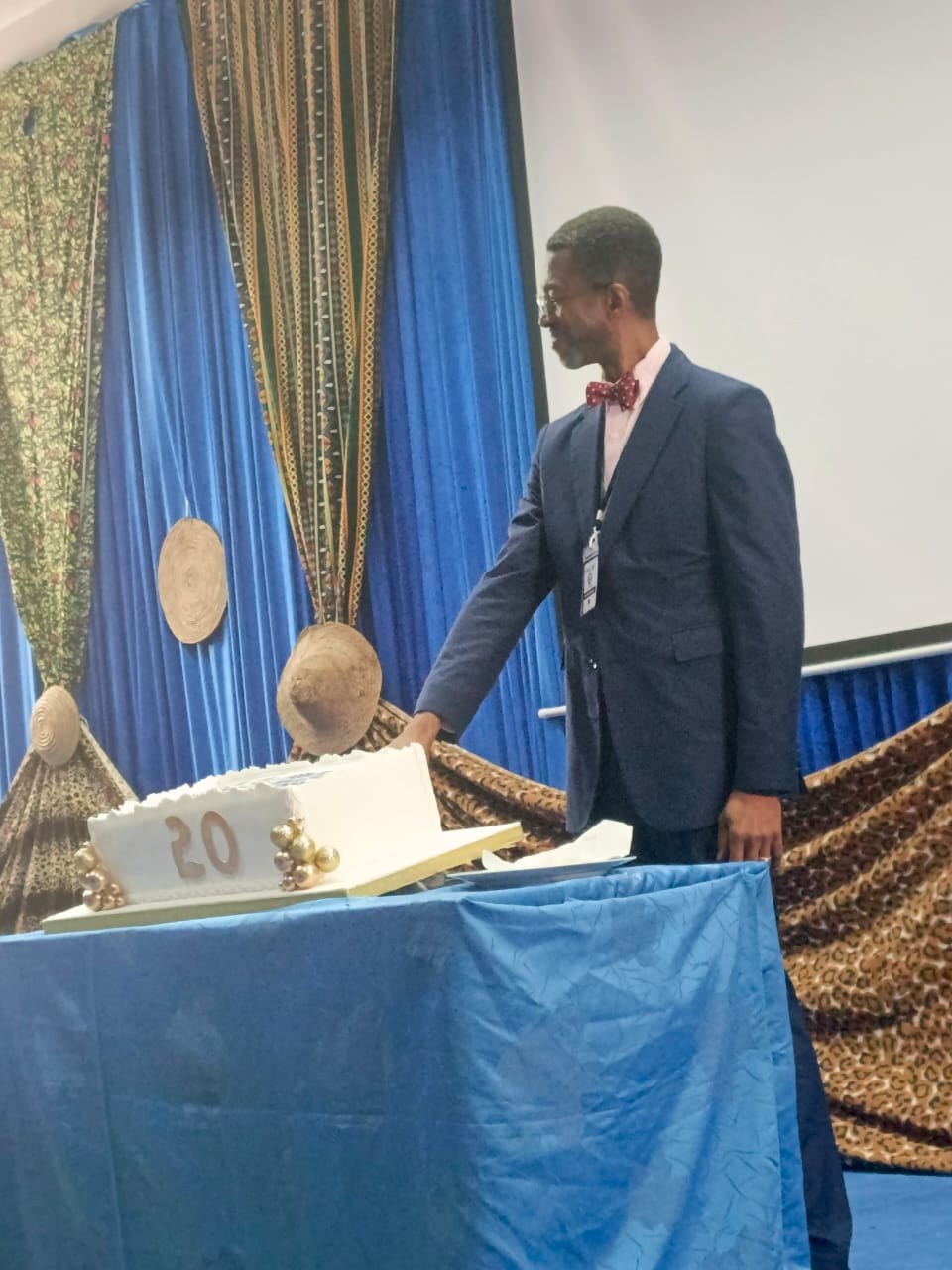
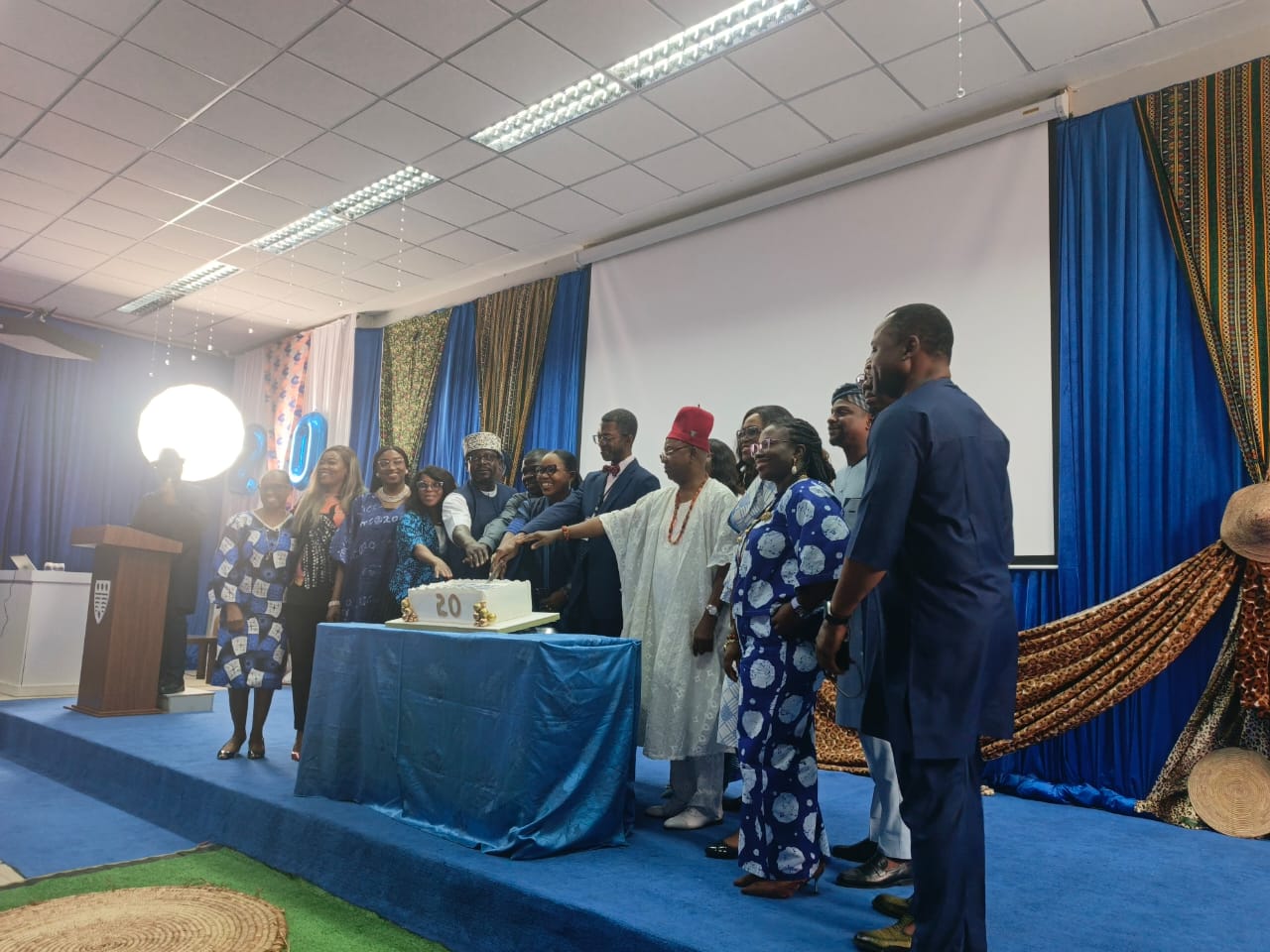
Last week, I joined stakeholders from the School of Media and Communication at Pan-Atlantic University to mark its 20th anniversary. On Day 4 of the weeklong celebration, I joined as a veteran communications professional, and a Council member delivered a keynote address urging the SMC to venture into new territory. The founder and CEO of the leading agency SO&U called for innovation and a paradigm shift.
The colourful event drew young people at their peak, faculty and staff in brilliant traditional attire, and friends and family. Mr Ufot’s speech showed why his Guinness TVC, “My friend, Udeme, is a great man”, transcended product marketing to become part of cultural communication.
Here are the five main points from Udeme Ufot’s keynote address:
- Daring to shape the future, not merely to predict it
The central theme is courage. Education must prepare communicators to actively shape a networked world rather than simply react to platforms, technologies, or algorithms. “Daring” means imagining better outcomes, preparing for them, and acting before full certainty is achieved. - Rethinking strategic communications education beyond tools and techniques
Adding social media, AI, or digital courses to an old curriculum is not enough. Communicators must shift from producing outputs (press releases, posts, campaigns) to becoming problem-solvers, interpreters, strategists, and advisers who understand business, culture, data, and human behaviour. Strategy and problem diagnosis come before tactics. - Shifting from teaching answers to teaching questions, with a focus on lifelong learning
In an information-rich, networked world, the scarce skill is sense-making. Future communicators need curiosity, analytical ability, research and data skills, cultural intelligence, and the capacity to keep learning, to unlearn outdated assumptions, and to adapt without losing their values. - Positioning Nigerian and African experience as a source of global knowledge
Communication education should move beyond the traditional “consumer of foreign ideas” role. Insights from diverse audiences, informal economies, cultural negotiation, community, resilience, and trust in Nigeria and Africa can generate frameworks and practices that contribute to the global conversation. - Treating AI and technology as tools that elevate human capability, with ethics, trust, and judgement at the centre, will change research, creation, monitoring, and distribution. Communicators must remain human-centred: AI-literate yet ethically grounded, data-driven but not data-dependent. In a world of abundant content, trust, credibility, responsibility, and judgement matter more than volume or speed. Education must prioritise purpose, consequences, and ethical responsibility over mere technical possibility.
Number 4 above is, for me, the litmus test. SMC must dare to lead in theorising about communication in this age for the world, with Nigeria as a base. Nigeria is a vast laboratory. As Ufot averred, “Nigeria offers the world valuable lessons in understanding diverse audiences, informal economies, cultural negotiation, community, resilience, and trust. These are not limitations; they are sources of knowledge.”
He stated: “Our opportunity is to turn those experiences into scholarship, ideas, frameworks and practices that can contribute not only to Nigeria and Africa, but to the global conversation.”
SMC’s mission and vision provide the right foundation. I was part of the first cohort of the part-time MSc.
Mission: The primary goal of the School of Media and Communication (SMC) is the formation of media and communication professionals to enable them to pursue their calling to the service of human culture with a sense of creativity, skill, knowledge and values. We wish to contribute through our expertise to the professional excellence of the creative industries in our country and the continent of Africa.”
VISION: The School’s vision is to be internationally recognised as a prestigious institution offering high-quality education in communication and media; to be a reference point for research in Africa; and to be a leading centre of learning globally. The School’s high standards are expected to positively influence similar faculties across the country and the African continent.
Twenty years later, one can surmise that SMC has fulfilled 80 per cent of its mission and vision. It has a strong brand and name recognition, outstanding alumni, a dedicated and respected faculty, and respect among its peers.
I came to the MSc programme while looking for Chinyerenma Augusta, my wife and partner. She was a Creative, and I worked in Client Service. We ran Blueflower Limited, our communications agency. During a visit to the School, I saw a poster for the Certificate in Media Enterprise. We discussed it, and she enrolled.
It was then my pleasant duty to ford the Mainland-to-Island traffic to ensure she made it to class on time. One day, I saw the MSc flyer. I enrolled.
After I served as a guest in Dr Richard Ikiebe’s class, School Administration offered me an Adjunct Faculty position to teach undergraduate classes.
In my experience, daring is in the SMC’s DNA.
- It introduced courses that broadened the discipline beyond the traditional.
- It deepened the town-and-gown collaboration that LBS introduced.
- It brought courses ahead of NUC approval and is among the first to commence many programmes now approved by the NUC. They include the BSc Strategic Communication, B.Sc. Information Science and Media Studies, and B.Sc. Film and Multimedia Studies.
- It runs professional education programmes that offer a rich blend of theory and practice. These include the MTN Media Innovation Programme, which brings participants to Wits University in South Africa each year. Its success has prompted MTN to consider a similar programme for East and South Africa. Other programmes include the MTN Entrepreneurship Programme, the Executive Programme in Advertising (EXPAD), the Certificate Course in Broadcasting, the Advanced Writing and Reporting Skills (AWAReS), and the Content Creation Course for Film and Television.
However, SMS is as pricey as the rest of Pan-Atlantic University. In our day, students and participants in its programmes proudly carried those folders or stylishly left one in the car. You get value for money in many ways!
Those folders were highly useful. I turned to mine and Chinyeremma’s for this reflection. Each contained papers and reference literature. The digital era has led to near abandonment. SMC sends lectures, presentations and supporting audio-visuals by email. This results in a long list of emails for most people, and some lose them easily. Students and participants could receive beautifully packaged, fresh drives that offer digital compatibility and the keepsake of the old folders.
Happy 20th anniversary, Dean Dr Ikechukwu Obiaya, faculty, staff and students of SMC. March into the next 20 years with surefootedness.