By Charles Obiajulu Ugwu – PhD
In 1841, a ship called the Creole left Virginia bound for New Orleans, carrying tobacco and a hundred and thirty-five enslaved people below deck. Somewhere off the coast of the Bahamas, the enslaved men and women rose up, seized the ship, and sailed it into British waters, where slavery had already been abolished. The nineteen who led the revolt were free the moment they reached shore. Everyone else on that ship walked off free too, by simple virtue of where the water had carried them.
That story has always struck me less for its drama than for its geography. Freedom, in 1841, was not a truth. It was a coordinate. Cross one line of longitude and a human being was property. Cross another and the same human being was a person under the law. Nothing about the man or woman had changed. Only the map had.
I think about that ship often, because it captures something we prefer not to look at directly: slavery was never really an argument about biology or capacity. It was an argument about where the lines got drawn, and who got to draw them. A person was fully human on one side of an imaginary border and a unit of property on the other, and the act of crossing carried no moral content of its own. Whatever made the arrangement wrong had been true the entire time. Only the law had been slow to notice.
That is an uncomfortable thing to sit with, because it means the injustice was never really settled by argument. It was tolerated because it was profitable, and defended because it was familiar, and both of those can keep an obvious wrong alive for generations inside a society that otherwise considers itself civilized. Once you understand that slavery was a line-drawing exercise rather than a natural fact, a harder question follows you home. Are we still drawing those lines somewhere? Have we simply moved them to ground the law no longer reaches?
An Institution, Not an Aberration
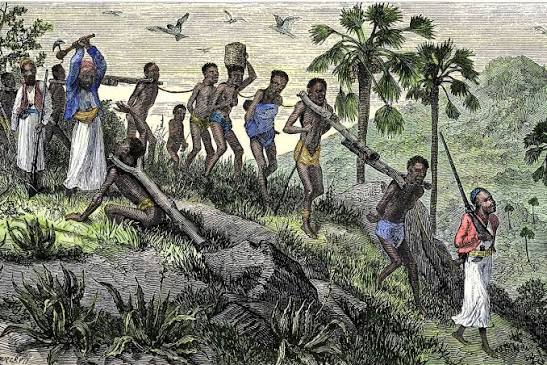
It helps to be honest about the scale of what happened. Slavery was not a shameful footnote carried out by a few bad actors on the margins of otherwise decent societies. It was infrastructure, woven into the ordinary machinery of commerce so thoroughly that unwinding it looked, to the people who benefited, like unwinding the economy itself. Insurance companies in London wrote policies on human cargo the same way they wrote policies on grain or timber.
Banks accepted enslaved people as collateral for loans, the same paperwork used for land or livestock. Textile mills in Manchester, shipping firms in Liverpool, and plantations stretching from the Carolinas to Bahia were nodes in one continuous circuit, each profiting from the plain fact that a human being could be converted, on paper, into a possession. Fortunes were built on it. Universities were endowed by it. Entire port cities were raised on its proceeds.
This is worth naming plainly because it is tempting, from a comfortable distance, to imagine slavery as an obviously monstrous system that only monstrous people could have tolerated. The truth is less comforting. Merchants defended it as commerce, politicians as national interest, intellectuals built elaborate theories of racial hierarchy to give it the appearance of science, and ordinary people ran the ledgers, attended the churches, and raised their children, considering themselves decent all the while. That is not an excuse. It is a warning, because moral catastrophe does not require a nation of villains. It only requires a nation of people willing not to look too closely at what their comfort is built on.
And the Church, which might have been expected to stand as the one institution immune to this logic, was instead frequently its most articulate defender. This is the part of the history that unsettles people most, because it cannot be waved away as secular greed corrupting sacred principle. The complicity was often theological, argued from the pulpit, footnoted with scripture.
Ministers on Southern plantations built entire sermon traditions around a handful of verses from Paul’s letters to the Ephesians and the Colossians, instructing servants to obey their earthly masters “with fear and trembling.” One well-documented set of sermons, delivered by a Scottish-born minister to enslaved congregations in the Carolina Lowcountry, returned again and again to this theme of obedience as the entire substance of Christian instruction offered to the enslaved. It is hard to think of a passage put to more damaging use. The verse did not create slavery, but it dressed it in the language of duty, and there is no more effective way to make a person keep their own chains fastened than to convince them that loosening them would be a sin.
None of this is unique to Christianity, and none of it is safely sealed away as ancient history. Nearly every enduring religious tradition has, at some point, been enlisted to sanctify the arrangement of power already in place. The beneficiaries of slavery still hold the deeds their fortunes were built on, and its descendants still carry the debt. Which is precisely why treating the story as finished business deserves more suspicion than it usually receives.
The Uncomfortable Rhyme
Here is where the question gets harder to hold at arm’s length. If slavery is understood only as the legal ownership of another person’s body, it has retreated from civilized society, and rightly so. But if slavery also describes the systematic surrender of one’s capacity to think, question, judge, and choose, the conversation gets considerably more complicated. The chains may have disappeared. The habits remain.
Walk into certain religious communities today, anywhere in the world, and you will recognize a familiar architecture even though the chains are gone. Followers are urged to obey before understanding, to submit before examining, to believe before questioning. A leader’s word becomes unquestionable. Doubt, which many serious theologians have treated as a normal companion of sincere faith, is quietly recast as moral failure. The measure of devotion shifts from the quality of a person’s conscience to the completeness of their compliance. Nobody auctions anybody. But something is still being surrendered, and it is not trivial. It is the right to reason, to withhold consent, to say no and remain in good standing.
I want to be careful here, because this is not an argument against faith, or against authority, or against the structure any serious community needs to survive. Discipline is not oppression. Reverence is not submission. Every institution capable of doing anything worthwhile, a family, a company, a congregation, needs some agreed hierarchy and shared conviction to hold it together. The Knights of St. Mulumba does not function without structure, and neither does any diocese, newsroom, or army. The problem was never authority itself. The problem is authority engineered to escape scrutiny, and obedience stretched until it no longer has room left for conscience.
The mechanism is the giveaway, because it repeats itself with remarkable fidelity across very different settings. Enslaved people were taught that resisting an earthly master was equivalent to resisting God’s ordained order. Today, in some pulpits, questioning a pastor’s authority is treated as functionally identical to questioning God. The vocabulary has been updated. The architecture has not moved an inch.
Nor is religion the only place this architecture shows up. The Peoples Temple, led by Jim Jones, did not begin its story with the deaths of more than nine hundred people in the Guyanese jungle in November 1978. It began years earlier, with smaller and more forgivable surrenders: a congregation gently persuaded to stop asking questions, dissenters recast as traitors to the community’s love, warnings about outside enemies used to seal the group tighter against its own doubts. By the time armed guards controlled who could leave, the members inside had long since handed over the one thing that might have saved them, their own independent judgment. Jonestown was the final chapter of a story that started with something as ordinary as agreeing not to ask a question out loud.
The same architecture has toppled financial empires built around a single charismatic figure, once investors stopped asking the questions they would have asked of anyone else, and it has propped up political movements long after their contradictions became visible to everyone but the people inside them. The names change. The underlying psychology holds remarkably still.
When Ideas Do the Work Chains Used to Do
There is a reason physical bondage, terrible as it was, eventually broke. It broke because it was visible, and violence, made visible enough for long enough, tends to summon its own opposition. Frederick Douglass could show the scars on his back. Sojourner Truth could stand in a room and ask whether she was not a woman. The wrongness of a whip is legible to almost anyone who sees it applied to another human being.
Mental and spiritual bondage rarely offers that same legibility, which is exactly what makes it more durable, not less. Nobody is chained to a pew. People arrive at services and gatherings freely, often joyfully, because those communities have given them real belonging, real comfort, real answers in seasons when nothing else offered any. That is not nothing, and it should not be dismissed with cynicism. But it is also precisely why the surrender, when it happens, tends to happen so completely. A person does not need to be forced to give up their judgment if they can first be persuaded that giving it up is the very definition of holiness. Absolute authority rarely announces itself as oppression. It almost always presents itself as protection.
This is the deeper lesson buried inside the history of slavery, easy to miss if you only look at the shackles. The core violation was never simply that one body was made to labor for another’s profit. It was that one person’s interior life, their capacity to reason, to object, to imagine a different arrangement, was declared illegitimate territory, off-limits even to themselves. Laws can dissolve shackles in an afternoon. Britain did it by Act of Parliament in 1833. The United States did it by constitutional amendment in 1865. What no law has ever managed to dissolve quite so cleanly is the conviction, once planted deep enough, that a person’s own reasoning cannot be trusted and must be handed to someone else for safekeeping.
Faith Is Not the Danger
None of this requires believing that religion is uniquely prone to this failure, or that faith itself is a trap waiting to be sprung. The same warning applies wherever unaccountable power meets a population persuaded not to examine it, which is to say it applies to politics, corporations, universities, and families, to any institution that quietly comes to prize its own preservation over the truth it was built to serve.
It is worth remembering, in the same breath, that authentic faith has been one of history’s great engines of liberation rather than domination. It was the conviction of William Wilberforce, working for decades inside the very Parliament that had legalized the slave trade, that eventually produced the Act of 1833. It was the same conviction, more than a century later, that gave Martin Luther King Jr. the language and the discipline to confront segregation with something more durable than anger. Faith, in both cases, did not ask people to stop thinking. It asked them to think more clearly than the world around them, and to say so out loud at considerable personal cost.
That is the distinction worth holding onto. Faith liberates. Authoritarianism domesticates. They can look similar from a distance, sometimes preached from the very same pulpit, but a healthy tradition should be able to tell them apart in its own house. Healthy spiritual leadership does not demand intellectual surrender. It cultivates moral maturity, because it has little reason to fear examination.
A Question Worth Sitting With
A society that takes its own freedom seriously has to be willing to turn that same question on its most cherished institutions, not out of hostility, but out of the same seriousness that eventually produced abolition. It has to ask whether reverence has quietly become dependence, whether loyalty has quietly become silence, whether the language of duty is once more being used to protect the comfort of the powerful rather than the dignity of everyone else. Abolition did not happen because slaveholders woke up one morning and reconsidered. It happened because enough people, inside and outside the institution, insisted on asking the uncomfortable question out loud, repeatedly, for decades, until the answer became impossible to avoid.
What makes this difficult is that nobody experiences their own submission as submission while they are inside it. The enslaved congregant listening to a sermon on obedience did not necessarily hear a chain being forged. He may have heard comfort, or belonging, or an explanation for suffering that made it bearable. That is precisely how the deepest forms of captivity work. They rarely announce themselves as captivity. They arrive dressed as devotion, as the highest and most demanding form of love a person can offer. The test was never whether it felt like bondage from the inside. The test is what it costs a person’s conscience over time, and whether they are still permitted to notice the cost.
Physical chains, in the end, rust. Mental chains are handed down as heirlooms, polished by tradition, wrapped in sacred language, until the people wearing them stop recognizing them as chains at all. History has taught the world, at great and belated cost, to reject the ownership of another person’s body. The task still unfinished is teaching every generation, including this one, that no person, however powerful or revered, has any claim to own another person’s mind.
History rarely repeats its greatest injustices wearing the same uniform twice. It comes back rephrased, in new vocabulary, invoking new authorities, asking for the same old surrender in a voice gentle enough that most people never notice they have said yes. The ship crossed a line in 1841 and the people aboard it became free. No ship, no border, no single Act of Parliament will do that work for the freedoms still being negotiated today. That work falls, as it always has, to whoever is willing to ask the question their own institution would rather not hear.
Charles is a contrarian thinker writing from lagos