By Charles Obiajulu Ugwu- PhD
Here is the arithmetic of political stasis. Nigeria exports its most talented, its most educated, and its most aggrieved citizens at a rate that would collapse any ordinary state. Yet the state does not collapse. Instead, those same citizens send back twenty billion dollars annually, not as investment, not as rebellion, but as a monthly installment on their own exile. The remittance economy is not a lifeline. It is the most sophisticated anesthesia ever administered to a nation, converting the political rage of its most potent reform constituency into a subsidy for the very failure that expelled them.
The standard narrative frames these inflows as proof of resilience, of global Nigerian enterprise, of an economy that endures despite itself. But resilience is not always a virtue. Sometimes it is the symptom of a deeper pathology, a system so adept at absorbing shock that it never reaches the breaking point required for transformation. The more honest reading is that remittances function as a pressure-release valve of extraordinary efficiency.
They extract precisely the cohort most capable of demanding change, monetize their discontent, and distribute that money across familial networks just widely enough to prevent the concentrated desperation that historically precedes structural reform. The result is not a developing nation. It is a nation trapped in subsidized stasis, where failure is rendered affordable and the unbearable is made merely uncomfortable.
The Selective Hemorrhage
To see how this works, consider who leaves. Emigration from Nigeria is not a random lottery. It is a selective filtration system that disproportionately removes the educated, the professionally skilled, the technologically literate, and, critically, those most acutely aware of systemic dysfunction. These are individuals who navigated the collapse of public education, the arbitrariness of regulatory environments, the violence of institutional neglect, and concluded that exit rather than voice was the rational response. They are, by definition, the population segment with both the cognitive tools to diagnose structural failure and the organizational capacity to agitate for its repair.
In a functioning political economy, this cohort would constitute a formidable domestic constituency. They would be the professionals turning associations into political blocs. They would be the technocrats refusing to participate in bureaucratic systems until meritocracy is restored. They would be the young entrepreneurs whose inability to secure reliable electricity or enforce contracts would translate into collective demands for institutional reform. Their frustration would have nowhere to go but inward, into the domestic political space, where it would collide with state power and, historically, produce either revolution or negotiated transformation.
Instead, the Nigerian system offers a third option: the exit visa. The remittance economy completes the circuit by allowing that exit to be partial. The emigrant does not disappear into assimilation; they remain tethered by obligation, by guilt, by genuine love, and by the monthly wire transfer. They become, in effect, offshore subsidiaries of the Nigerian survival economy, providing the liquidity that keeps families fed, children in private schools, relatives in private hospitals, and small businesses operational in the absence of functioning public goods. The state is relieved of the political pressure that would accompany widespread destitution, while simultaneously relieved of the fiscal responsibility to provide the services that would prevent it.
The Monetization of No-Confidence
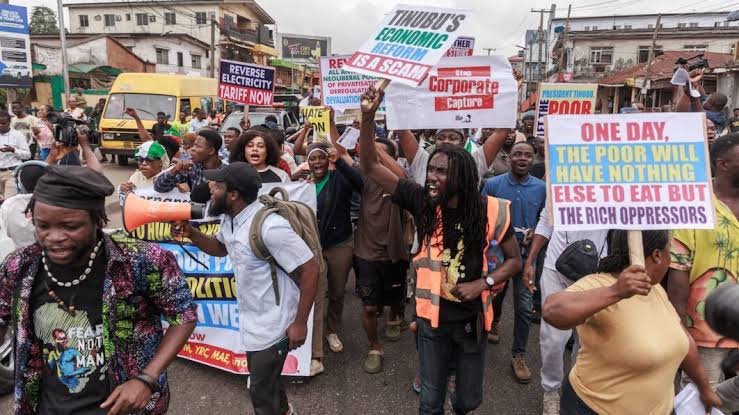
Every dollar remitted is, at its core, a vote of no-confidence in Nigerian governance that has been converted into foreign currency and stripped of its political content. The emigrant does not march; they send money. They do not organize; they send money. They do not withhold compliance from a state that has failed them; they send money, thereby enabling those who remain to withhold their own political anger. The remittance transforms a potentially destabilizing judgment on state capacity into a stabilizing subsidy of that very incapacity.
This is the sedative function at its most insidious. Political economy teaches us that regimes reform when the cost of maintaining the status quo exceeds the cost of change. But remittances artificially depress that cost. They allow the state to maintain a level of dysfunction that would otherwise produce either mass mobilization or fiscal collapse.
The twenty billion dollars does not appear on the government balance sheet as revenue, but it functions as an invisible social welfare program, one that requires no bureaucratic competence to administer, no legislative appropriation to authorize, and no political accountability to sustain. It is, in essence, a privatized safety net that subsidizes public failure.
The families who receive these funds are not to blame for accepting survival. The moral burden lies not with the mother who pays her child’s school fees with diaspora dollars, nor with the entrepreneur who keeps his generators running through foreign support. The burden lies with a governance architecture that has learned to depend on this transfer as a structural feature rather than a temporary palliative. The state has, in effect, outsourced its social contract to its own expelled citizens.
The Philanthropic Paradox
The culture of diaspora philanthropy compounds this anesthesia. The “giving back” narrative is seductive because it is genuinely animated by love, by memory, by the desire to repair what was broken in one’s own journey. The diaspora professional builds a school in her ancestral village. The emigrant doctor funds a clinic. The tech entrepreneur sponsors coding bootcamps. These acts are individually virtuous and collectively devastating.
They are devastating because they perform the work of the state without demanding the structural conditions that would make such work unnecessary. The diaspora-funded school does not require the government to reform public education; it bypasses it. The clinic does not demand a functional national health system; it temporarily fills the void. The coding academy does not insist on regulatory reform or reliable infrastructure; it trains young people to do precisely what their instructors did: acquire skills valuable enough to emigrate. Each philanthropic intervention, however well-intentioned, reinforces the message that the state need not perform because performance can be crowdsourced from abroad.
More profoundly, this philanthropy creates a moral economy in which the diaspora is celebrated as rescuers rather than recognized as refugees from a system that expelled them. The narrative of “giving back” obscures the prior narrative of being pushed out. It transforms structural violence into an opportunity for gratitude. The recipient community is encouraged to appreciate rather than interrogate, to celebrate individual generosity rather than demand collective accountability. The result is a society anesthetized by intermittent injections of private virtue, never quite reaching the threshold of public rage.
The Subsidized Rate of Failure
What emerges is a peculiar equilibrium: a state that fails at a subsidized rate. The Nigerian government does not need to fix power generation because generators are imported and fuel is purchased with remittance-backed household budgets. It does not need to reform public education because diaspora-funded private schools absorb the children of the ambitious. It does not need to build a functional healthcare system because medical tourism and diaspora-subsidized private care manage the health of those with connections abroad. It does not need to address unemployment because the most employable have already left, and those who remain are supported by the wages of the departed.
This is not the failure of a state that lacks resources. It is the failure of a state that has discovered it lacks the necessity to perform. The remittance economy has reduced the price of governance failure below the price of governance reform. And as long as that inequality persists, the rational choice for the political class is to maintain the status quo: to manage the optics of development while depending on the invisible infrastructure of diaspora support to prevent systemic collapse.
The danger is that this equilibrium is not stable. It is merely prolonged. The selective emigration that removes the most talented also removes the most capable of building domestic institutional capacity. The remittances that provide liquidity also create dependency that suppresses local productivity. The philanthropy that fills gaps also prevents the gaps from becoming politically intolerable. Over time, the nation risks becoming a geography of consumption rather than production, a space where survival is imported and the domestic economy atrophies around the pipeline of foreign support.
Toward an Uncomfortable Rethink
If this analysis holds, then the policy implications are profoundly uncomfortable. It suggests that the celebration of remittances as a development strategy is not merely misguided but actively counter-developmental. It suggests that diaspora engagement policies framed around “leveraging remittances” are, in effect, strategies for institutionalizing the valve rather than closing it. It suggests that the Nigerian state has a structural interest in maintaining the conditions that produce emigration, because the resulting transfers are more politically manageable than the resulting demands would be.
The fundamental rethink required is this: development cannot be outsourced to the expelled. A nation cannot build institutional capacity by celebrating the exit of its most capable citizens and monetizing their discontent. The remittance economy must be recognized not as a complement to development but as a substitute for it, a substitute that is, by its very nature, temporary and corrosive.
The alternative is not to condemn the diaspora for sending money, nor to blame families for accepting it. The alternative is to recognize that the only sustainable development is one that makes remittances unnecessary, that creates conditions where the talented do not need to leave to thrive, where the aggrieved can direct their fury into domestic political transformation rather than foreign currency transfers, and where the state’s failure produces reform rather than a wire transfer.
This requires a political courage that has been absent: the courage to allow the cost of failure to be felt where it belongs, by the institutions that produce it. It requires a diaspora willing to convert its no-confidence votes back into political currency, into demands, into conditional engagement, into a refusal to subsidize the very systems that expelled them. It requires, above all, a recognition that resilience, when it becomes a permanent condition, is not strength. It is the body’s way of adapting to a chronic disease that it has forgotten how to fight.
The twenty billion dollars is not a measure of Nigerian success. It is a measure of Nigerian deferral, a down payment on a revolution that keeps not arriving, a subsidy for a state that keeps not reforming, and a sedative administered by the very people who, in another configuration of history, might have been its most transformative agents.
The question before Nigerian governance is no longer how to maximize remittance inflows. It is how to build a nation worthy of the return of those whose departure currently funds its stagnation.
Charles is a Contrarian thinker writing from Kigali