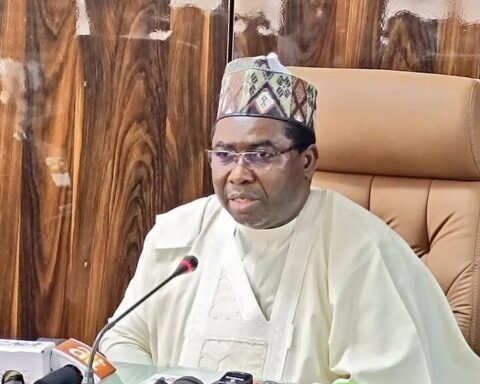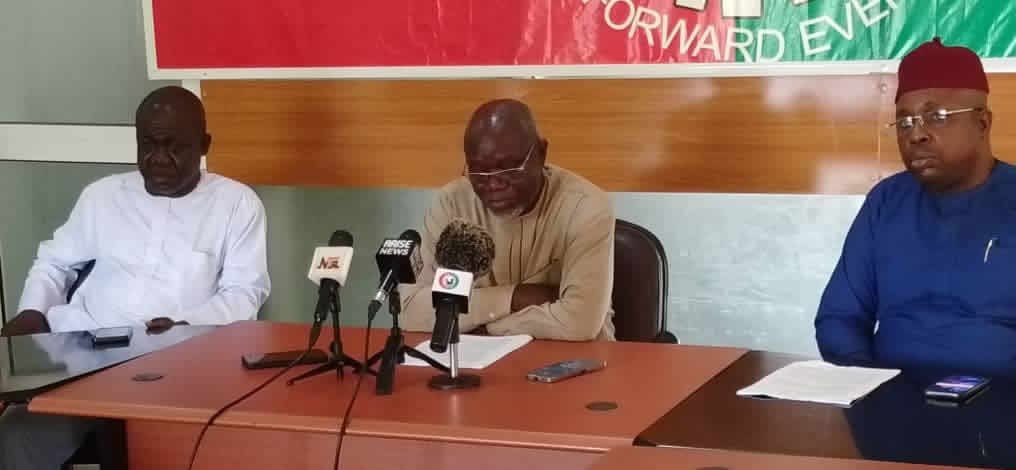
The quiet rhythm of Nigeria’s political landscape was disrupted on a humid Thursday morning in Abuja, as tension mounted over a decision that many feared could cast a long shadow over the nation’s democratic integrity. At the center of the unfolding controversy stood Abayomi Arabambi, the National Vice Chairman (South West) of the Labour Party, whose voice rang with urgency and conviction as he addressed a crowded press conference.
Arabambi did not mince words. With journalists leaning forward and cameras flashing, he declared that the recent transfer of Mutiu Agboke, the Resident Electoral Commissioner (REC) in Osun State, was not merely an administrative adjustment—but a move he described as “unconstitutional and deeply troubling.”
The controversy stemmed from a decision by the Independent National Electoral Commission (INEC) to redeploy Agboke from Osun State to Ondo State on April 8, just months before the crucial August 2026 governorship election. To INEC, it was routine. To Arabambi and his party, it was a red flag.
“This is not just about one man,” Arabambi said, his tone firm. “This is about the credibility of our electoral system and the future of democracy in Nigeria.”
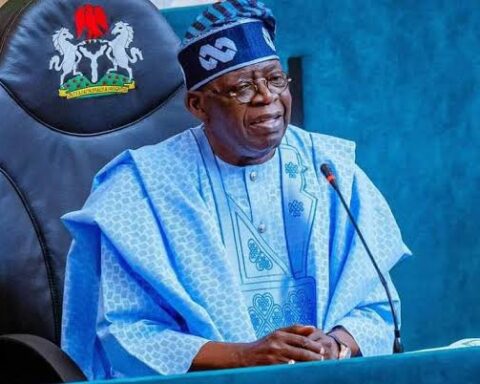
In a dramatic appeal, Arabambi called on Bola Tinubu to intervene directly. He urged the President to reverse the decision and reinstate Agboke, arguing that the timing of the transfer raised serious questions about neutrality and transparency.
“Mr. President must act swiftly,” he insisted. “The people of Osun State deserve an electoral process free from suspicion and administrative manipulation.”
For many observers, the call placed Tinubu in a delicate position, balancing the independence of INEC with growing political pressure from opposition voices wary of any perceived interference.
INEC, however, stood its ground. Through its Director of Voter Education and Publicity, Victoria Eta-Messi, the commission dismissed the concerns as misplaced.
“The redeployment of Resident Electoral Commissioners is a routine administrative exercise,” Eta-Messi stated calmly. “It should not be interpreted as interference in any forthcoming election.”
She emphasized that such transfers were part of standard operational procedures designed to maintain efficiency and impartiality within the commission.
Yet, her assurances did little to quell the growing unease among political stakeholders.
Arabambi went further, alleging that Agboke’s transfer was not an isolated case but part of a broader pattern within INEC, one that, he warned, could undermine public trust in Nigeria’s elections.
“In recent times, we have observed administrative decisions that raise eyebrows,” he said. “When such actions occur close to major elections, they cannot simply be dismissed as coincidence.”
His remarks struck a chord with segments of the political class and civil society groups, many of whom have long advocated for greater transparency in Nigeria’s electoral processes.
Osun State, known for its vibrant political culture, now finds itself at the center of a national debate. With the August 2026 governorship election approaching, the stakes are high, not just for political parties, but for voters whose confidence in the system is paramount.
In markets, offices, and community gatherings across the state, discussions have begun to swirl. Some citizens view the controversy as political theatrics, while others worry it could signal deeper issues within the electoral framework.
Beyond Osun, the situation has reignited a familiar question in Nigeria’s democracy: how to ensure that institutions tasked with safeguarding elections remain above suspicion.
For Arabambi and the Labour Party, the answer lies in vigilance and accountability. For INEC, it lies in maintaining operational independence without yielding to political pressure.
As the days pass and the election draws nearer, one thing is clear, the battle for Osun is no longer just about candidates and campaigns. It has become a test of trust, a measure of institutional integrity, and a defining moment for Nigeria’s democratic journey.
Whether the storm will settle or intensify remains uncertain. But for now, all eyes are fixed on the decisions made in Abuja and their ripple effects across Osun State and beyond.