Letter from Gboko
Mr. President,
I am writing to you from Gboko, where government is not experienced through communiqués or presidential briefings. People meet government when they go to the market, when they travel to the farm, when they pay school fees, when transport fares rise and when they have to decide which household expense can wait until next month.
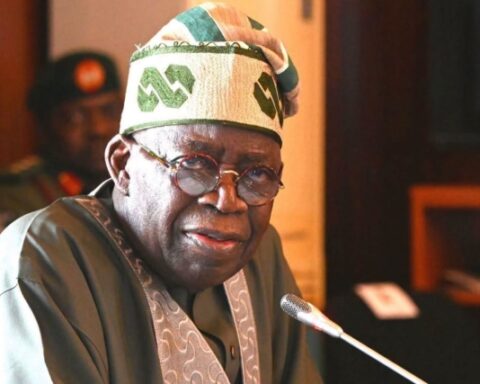
That is the country I am thinking about as I look at your latest stay in Paris.
There is nothing wrong with a Nigerian president travelling to France. Nigeria needs France, just as France needs Nigeria. We need diplomatic relationships, investment, technology, trade and cooperation with countries whose decisions can affect our interests. A president should be able to sit across the table from another head of state and negotiate for Nigeria.
But there is a question that ought to follow every presidential journey.What comes home with the President?
On September 18, French President Emmanuel Macron received you for a private dinner at the Élysée Palace. The Presidency described the meeting as part of the enduring relationship between Nigeria and France and a shared commitment to strengthening bilateral cooperation. You also met Vincent Bolloré in Paris, after which the Presidency announced plans for deeper investment in Nigeria’s creative and digital economy, including film, entertainment and fibre-optic infrastructure.
There is something jarring about the picture from Paris when placed beside the pictures Nigerians see at home. At the Élysée Palace, there was a table laid for a presidential dinner, polished glasses, fine surroundings and two heads of state seated together in the grandeur of one of France’s most important rooms. In Nigeria, displaced families are still living in camps and informal settlements, many struggling to secure food, shelter and the basic necessities of life after losing their homes.
The contrast does not mean the President should not sit down to dinner with the French President. It means that a country should be able to look at both pictures at the same time. One shows Nigeria represented at the highest level of international diplomacy. The other shows Nigerians who need their own government to remember that diplomacy ultimately means little if the people being represented cannot feel the dignity of the country in their own lives.
A presidential dinner can last a few hours. Hunger does not keep diplomatic time. For a displaced family, an empty plate is not a metaphor, and there is no communiqué that can make it less empty.
That is the picture I would like the presidency to keep in mind whenever Nigeria is represented abroad. The table in Paris is important. So is the Nigerian who has no table at all.
Those are legitimate areas of engagement. But Nigerians should be allowed to ask what these meetings mean beyond the photographs and official descriptions. What commitments were made? What does Nigeria stand to gain? What obligations, if any, has Nigeria assumed? What should Nigerians expect to see from these conversations, and when?
What do you bring back for us after these meetings?
Those questions are not hostility to France. They are the ordinary questions citizens should ask of their government.
They are even more reasonable because Paris has become one of the most frequent destinations of your presidency. The PUNCH reported in September that you had spent more than 270 days abroad since assuming office, on 51 trips covering at least 30 countries, with more than 50 days spent in Paris across official, working and private visits.
The number alone does not prove that every journey was unnecessary. Your administration has maintained that you continue to receive briefings, issue directives and oversee government while abroad. The Presidency has also described the current European stay as a working vacation and said you remained in touch with developments at home.
But governing is not only the ability to issue instructions from another country.
There is a difference between being informed about Nigeria and being physically present in the country whose problems you are being briefed about.
That difference matters.
From Gboko, the question is not whether the President is permitted to travel. Of course he is. The question is whether the frequency and length of those absences are proportionate to the condition of the country he leads and the sacrifices Nigerians are being asked to make.
And this brings me to France.
Nigeria was never a French colony. That history matters, not because Nigeria should keep France at arm’s length, but because it should remind us of the basis on which the two countries meet. Sovereignty.
We should trade with France. We should welcome French investment where it serves Nigerian interests. We should cooperate with France on security, culture, technology and diplomacy. We should also disagree with France whenever Nigeria’s interests require disagreement.
A sovereign country should be able to do all of that without the psychology of dependence.
Our relationship with France should therefore be a relationship between countries with interests to negotiate, not between a former colony and a former colonial power. Nigeria does not need to approach Paris with reverence. It needs to approach Paris with clarity about what Nigeria wants.
And whatever is negotiated in Paris in Nigeria’s name should eventually be understandable to Nigerians at home.
That is where transparency becomes important.
The Presidency has told Nigerians what happened at the Macron dinner. It has told us about the meeting with Bolloré and the investment interests discussed there. But an official account is not the same thing as public accountability. Where important national interests are involved, Nigerians deserve to know enough to understand what their government has agreed to pursue on their behalf.
This becomes particularly important in a presidency that has asked Nigerians to accept painful economic changes.
The petrol subsidy was removed. The naira was allowed to adjust sharply. Transportation costs rose. Food prices became harder for ordinary households to absorb. Businesses were forced to confront higher operating costs. Your administration has repeatedly argued that these reforms were necessary to correct structural weaknesses and put the economy on a more sustainable footing.
That argument can be made.
But the people making the sacrifice are entitled to ask what the sacrifice is producing.
A family in Gboko does not experience economic reform as a policy paper. It experiences it when the same amount of money buys less food, when transport consumes a larger part of household income and when a young person with qualifications still cannot find work.
If Nigerians are being asked to endure the immediate pain of reform in anticipation of a better future, government must be prepared to show them the road from one to the other.
Otherwise, what exactly was the sacrifice for?
This is why questions of transparency cannot be treated as distractions.
The same principle applies to the continuing dispute in the United States over access to investigative records involving you. Your legal team has challenged the release of records sought through a Freedom of Information Act case, relying on privacy and other legal protections. The Presidency has stressed that the proceedings are a civil dispute over access to government records and that no US court has found you guilty of criminal wrongdoing.
That distinction matters and should not be erased.
An allegation is not a conviction. A record is not automatically proof of wrongdoing. A court dispute over access to documents should not be presented as though it were itself a criminal judgment.
But transparency has another side.
When questions about a public official persist, citizens are entitled to ask whether as much information as the law permits should be available to them. Public confidence is not strengthened merely by telling people that a matter is complicated. It is strengthened when the facts that can lawfully be disclosed are placed beyond unnecessary doubt.
The same standard should apply to public contracts, government honours and access to state opportunities.
Whenever the government gives an individual or corporation a significant public benefit, Nigerians should be able to ask what due diligence was conducted, what qualifications justified the decision and what the country received in return. That is not an attack on business or investment. It is what accountability looks like when public resources and public institutions are involved.
Mr. President, this is why I am writing from Gboko.
The concern is larger than Paris.
It is about the growing distance between the places where presidential decisions are made and the places where Nigerians have to live with their consequences.
From here, the consequences are impossible to outsource.
A farmer cannot take his inflation problem to Paris.
A trader cannot fly to London to escape the price of transportation.
A graduate without a job cannot solve unemployment with a presidential communiqué.
And a family struggling with the cost of food cannot be comforted indefinitely by the promise that today’s hardship will eventually produce tomorrow’s prosperity.
They need to see evidence that the country is moving.
You may conduct government from abroad. You may meet presidents, investors and international business leaders there. Some of those meetings may produce agreements that eventually benefit Nigeria. That is precisely why Nigerians should insist on knowing what those agreements contain and how their benefits will reach the country.
The world will continue to invite the Nigerian President.
Paris will continue to receive you. Investors will continue to request meetings. Foreign governments will continue to seek Nigeria’s attention because Nigeria matters.
But none of those audiences is the final audience of your presidency.
That audience is here.
It is in Gboko and Umuahia, Kano and Maiduguri, Lagos and Enugu, Port Harcourt and Kaduna. It is the Nigerian who wakes up every morning and has no choice but to live with the consequences of what government decides.
Mr. President, you do not need to stop travelling.
You need to make every journey answerable to the people whose country you are travelling on behalf of.
Engage France. Engage Europe. Engage America. Bring investment home. Negotiate firmly. Build partnerships. Open markets. Pursue opportunities.
But do not allow the foreign capitals where Nigeria’s President is received to become more familiar to the presidency than the Nigerian communities where the consequences of presidential decisions are endured.
The people of Gboko do not have the luxury of stepping away from Nigeria for three weeks when things become difficult. They stay. They work. They struggle. They adjust. They wait.
They are entitled to expect the same government that asks them for patience to remain close enough to understand what that patience is costing them.
Nigeria was not created to serve the comfort of its leaders.
Nigeria is a sovereign country. Its resources belong to its people, and its institutions are supposed to work for the public. Those principles should not become less important simply because the President is dealing with foreign governments, investors or powerful individuals.
And its presidency is not an entitlement to distance itself from the people whenever governing becomes easier from somewhere else.
Unlike Paris, in any part of Gboko, agonising cries of children, their mothers, laced with piercing information of another attack, more attacks, the unaccounted dead and the hollowness of rites of pretence that you care.
Whatever is discussed in Paris, whatever is negotiated abroad and whatever is committed in the name of Nigeria must eventually be capable of being explained to Nigerians.
That is not too much to ask.
It is the minimum owed to the people whose country you lead.
From Gboko, that is the question I leave with you:
After all the journeys, all the meetings and all the conversations abroad, can Nigerians still see themselves clearly in the government being conducted in their name?
Nigeria belongs to Nigerians.
Please govern accordingly.
Stephanie Shaakaa
Writes from
Gboko, Nigeria
Shaakaa can be reached on: shaakaastephanie@yahoo.com