By Jude Iyitor
The prospect of creating Anioma State is currently one of the most dynamic and contentious issues in Nigerian geopolitics. While the proposal has gained unprecedented legislative traction, its future is inextricably tied to a raging debate over its proposed affiliation with the Southeastern geopolitical zone. A comprehensive understanding requires examining both the powerful arguments in its favour and the deeply rooted opposition it faces.
The campaign for Anioma State is not a new phenomenon; it is the modern incarnation of a decades-old aspiration for self-determination. The name “Anioma” was derived from four original local government areas and created for a specific geopolitical purpose and has been consistently used to represent the people of the Delta North Senatorial District in their quest for Statehood recognition and development. In popular interpretation, Anioma fittingly means “Good Land.” The contemporary proposal, championed by Senator Ned Nwoko of Delta North, is now formally encapsulated in Senate Bill 481, which is part of the ongoing national constitutional amendment process.
The core arguments for the state’s creation are compelling and multi-faceted. Proponents anchor their case on the principle of political equity and federal balance. They correctly point out that the Southeast geopolitical zone is the only one in the federation with just five states, while all other zones have a minimum of six. This imbalance has tangible consequences, granting the Southeast fewer representlatives in the National Assembly, a smaller share of national revenue allocation, and diminished political influence. The creation of Anioma as the sixth state of the Southeast is therefore framed as a necessary act of national justice to correct a longstanding structural inequity.
But with the Southeast getting the 6th State, can it truly be said that the so-called imbalance has then been finally corrected? The logic of geopolitical balance is itself flawed as the very premise of correcting the structural imbalance is itself built on unstable ground. The Southeast is not the only zone with a numerical disparity; the North-West and North-Central zones each have seven states. If the National Assembly can arbitrarily create a seventh state in one zone, what sacrosanctity does a six-state structure then hold? This reveals that the argument for “balance” is not a principled standard but a convenient political tool, which could be rendered obsolete and violated by future state creations in the South-West or South-South.
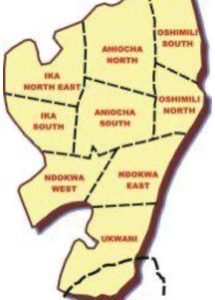
Furthermore, advocates emphasize profound, though largely anecdotal, cultural and linguistic ties while overlooking concrete administrative history. The Anioma people, comprising nine local government areas in the current Delta North Senatorial District, are portrayed by proponents as a predominantly Igbo subgroup. They trace affiliations to modern socio-political groups like the Ibo Union and the present-day Ohanaeze Ndigbo, arguing that Anioma’s inclusion in the old Mid-Western Region was an administrative anomaly and that severed their natural kinship with the East. For them, the creation of Anioma State is not just about new borders but a cultural reintegration and the fulfillment of a longstanding self-determination goal. This framing conveniently ignores the fact that Anioma has never shared a direct administrative unit with the Southeast throughout Nigeria’s history.
This movement has achieved significant legislative momentum. As of mid-2025, the bill is reported to have the backing of over 90 senators, a number that surpasses the two-thirds majority required for constitutional amendments in the Senate. This level of support indicates that the argument for equitable geopolitical structuring has found a sympathetic hearing at the highest legislative level.
The Raging Rejection of Southeastern Affiliation
Despite the compelling case and legislative progress, the proposal faces formidable opposition, precisely centered on the plan to place the new state within the Southeast geopolitical zone. This rejection is not monolithic; it springs from several distinct but often overlapping concerns.
A primary point of contention revolves around ethnic and linguistic identity. While proponents highlight Igbo heritage, a significant segment within Anioma disputes the notion of a homogenous Igbo identity. Groups such as the Ukwuani and some Ika communities argue that while their languages are Igboid, their distinct ethnolinguistic identity is not solely defined by this connection. This perspective is bolstered by the region’s complex demographics; within areas like Aniocha and Oshimili, there are significant communities with clear historical origins in Edo, Igala, and Yoruba lands. This intricate ethnic tapestry fundamentally challenges the narrative of a monolithic Igbo identity. They also contend that the Anioma region has developed a unique cultural tapestry over decades, distinct from the core Igbo areas of the Southeast, and that forcing a singular Igbo identity upon them is a misrepresentation.
This internal dissent presents a direct challenge to the political forces backing the bill. For instance, while the APC Delta North has endorsed the creation of Anioma State as the sixth state of the Southeast, a critical question arises: as a caring and listening political party, is the APC Senatorial chairman sensitive to the divergent opinions of, for instance, the Onu Ika, the Ndokwa N’Ekwu, the leadership of OFFAC, the Asagba of Asaba, the Obi of Isele-Uku, the Dein of Agbor, and Njiko Aniocha Oshimili, to mention just a few, who are against this Southeast gambit? The endorsement risks appearing as a top-down political decision that is out of touch with the deep-seated reservations of key traditional, cultural, and socio-political institutions within Anioma itself.
Another powerful line of opposition is grounded in geopolitical loyalty and regional integrity. Critics argue that it is profoundly unjust to attempt to resolve an imbalance in the Southeast by actively dismembering the South-South zone. This move would violently sever Anioma from decades of shared administrative, political, and economic development within the South-South, a union that has a tangible historical basis, unlike the hypothetical and historically unsupported affiliation with the Southeast. They also view the proposal as an annexation of Delta State’s territory, arguing that the people of Delta North were not consulted on such a fundamental change to their geopolitical belonging. This perspective sees the move as a violation of the existing zoning arrangement that could set a problematic precedent for altering state and zonal boundaries against the will of a significant portion of the local population.
This resistance has a revealing historical precedent. A similar 1991 proposal to merge the Igbo-dominated city of Onitsha with parts of Delta to form Anioma State was met with fierce opposition from the core Igbo community in Onitsha itself, who saw the River Niger as an immutable cultural boundary. This historical irony poses a damning question: if the core Igbo people of Onitsha once rejected a union with Anioma, why should Anioma now be so eager to subordinate its identity and future to that very same Southeast, effectively begging for a place at a table that was once deliberately closed to them? This historical context demonstrates that the unease about merging these territories is a long-standing feature of the debate.
Conclusion: A Complex Path Forward
In conclusion, the prospects for the creation of Anioma State are at a critical juncture. On one hand, the proposal has never been closer to legislative reality, buoyed by a powerful argument for national equity and significant support in the Senate. On the other hand, it is confronted by a deeply rooted and multi-faceted rejection, grounded in irreconcilable questions of identity, divergent worldviews, legitimate regional integrity, and a profound emotional inclination against the move.
Furthermore, the debate exposes a fundamental philosophical conflict in Nigeria’s approach to state creation: should it primarily serve the goal of ethnic reunification or that of administrative viability and federating unit cohesion? The Anioma case pits the powerful, emotive appeal of cultural affinity against the pragmatic realities of decades of shared development and integrated economies within Delta State and the South-South. This forces a critical national question: is it more just to correct a numerical imbalance for one zone by altering the identity and boundaries of another, or does this solution simply create a new set of grievances and dislocations? The resolution of this conflict will set a significant precedent for future boundary and state creation agitations across the country.
The path forward is fraught with challenges that render the buoyant optimism in Senator Nwoko’s camp premature. The bill must still secure a two-thirds majority in the House of Representatives and, most dauntingly, be approved by two-thirds (24 out of 36) of the State Houses of Assembly. The vigorous opposition from within the segments of the Anioma population itself will make this a difficult hurdle to clear.
Therefore, the ultimate prospect for Anioma
State depends not on legislative numbers alone, but on overcoming the powerful, logical argument that its creation for the Southeast is a historical contradiction and a geopolitical imposition that sacrifices Anioma’s established identity and administrative history to solve a problem it did not create.