The Architecture of Quiet Decay
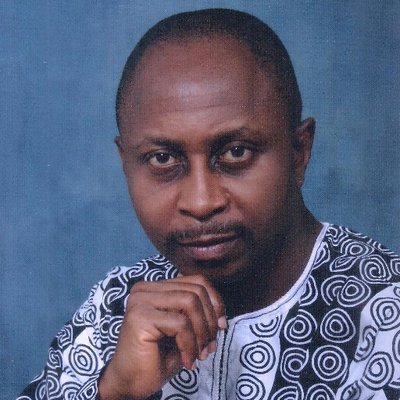
By Agbeze Ireke Kalu Onuma, AI-KO
There is a particular quality to the silence that has settled over Nigeria – not the silence of peace [we have none], nor the silence of surrender [we have not yet as a nation], but the silence of a people who have learned that speaking sometimes costs more than enduring. It is the silence of the woman in Kaduna, Kano, Calabar, Lagos, Aba, Ibadan, Jos or Akure who watches the price of garri double in three months and says nothing because she has said it all before, to neighbors who already know, to a government that already knows, but appears not to care, to a God she still trusts more than the state.
It is the silence of the young graduate in Owerri, Abak, Damaturu, Abeokuta, or Umuahia who has stopped applying for civil service jobs because he understands, without being told, that the list was written before the advertisement was published. It is the silence of the engineer in Port Harcourt who designs gas systems for foreign companies but cannot get his own street to have steady electricity, and who no longer mentions this contradiction because it has stopped feeling ironic and started feeling ordinary. This is the country we are becoming: a place where the most articulate thing many citizens can offer is the eloquence of their withdrawal, the precision of their…
The Architecture of Quiet Decay
Luke Kemp, in mapping the slow undoing of complex societies, returns repeatedly to a phenomenon he calls “the inversion of feedback” – the moment when a system stops receiving accurate information about itself and begins, instead, to receive only the information that confirms what its rulers wish to believe. It is one of the most dangerous transitions in the life of a political order, more dangerous than any single act of corruption, because it disables the very mechanism by which a society corrects course. A nation can survive bad leaders. It cannot easily survive leaders who do not know they are bad, surrounded by advisers who do not know they are flattering, governing institutions that no longer measure what is actually happening to the people they claim to serve. Nigeria has entered that phase, not by conscious decision but by accumulated habit, and the symptoms are everywhere for those willing to read them.
Consider the official statistics, which have become a genre of fiction so refined that they could be taught in writing workshops. Inflation is reported as a single national number, smoothed and seasonally adjusted, while the actual inflation experienced by a working family in Kaduna or Aba – the inflation of beans, of tomatoes, of school fees, uniform and other related needs, of a child’s malaria treatment – runs at a velocity the chart cannot capture.
Unemployment is reported through methodologies revised so frequently that comparison across years has become meaningless, and the revisions almost always move in the direction of a more flattering number. GDP growth is celebrated even when per capita income is collapsing, even when the population is growing faster than the economy, even when the growth is concentrated in extractive sectors that touch the lives of ordinary citizens only through the prices they push upward.
The data has been polished until it no longer reflects the country; it reflects only the desire of those who commissioned it to see a country they can defend. And so, when officials speak from podiums about “macroeconomic stability” and “positive trajectories,” they are not lying in the simple sense; they are speaking the truth of a parallel Nigeria, a Nigeria that exists only inside the spreadsheet, while the real Nigeria queues for kerosene and counts naira at the market and wonders what country these officials are describing.
The Citizen as Stranger in His Own Republic
There is a specific psychological condition that takes hold in a society where the official narrative has detached from lived experience, and Nigerians have begun to inhabit it fully. The condition is estrangement – not from the land, not from one another, but from the institutional language used to describe the country we live in. A trader in Aba hears the finance minister speak about “fiscal consolidation” and understands, correctly, that this means his customers will have less money next month.
A nurse in Yenagoa hears about “subsidy rationalization” and understands that her transport to work will cost more, that her patients will arrive sicker because they delayed coming, that her own salary will buy fewer of the things her children need. The vocabulary of the state and the vocabulary of the street have diverged so thoroughly that they now describe two different countries, and the citizen has learned to translate between them in real time, the way a colonized people once translated between the language of the administrator and the language of the home.
This estrangement is not merely linguistic; it is constitutional, in the deepest sense of that word. A republic, properly understood, is a thing held in common – *res publica*, the public thing – and its legitimacy depends on the citizen’s recognition of himself in its institutions, in its language, in its claims about itself. When that recognition fails, when the citizen looks at the state and sees a stranger speaking a stranger’s language about a country he does not live in, the bond that makes a republic possible begins to dissolve. What replaces it is not rebellion, at least not at first; what replaces it is internal exile. The citizen remains physically present, pays his taxes when he must, queues for his documents, votes when voting feels meaningful – but he has emigrated inwardly, withdrawn his moral investment, ceased to imagine the state as an extension of himself. He is a stranger in his own republic, and he has stopped expecting the republic to remember his name.
The Geography of Abandonment
To understand what has happened to Nigeria, one must walk the country, not read about it, because the geography of abandonment is now legible in the landscape itself. There are roads in the South-East that have not been resurfaced in a generation, roads where the asphalt has been replaced, in places, by red earth and rainwater and the prayers of drivers. There are federal hospitals in the North-West where doctors purchase their own gloves, where patients are asked to bring their own bedsheets, where the maternity ward has one functioning incubator and three babies who need it.
There are universities in the Middle Belt where lecturers have not been paid in months, where students study by torchlight, where the library catalogue ends in the year the donor program closed. There are villages in the North-East where the school building still stands but no teacher has come for two years, where the children gather anyway because their parents told them that gathering, even without a teacher, is what students do. There are creeks in the South-South where the fish have vanished and the women now sell sachet water to the men who once fished, the local economy reorganized around the absence of what used to sustain it.
The geography of abandonment is not random. It traces, with disturbing precision, the contours of political distance from the center, the lines of ethnic and religious arithmetic, the calculations of which votes are needed and which are taken for granted. It produces a country that is technically one nation but functionally several, a federation in which the federal presence is felt as extraction in some regions, as patronage in others, and as nothing at all in many.
A young man in Maiduguri who has watched his town rebuilt after Boko Haram and abandoned again to bandits, who has buried friends in two separate insurgencies, who has heard three presidents promise that this time will be different, has developed a clarity about the Nigerian state that the political class would prefer he did not possess. He has learned that the state arrives when it needs something from him and disappears when he needs something from it, and that this asymmetry is not a malfunction of the system but its operating principle. The state is not absent because it has failed; it is absent because absence, in his region, is the policy.
The Quiet Confiscation of the Future
There is a kind of theft that does not announce itself, that does not register on any ledger, that does not appear in any indictment, but that may be the largest robbery in Nigeria’s modern history: the quiet confiscation of the future from the young. It is happening in the visa queues at every embassy in Abuja and Lagos, where the most ambitious, the best educated, the most entrepreneurial young Nigerians wait for permission to take their talents elsewhere. It is happening in the universities, where the lecture halls are full but the laboratories are empty, where students graduate with degrees that no employer values and debts they cannot service.
It is happening in the small businesses that close before their second year because the cost of diesel has eaten the margin, because a regulatory officer demanded a payment that was not in the budget, because the foreign exchange needed to import a single component had become a fiction. It is happening every time a brilliant child in a public school in Sokoto or Zamfara is taught by an unqualified teacher from a faded textbook in a classroom without windows, and her possibility – the contribution she might have made, the problem she might have solved, the life she might have built – is quietly subtracted from the national total.
This confiscation does not appear in the budget because it is invisible to the accounting methods of the state, but its consequences will dominate the next thirty years of Nigerian life. A nation that loses its most capable citizens to emigration, its most curious minds to underfunded education, its most enterprising young people to a hostile business environment, is not merely poorer in the present; it is foreclosing on a future it has not yet had the dignity to imagine.
The Japanese, the Koreans, the Singaporeans understood, in their hours of poverty, that the wealth of a nation is finally the wealth of its people’s capacities, and they organized their states around that understanding. Nigeria has organized itself around a different premise – that the wealth of the nation is what can be extracted from beneath its soil – and the consequences of that premise are now visible in the queues at the embassies, in the empty laboratories, in the closed factories, in the brilliant young people who have learned that brilliance, in this country, is not a resource the state knows how to value.
The Boardroom Republic
There is a particular flavor of governance that has emerged in recent years, distinct from the kleptocracies of earlier decades and from the military regimes that preceded them, and it deserves its own name. Call it the boardroom republic – a mode of governing in which the country is administered as if it were a distressed asset acquired by a private equity fund, with citizens repositioned as cost centers, public goods reframed as inefficiencies, and the entire vocabulary of statecraft replaced by the language of restructuring. In the boardroom republic, subsidies are not removed because the people have been consulted and persuaded; they are removed because a presentation deck argued that removal would improve the fiscal indicators that matter to creditors.
In the boardroom republic, the central bank is run not as the steward of a national currency but as the desk of a foreign exchange operator, optimizing for a narrow set of metrics that are legible in international markets but illegible in the markets where ordinary Nigerians actually buy food. In the boardroom republic, ministers speak in the cadence of consultants, advisers speak in the cadence of bankers, and the language of citizenship – duty, dignity, the common good – is treated as sentimental clutter that has no place in the serious business of governing.
The deepest danger of the boardroom republic is not that it makes wrong decisions; it is that it makes decisions about a different country than the one it is governing. The presentation deck contains no provision for the woman in the village who walks four kilometers for water, because she does not appear in the deck. The optimization model assumes a labor market that responds to price signals, but it does not see the millions of Nigerians whose work is unwaged and unmeasured, whose households absorb every shock, whose informal economies are not deficiencies of the system but the system itself. When the boardroom republic congratulates itself on tough decisions, on hard reforms, on the discipline of austerity, it is congratulating itself for treatments delivered to a patient who was never actually examined. And the patient – the real Nigeria, the Nigeria of the markets and the okada riders and the small farmers and the schoolteachers – bears the side effects of medicines designed for a different body.
The Sacralization of the Personal and the Profanation of the Public
A society reveals what it has come to value by what it treats as sacred and what it treats as disposable, and Nigeria has executed an inversion in the past decade that deserves careful naming. The personal has been sacralized – the private gym hour, the morning routine, the curated wellness practice, the entrepreneurial hustle as identity – even as the public has been profaned. The shared spaces in which a citizenry encounters itself – the public school, the public hospital, the public park, the public library, the public transport, the public square – have been allowed to decay so thoroughly that the word “public” now carries, in many Nigerian ears, a connotation of inferiority, of last resort, of what one settles for when one has failed to escape it.
The middle class no longer aspires to better public schools; it aspires to private schools that make public schools unnecessary. It no longer fights for better public hospitals; it pays for private clinics or it travels abroad. It no longer demands functioning public transport; it buys cars and generators and security guards and drills its own borehole, building a private infrastructure to substitute for the public infrastructure the state has abandoned.
This privatization of survival is often described as resilience, and there is something admirable in it, but it is also a slow constitutional disaster. A society in which every household provides its own electricity, water, security, education, and healthcare is no longer a society in any meaningful sense; it is a collection of fortified compounds inhabited by people who happen to share a flag.
The bonds of common dependence that make a citizenry a citizenry – the recognition that we drink from the same tap, learn in the same classroom, are healed in the same ward, are protected by the same officer – have been severed, and what remains is a federation of private worlds bargaining with one another in the marketplace. The wealthy buy their way out of the consequences of state failure and lose interest in fixing the state; the middle class strains to imitate the wealthy; the poor inherit the ruins. And the public square, which a republic requires the way a body requires lungs, becomes a place that no one of consequence visits anymore, because everyone of consequence has built a private alternative.
The Sociology of Permission
A subtle change has occurred in the everyday relationship between Nigerian citizens and the state, and it can be detected in a single word that appears with growing frequency in conversations about ordinary life: “permission”. Citizens now speak about needing permission for things that, in a healthy republic, would not require permission at all. Permission to gather. Permission to discuss. Permission to publish. Permission to teach. Permission to register an organization. Permission to hold a memorial.
Permission to film a wedding near a government building. Permission to enter a market that has been cordoned off for reasons no one has been told. The word has migrated from the domain of the genuinely regulated – the licenses, the permits, the formal approvals – into the domain of the everyday, where it should have no business operating. And once a citizen begins to ask permission for things that are his by right, he has begun, without noticing, to live as a subject rather than a citizen, as a tenant in his own country rather than its co-owner.
The sociology of permission produces a particular kind of human being, one that older Nigerians sometimes recognize with a chill, because they remember encountering this human being under military rule. He is the citizen who hesitates before posting an opinion, who softens his sentences before sending them, who carries his identification everywhere because he has learned that confidence without paper is dangerous, who instructs his children to be invisible at checkpoints, who has internalized a habit of self-erasure so deep that he no longer notices it.
The military regime that produced this citizen has long since departed, but the citizen remains, and democracy has not yet figured out how to teach him to stand up straight again. Indeed, in the past several years, the elements of the political environment that once frightened him into his crouch have begun returning, in civilian dress, with civilian justifications, and his crouch has deepened. This is what the slow death of democratic culture looks like: not soldiers in the streets, but citizens who have remembered, before they were asked, how to make themselves small.
The Counter-Currents
And yet – and this matters more than the catalogue of decay – there are counter-currents in Nigeria that the catalogue cannot capture, currents that run beneath the official surface of the country and may yet prove stronger than what runs above. There is a generation of young Nigerians who have grown up entirely within the digital age, who have learned to organize themselves outside the structures of patronage, who built the protests of 2020 from a hashtag and a shared sense that something had to break. They have not gone away. They have grown older, more sophisticated, more patient, and they are doing the slower work now – building media organizations, running for local office, founding civic technology firms, training election observers, writing the policy briefs that no one in the boardroom republic reads but that are accumulating, slowly, into an alternative archive of how this country could be governed.
There are women across the country who are quietly rebuilding the social infrastructure that the state has abandoned, organizing cooperatives, running savings groups, teaching girls in spaces the formal education system cannot reach, holding together communities that the official statistics no longer count. There are journalists who continue to do the work despite the detentions, the lawsuits, the closed venues, and the calls from anonymous numbers in the middle of the night.
There are judges, in particular courts and on particular days, who issue rulings that surprise everyone with their courage, who remind the country that the bench has not entirely surrendered. There are traditional rulers, in places the constitution does not formally empower them, who still convene the disputes their communities cannot bring to the formal courts, who still hold the ritual ground on which a different kind of authority operates. There are pastors and imams who, when the cameras are not present, are saying things to their congregations that are far braver than what the political class will say in any chamber. The country is not only what is broken; it is also these counter-currents, and they are not minor, and they are not finished.
What a Renewal Would Actually Require
It is tempting, when a society is in the condition Nigeria is in, to indulge in fantasies of rescue – the right leader, the right party, the right election, the right international intervention – but the historical record on which Kemp draws is unsentimental about such fantasies. Societies do not renew themselves through the arrival of a savior; they renew themselves through the slow reconstruction of the institutions that distribute power, the feedback loops that correct error and the civic habits that turn a population into a citizenry. The work is undramatic, and it is mostly done by people whose names will not be remembered, and it takes longer than the news cycle and longer than a single political career, and it requires precisely the patience that an exhausted country finds hardest to muster.
A renewal would require, first, a restoration of feedback – institutions that genuinely measure what is happening in the country, statistics that are not shaped to flatter, public hearings that are not theater, oversight committees that are not rented. It would require, second, a re-pluralization of power – open primaries that are actually open, local governments that actually govern, courts whose rulings actually constrain, a press whose reporting actually circulates. It would require, third, a reinvestment in the public – schools that the children of legislators would attend without humiliation, hospitals that ministers would not bypass for foreign clinics, transport that the wealthy would find acceptable, security that protects everyone equally.
It would require, fourth, a reconstruction of the language of the state – a return to a vocabulary in which citizens recognize themselves, in which dignity and duty and the common good are not embarrassing words. And it would require, fifth, a generational covenant – an agreement, made one citizen at a time, that the future of this country is not someone else’s problem, that the boardroom republic will not be answered by emigration alone, that the work of becoming a country worth becoming has to be done by the people who are here.
The Country Inside the Citizen
There is, finally, a country inside the citizen that no decree can dissolve and no convention can choreograph, and it is in that interior country that the larger country will be saved or lost. It is the country that the schoolteacher in still believes in when she teaches her students well despite a salary that has not been raised in years. It is the country that the trader still believes in when she gives an honest price to a stranger because she was raised that an honest price is a kind of prayer.
It is the country that the soldier in Borno still believes in when he holds his position on a night when no reinforcement is coming and no one will know whether he held. It is the country that the nurse in Jos still believes in when she treats a patient whose family cannot pay because she remembers what a nurse is for. These interior commitments – undocumented, unmeasured, unrewarded – are the actual foundation on which any future Nigeria must be built, and they have not yet been exhausted, though they have been tested in ways that ought to shame those who tested them.
The country we are becoming is not yet decided, and the language of the question matters: we are “becoming”. which means the verb is unfinished, which means the noun is not yet fixed, which means the citizens whose work is not yet done are still the authors of what comes next. The shell can become a tomb, in which what was alive will be remembered as a cautionary tale told by other nations to their children. Or the shell can become a chrysalis, in which what is being remade is being remade slowly, painfully, mostly invisibly, by people who have refused to accept that the country they were born into is the country they must die in.
Which of these the shell becomes will not be decided by the rulers whose decisions fill the headlines; it will be decided by the cumulative weight of the choices made by ordinary citizens in ordinary moments – the teacher who teaches truthfully, the journalist who publishes carefully, the judge who rules courageously, the voter who votes thoughtfully, the parent who raises a child to expect dignity, the neighbor who refuses to look away. The country we are becoming is, in the end, the country we are choosing to become, one small unwitnessed act at a time, and the choice is still ours, though the hour is later than we have allowed ourselves to admit.