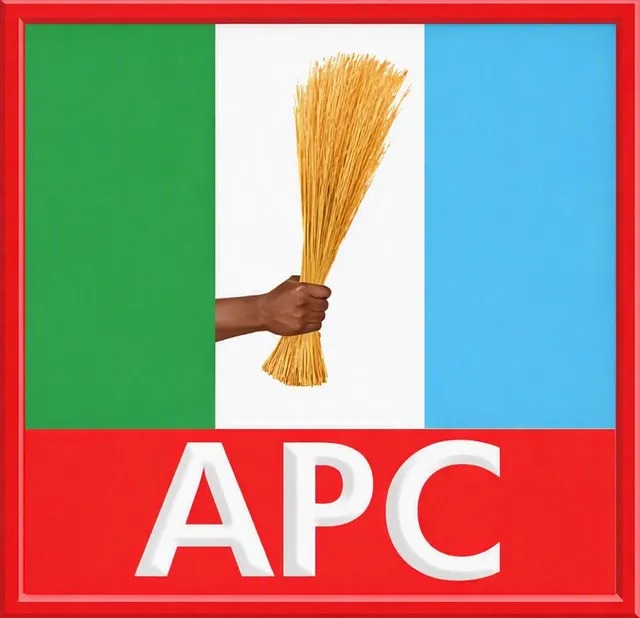
From the promise of Change to the arithmetic of ruin – twelve years of a party that borrowed an ancient symbol, sold it as salvation, and swept nothing but the nation’s hope into the gutter
By Agbeze Ireke Kalu Onuma, AI-KO
Pick up a broom.
Feel the weight of it. The roughness of the handle, worn smooth in some places by use. The stiff bristles at the base, bound together with something tough enough to hold them in formation. In your grandmother’s compound, this object was sacred in the most domestic sense of the word. She swept at dawn before the household woke. She swept the yard before visitors arrived. She swept after a death, to clear the house of lingering sorrow. In Yoruba tradition, the broom is ose – a tool of purification, of boundary-marking, of the assertion that this space belongs to the living and the clean. An Igbo elder I know once told me that in his village, a broom left lying against the wall after nightfall was left there deliberately – not negligence but instruction to whatever dark thing might wander in: this house is swept, this house is ordered, this house is not for you.
In many African cultures, the broom carries deep spiritual weight. It is used in…
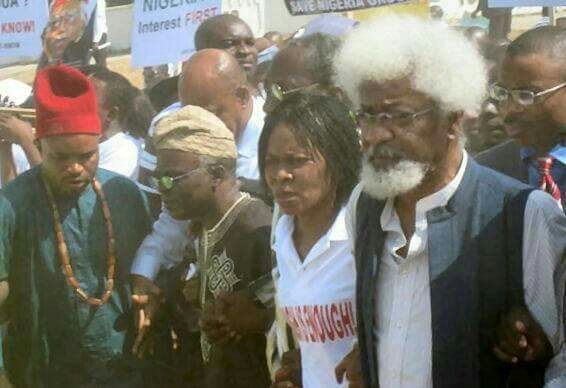
Now imagine the scene in Lagos, in 2014 and early 2015. Rallies the size of which Nigeria had not seen. Rivers of people, hundreds of thousands in Tafawa Balewa Square and in the stadium in Port Harcourt and in the grounds in Kano, all of them holding brooms. Holding them aloft. Waving them. Chanting. A forest of brooms against the Nigerian sky, every one of them a pledge: this country will be swept clean. Change is coming. The rot will be removed. The accumulated corruption of sixteen unbroken years of PDP rule – the looting, the impunity, the stolen mandates, the Chibok girls still missing, the Boko Haram caliphate eating through the Northeast, the economy running on borrowed time and borrowed money – all of it will be swept away. The broom said so. Nigeria believed the broom.
I want to ask one question, and I want this essay to be my attempt at an honest answer. That question is: did the broom ever actually sweep? Not in the metaphor. In the reality. Did the All Progressives Congress, which came to power on that image of radical civic cleaning, actually clean anything? Did the promise of Change – one word, one syllable, printed on shirts and caps and banners across the length of this country, offered to a desperate people as the most reliable guarantee that tomorrow would be different from yesterday – did it mean what the people who voted for it thought it meant?
Or was the broom, from the very first moment it was raised above those rally crowds, already a prop? Already a piece of theater, staged by people who knew exactly what they were doing and had decided, with the cold precision of those who have always understood that Nigeria’s people are too hungry and too hopeful to look carefully at what is being offered to them, to offer them a symbol in place of a solution?
I believe I know the answer. I have believed it for years, and the evidence has been building so relentlessly, so pitilessly, that I can no longer find any formulation of charitable doubt sufficient to hold it back. The broom was a con. The Change was a slogan. And what followed was not the sweeping clean of Nigeria’s political house but something far worse: the demonstration that the same hands which had built the rot could pick up the broom, hold it up for the cameras, sweep nothing at all, and govern anyway, for twelve years, with barely any more accountability than the party they replaced.
February 6, 2013: The Merger and the Myth
The All Progressives Congress was formally unveiled on February 6, 2013, in a press briefing by Chief Tom Ikimi – a one-time Foreign Minister under Abacha, a man whose presence at the founding of a party promising clean governance should have been, and largely was, the first red flag that serious observers noted and most Nigerians ignored. Four parties merged to form it: the Action Congress of Nigeria, the Congress for Progressive Change, the All Nigeria Peoples Party, and a faction of the All Progressives Grand Alliance. Four separate party bureaucracies, four separate patronage networks, four separate sets of political godfathers and their interests, fused into a single vehicle under the banner of Change.
The broom came from the ACN. It had been the symbol of Bola Tinubu’s political family – the Lagos political machine that had dominated the South-West since the 2003 elections, that had built one of the most formidable political organizations in Nigeria’s democratic history, organized ward by ward, local government by local government, utterly ruthless in primaries and elections and the management of political loyalty. When the merger committee met at Tom Ikimi’s residence in Maitama to choose a symbol for the new party, the broom was the consensus choice.
As Premium Times reported at the time, those who favored the broom argued that it was “generally more acceptable” than the ANPP’s maize or the CPC’s pen. More acceptable. Not more meaningful. Not more philosophically coherent. More acceptable. The broom was chosen as a merger symbol because it polled better in the room, which tells you a great deal about the intellectual seriousness with which the founding documents of the new Nigeria were being assembled.
What the broom actually represented, in the hands of these founding fathers, was not the sweep of the grandmother’s compound but the sweep of a political campaign machine. The ACN had used it to sweep the South-West. The combined merger used it to sweep the North and South together, at least in the imagination of the rally crowds, into a unified front against PDP dominance. The broom was always, from day one, a symbol designed to win power rather than to use it. The distinction matters enormously.
A symbol designed to win power says: look how clean things will be when we have swept the other side away. A symbol designed to use power says: look what we have built with our time in office. The APC never made the transition from the first to the second. Twelve years later, it is still, in its bones, a campaign party – a machine designed to acquire the state, not to serve it.
What Brooms Know That This Party Never Learned
I want to stay with the broom image a little longer, because I think it has more to teach us than the politicians who borrowed it ever intended.
A broom, to work, must be held the right way. It must make contact with the floor. It must be moved in a specific direction, consistently, with appropriate force. It cannot sweep if it is held above the ground for the cameras. It cannot clean a house if the person wielding it is standing in the doorway talking about sweeping while the dirt accumulates behind them. And here is the detail that the broom’s Yoruba custodians know that the APC’s symbol-borrowers apparently did not: in Yoruba tradition, it is considered a bad omen for the broom to stand erect. The broom must lie down.
When the broom stands erect, the tradition says, it is available to evil spirits for their work. During the 2015 campaign rallies, brooms were raised above heads, waved in the air, thrust skyward in hundreds of thousands of outstretched arms. In the cultural tradition from which that symbol was borrowed, every one of those raised brooms was a bad omen. A tool delivered into the hands of those who should not have it. A cleansing instrument inverted into its opposite.
I am not making a supernatural argument. I am making a cultural one. The APC borrowed one of the most resonant domestic and spiritual symbols in Nigerian life – a symbol freighted with generations of meaning about purity, order, the defense of domestic space against the forces of entropy and darkness – and it did not understand what it had borrowed. It understood that the image was powerful. It did not understand that the image had obligations. A broom promises to sweep. The sweeping is the contract. And this party has been in breach of that contract for twelve years.
2015 – 2023: “Baba Go Slow” and the Sixty-Two Broken Promises
Muhammadu Buhari arrived in Aso Rock on May 29, 2015, as the most eagerly awaited Nigerian president since Murtala Muhammed in 1975. The comparison was not accidental. Like Murtala, Buhari projected the image of a man of personal austerity, incorruptible by the standards of the political class around him, genuinely offended by the corruption of the system he had been brought in to replace. Like Murtala, he was a Northerner arriving to a presidency that had been soiled by the government of his predecessor. And like Murtala, the hope invested in him was enormous, a product of the desperate human need to believe that the next person will be different from the last.
The first sign that something was deeply wrong arrived not in a policy failure or a security catastrophe but in a silence. Buhari won the election on March 28. He was inaugurated on May 29. He did not announce a cabinet until November. Five months of governance without a cabinet – without the ministers who would translate the Change mandate into actual governance – because the president who had campaigned on urgency was in no particular hurry to govern. Nigeria labeled him Baba Go Slow. The name stuck because the name was accurate. For eight years, with all of the state’s resources and all of the mandate’s political capital at his disposal, Buhari governed with the administrative urgency of a man who had already won and saw no particular reason to rush.
The APC had campaigned on three specific promises, stated so clearly and so often during the 2015 campaign that they became the party’s implicit contract with the electorate: tackle insecurity, end corruption, fix the economy. Mandate Protection Vanguard identified sixty-two specific campaign promises made by Buhari and the APC in 2015 and documented, with uncomfortable precision, the record on each one. Three million jobs per year. A ban on government officials traveling abroad for medical treatment (a promise that became notorious when Buhari himself spent months in London for medical treatment at public expense). State police. Gender policy. Full declaration of assets. Public sector reform. The list was specific and the outcomes were measurable and the measurements were damning.
On insecurity: the Boko Haram caliphate in the Northeast was degraded. This is real, and it deserves acknowledgment. The territorial caliphate that had held swathes of Borno and Yobe was dismantled. But ISWAP emerged as a more sophisticated and durable successor. And the security crisis, far from being swept away, geographically metastasized. Banditry exploded across the Northwest – an entirely new front, with entirely new armed groups, kidnapping at industrial scale, killing at rates that ACLED would document as twenty-one deaths per day across Buhari’s tenure, sixty-two thousand lives across eight years. The broom that was supposed to sweep Nigeria clean of insecurity instead spread the dirt into new rooms.
On corruption: Nigeria’s Corruption Perceptions Index ranking did not improve under Buhari by any measurable standard. Anti-corruption prosecutions targeted opponents of the administration with a consistency that made the selectivity unmistakable. Meanwhile, figures within the APC itself accumulated wealth and power with an ostentation that made the PDP’s excesses look, if not modest, then at least less hypocritical – since the PDP had never campaigned on anti-corruption as its primary mandate. Buhari’s government had. The distance between the promise and the reality was therefore more than the distance between corruption and cleanliness. It was the distance between what the broom advertised and what it actually swept.
On the economy: the naira, which had traded at 197 to the dollar when Buhari took office in 2015, was exchanging at over 460 to the dollar when he left in 2023. Inflation had climbed steadily. Unemployment reached record levels. The two recessions that Nigeria experienced during Buhari’s tenure – in 2016 and 2020 – were managed with the economic coherence of a government that had no consensus theory of what was wrong and therefore no coherent plan for making it right. The Change that had been promised was, in economic terms, a change in the direction of deterioration. Nigeria got worse faster under the party of Change than it had under the party the voters had been swept along to replace.
I want to be careful here, because I am not making the argument that the PDP was equivalent to the APC, or that Jonathan would have been better than Buhari. I cannot know that, and it is not the argument I am making. I am making a simpler and more devastating argument: the APC made specific, measurable promises. Those promises constituted the explicit case for its mandate. And it failed to keep them, substantially and systematically, across eight years, and then ran a successor candidate who used the same party platform to seek another term rather than asking for forgiveness for the one just completed. The broom swept nothing. And then the broom asked to sweep some more.
2019: “Next Level” and the Audacity of Asking Again
The 2019 presidential election campaign was one of the most politically audacious exercises in recent Nigerian history, and I use audacious without admiration. Muhammadu Buhari and the APC returned to the Nigerian electorate having presided over two economic recessions, a security crisis that had expanded rather than contracted, and a government that had taken five months to form a cabinet – and they asked for four more years. Not with an apology. Not with an acknowledgment of what had not been done. With a new slogan: Next Level.
“Change” had been aspirational. It had carried within it the implicit admission that the present was wrong and needed to be different. But “Next Level” was something else entirely. Next Level is the language of achievement building on achievement, of a journey that has already begun successfully and is now advancing to its next stage. Next Level said, in effect: Change has already worked; now let us accelerate it. This was the language of a party that had decided to govern its own narrative rather than its own record, and that had calculated, correctly as it turned out, that the disorganization of the opposition and the loyalty of its core constituencies would be sufficient to survive an election in which the evidence of performance pointed against it.
Buhari won 2019 with 15.1 million votes against Atiku Abubakar’s 11.3 million. Turnout was 34.75 percent – a record low at the time, with 55 million registered voters absent. The party that swept its way to power on the energy of the broom rallies had, four years into its tenure, produced an electorate so exhausted by the gap between promise and reality that barely a third of registered voters considered the exercise worth their time. The broom had not swept the voter suppression. It had, in a sense, created it. The discouragement was the product of the disappointment, and the disappointment was the direct and measurable consequence of the broken contract.
2023: The Broom Passes to a New Hand. The Dirt Multiplies.
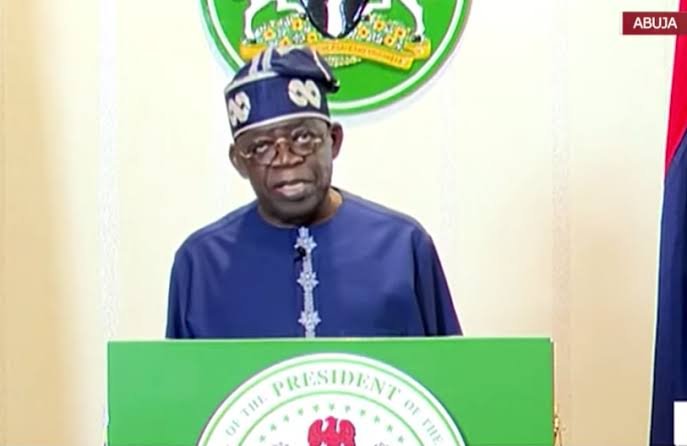
On May 29, 2023 – the same date, twenty-four years earlier, that civilian rule had been inaugurated and the hope of the Fourth Republic planted – Bola Ahmed Tinubu stood at Eagle Square in Abuja and delivered the most consequential sentence of his political career. Five words. “Subsidy is gone.” Full stop.
The crowd that heard it had not been warned. The economic analysts who would spend the next days trying to model the inflationary consequences had not been consulted in any public way. The social protection infrastructure that experts had unanimously agreed was the prerequisite for any viable subsidy removal had not been built. The country that had just elected a new president on the APC platform was informed, in five words, that the price of fuel – the single commodity on which Nigeria’s transport and logistics and food supply and cost of living all depend – was about to rise dramatically, immediately, without a transition plan, without a cushion for the poor, without the transparency about where the savings would go that every credible voice in Nigerian economics had argued was essential.
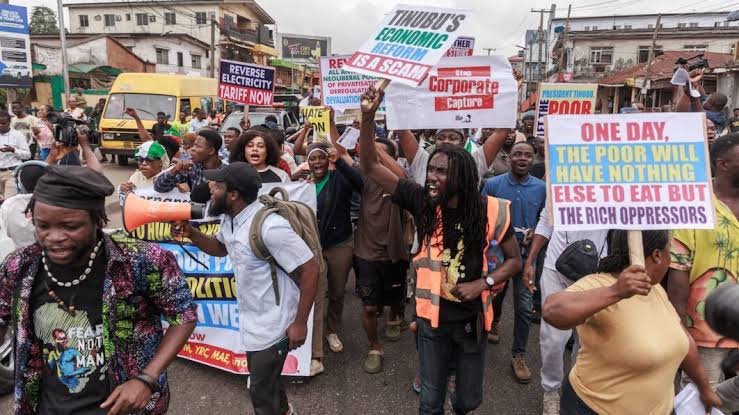
Fuel prices surged from N185 per litre to over N1,500 per litre – an increase of more than 700 percent in the cost of the commodity on which the daily survival of Nigeria’s majority depends. The naira, which had already been weakened under Buhari, collapsed further: from 460 to the dollar to over 1,700 to the dollar within the first year of the Tinubu administration. Inflation climbed from 22.2 percent to 34.8 percent and beyond. Food inflation exceeded 40 percent. The price of a crate of eggs, which had sold for N600 in 2015 when the APC first took power, was by 2024 selling for between N5,000 and N7,000 in many markets. The minimum wage, increased after strike action from N30,000 to N70,000, was rendered largely meaningless by the inflation that was consuming purchasing power faster than any wage increase could replenish it.
The poverty numbers are not rhetoric. They are documented in a study presented at a stakeholders’ dialogue in Abuja: the national poverty headcount rose sharply from approximately 49.8 percent to roughly 63 percent following the subsidy removal. The World Bank, in a projection that the APC government did not dispute, forecast that 79 percent of Nigerians – in a country of 230 million people, that is over 180 million human beings – would face poverty. The World Food Programme estimated that 35 million Nigerians faced hunger. These are not opposition statistics. They are the output of institutions with no partisan stake in Nigerian politics, measuring the condition of a country after twelve years of governance by the party of Change.
And the 20 trillion naira that the government claimed had been saved through subsidy removal? The Allied People’s Movement, among others, formally demanded in July 2026 that the government provide a comprehensive, independently verifiable account of how those trillions had been spent. The demand was met with the response that has characterized APC governance since 2015: the claim that progress is being made, the invocation of macroeconomic indicators that the average Nigerian citizen cannot eat, and the continuation of a governing style that prioritizes the management of narrative over the delivery of outcomes. Human Rights Watch documented that more than a year after the subsidy removal, there had been “no transparency regarding how much money has been saved or how it is being utilized.” The broom had swept the money into the house. No one was sure where the money had been put.
The Broom and the Hand That Holds It: The Personnel of the Con
I want to say something about the individuals who have been holding this broom, because I think the discussion of the APC’s governance failures too often remains at the level of the abstract – the system, the structure, the party – and avoids the more uncomfortable truth that systems are operated by specific people who made specific choices and whom specific accountability ought to reach.
Tom Ikimi, who unveiled the APC at that February 2013 press conference, was a former Foreign Minister under the Abacha regime – a military government whose brutality and corruption are so well-documented that no Nigerian who was alive in the 1990s needs them rehearsed. Ikimi’s participation in the founding of a party promising to sweep away corruption was not questioned by the party’s founders, because the party’s founders were not, at their core, building a clean governance movement. They were building a winning electoral coalition. The difference is total.
Bola Tinubu – who is now president, who now holds the broom – governed Lagos for eight years between 1999 and 2007 and built a political machine of extraordinary organizational sophistication and, by many accounts, equally extraordinary opacity. His assets declaration, when he ran for president in 2023, sparked the kind of scrutiny that his political organisation had spent decades making difficult to conduct. The court case over his academic credentials. The questions about his $460,000 Chicago drug prosecution settlement in 1993. These are documented matters, not invention. A man whose own biography required this level of forensic attention to establish was handed the broom of Change and tasked with sweeping Nigeria clean. The broom that he wielded had already been used. It knew what it was for.
And then there is the most important cast of all: the governors and senators and party chieftains who have cycled through the APC’s structures since 2013, many of whom came from the PDP and brought their networks and their practices with them. In November 2013, five serving PDP governors, along with Atiku Abubakar, defected to the APC – a move that was celebrated by APC strategists as the coalition expanding. What it actually represented was the governing philosophy of the PDP colonizing the body of the APC’s opposition. The broom was picked up by hands that had never learned to sweep honestly, and the coalition was between people who agreed on power, not people who agreed on governance. The broom’s bristles, from that moment, were directed at winning rather than cleaning.
What the Broom Actually Swept: An Inventory of the Real Losses
If the broom did not sweep the corruption, the insecurity, the economic dysfunction, the governance failures that it promised to remove, what did it sweep? I believe it swept several things, and naming them is essential to an honest accounting.
First, it swept the opposition. The PDP’s sixteen-year dominance was broken in 2015, and this is a real achievement of the APC’s electoral strategy. But breaking a party’s grip on power is not the same as replacing it with something better. The APC replaced PDP governance with APC governance. The difference, measured by the data, is that the country is in worse condition today than when the replacement was made. The dirt of the PDP was swept away. The floor was immediately covered with different dirt. The sweeping was real. The cleaning was not.
Second, it swept the hope. The 2015 election generated a civic energy that was genuine and that produced the most meaningful democratic moment in the Fourth Republic’s history: a peaceful transfer of power between parties, Jonathan’s concession, the demonstration that an incumbent could be voted out. That energy was the most valuable resource Nigerian democracy had generated in its first sixteen years. The APC received that resource as a mandate and spent twelve years proving that receiving it was the last thing they were good at. By 2023, voter turnout had collapsed to 26.72 percent – the lowest in the Republic’s history. The civic energy of 2015 had been swept, by the governance failures of 2015 to 2023, into the corner where exhausted hope goes to die.
Third, and most quietly devastating, the broom swept the idea of the principled opposition. Before the APC, Nigerian opposition politics – fragmented, underfunded, regionally constrained – had at least maintained some claim to a different vision. The merger that created the APC was a strategic coalition, not an ideological one. When the coalition won, and then governed as it governed, it made credible the argument that there is no meaningful difference between the parties in power, that changing the party in office changes only the letterhead on which the same practices are authorized. That cynicism – that deeply corrosive, structurally damaging conviction that it does not matter who governs because they will all govern the same way – is the APC’s most durable legacy. It is what the broom swept into Nigerian political culture. And it has been used, since 2015, to justify the absence of the 68 million registered voters who did not show up in 2023.
When the Broom Turned Inward: The Party’s War Against Itself
No essay about the APC is complete without an account of what the party did to itself, because the APC’s internal history is perhaps the most revelatory evidence of its fundamental nature.
The party has, since its founding, operated with the internal coherence of a temporary alliance of interest groups rather than a political organization with shared principles. Its history is a catalogue of crises, primary rigging accusations, court challenges, internal coups, mass defections, and reconstitutions so frequent that its membership records read less like a political party’s register and more like a revolving door in an Abuja office building.
Adams Oshiomhole was elected party chairman and spent his tenure fighting court battles over his own legitimacy. Governors were suspended, recalled, re-admitted. Senators crossed the floor and returned. The very candidates the party produced through its internal processes – processes that were documented by independent observers as among the least credible in Nigerian democratic history – sometimes went to court to challenge those processes immediately after benefiting from them.
In 2019, Tinubu and Buhari – the two most powerful figures in the APC, the man who claimed strategic credit for the party’s 2015 victory and the man who had been its presidential candidate – fell into a barely disguised cold war that played out in the press for years, each side briefing against the other, each side claiming the APC’s soul while demonstrating that neither had any particular interest in its stated principles. By 2022, Tinubu was publicly and pointedly distancing himself from Buhari’s record on the campaign trail, describing the state of the country in terms that, had they come from an opposition politician, would have been called alarming. They came from the man who had been a central figure in the party that created those conditions. The broom had turned on its own user and swept at nothing, while the country watched.
The Anatomy of the Con: How It Was Sold and Why It Worked
I have used the word con, and I want to be precise about what I mean by it, because the word carries implications of deliberate deception that I think apply, but not uniformly to everyone involved.
The Nigerians who waved brooms at the rallies in 2015 were not conned because they were stupid. They were conned because they were desperate, and desperation is the most powerful of all sales environments. Sixteen years of PDP misrule had produced a country in genuine crisis: Boko Haram holding territory, the economy beginning to buckle, corruption so brazen and so accepted that it had ceased to be news, a president in Goodluck Jonathan who was, as Al Jazeera’s own coverage noted, described by critics as better suited to his previous life as a zoology lecturer. Into this crisis walked a man with a military record, a reputation for personal austerity, and the image of a broom. The sell wrote itself.
The con worked because it exploited the genuine human belief that the instrument of change and the change itself are the same thing. The broom is change. The party with the broom will change things. This is a logical fallacy so common in politics, so deeply embedded in the way human beings process political choice, that no political system anywhere has fully solved it. We vote for symbols. We vote for personalities. We vote for stories. And the APC, in 2015, had a better symbol, a more compelling personality, and a more urgent story than the PDP could offer after sixteen years in power. It deserved to win that election on those terms. What it did not deserve was the conflation, by itself and by its supporters, of winning with governing, of sweeping the opposition away with sweeping the country clean.
The con deepened in 2019 with Next Level, because by 2019 the evidence was in and the party chose to suppress it rather than reckon with it. And it became most complete in 2023, when the APC ran a candidate who had been central to everything that had happened in the preceding eight years, on the same platform, with a new slogan – Renewed Hope – that required Nigerians to conclude that the party that had given them Change and then Next Level was now offering something different called Hope, without having explained what had gone wrong with the first two offerings or provided any structural reason to believe the third would be different. Renewed Hope is what you say when Change failed. It is the product of the con turning on itself and having to generate new packaging for the same content. The broom was still there. It still swept nothing.
What I Believe Must Now Be Said: An Accounting That Cannot Be Deferred
In twelve years, the APC has governed Nigeria under three slogans – Change, Next Level, Renewed Hope – and has produced a country that is measurably, documentably, irreversibly in worse condition than the one it received in 2015.
The naira went from 197 to the dollar to over 1,700 to the dollar. Inflation went from single digits to 34 percent and above. The poverty headcount climbed from under 50 percent to an estimated 63 percent immediately after the subsidy removal, on its way toward the World Bank’s 79 percent projection. Security deteriorated so severely that ACLED’s daily death toll from political and communal violence climbed to thirty under Tinubu – the highest average across any administration of the Fourth Republic.
The Transparency International Corruption Perceptions Index, which Nigeria’s government does not control and cannot adjust by decree, shows no improvement across the APC’s entire tenure. The fuel that cost N185 per litre on Inauguration Day 2023 costs over N1,500 per litre today. The ₦300 billion presidential jet was purchased while comprehensive cancer centers remained unbuilt. The 20 trillion naira in claimed subsidy savings remains unaccounted for.
These are not the statistics of a government that swept anything clean. They are the statistics of a government that picked up the broom, held it at the right angle for the cameras, and then used it to sweep the public’s money and attention and patience into a corner where it could not be recovered. The Change that was promised was not the change that was delivered. The broom that was raised above those millions of hopeful hands at the 2015 rallies did not sweep the house. It decorated the slogan.
What the Grandmother Knew That the Politicians Did Not
Return, one more time, to my grandmother’s compound. The broom she swept with every dawn was not a symbol. It was a practice. The clean floor was not a promise made at a rally. It was a result produced by a specific action, repeated consistently, by someone who understood that the maintenance of order is not an event but a discipline. She did not sweep once and declare the compound clean. She swept every day, because every day produces new dust, new leaves from the guava tree, new fragments of the previous day’s life that must be gathered and removed to keep the space fit for the living.
Governance is like this. The fight against corruption is not an event – a single dramatic prosecution, a single high-profile conviction that demonstrates seriousness and deters others. It is a discipline, practiced daily, through the patient building of institutions that make corruption costly and transparency automatic. The improvement of a country’s economic life is not a campaign slogan – it is the accumulated output of thousands of policy decisions, made consistently, with the welfare of the majority as the operative principle rather than the convenience of those in power. Security is not a press release – it is the result of investment in policing, in intelligence, in economic opportunity for the young men who would otherwise be recruited into the armed groups that carry out the killing.
The APC offered the broom. It did not offer the discipline. It won power and then governed as it governed, and when its governance produced suffering rather than relief it offered a new slogan and asked to keep governing. The grandmother would recognize what happened immediately, because the grandmother knows that a broom left unused is just a stick with bristles – a piece of wood with no purpose, decorating a corner while the dust accumulates.
What 2027 Must Demand: Beyond the Symbol, Toward the Account
The 2027 election is approaching. The APC will be on the ballot. Bola Tinubu, who took the broom from Buhari’s hand and used it to sweep five words into the national conversation that changed every Nigerian’s daily reality, will almost certainly be seeking a second term. And the question that Nigeria faces – that I believe Nigeria must face with more honesty and more methodological precision than it has faced it before – is this: what does accountability look like for a party with this record?
Not accountability as punishment. Not accountability as revenge. Accountability as reckoning: the insistence that before any political party – this one or any other – is given another mandate, it must account for the previous one. Not in slogans. In numbers. In specific answers to specific questions. Where did the 20 trillion naira in subsidy savings go? What is the inflation rate today, and what was it when you took office, and what do you say about the difference?
What is the poverty rate today, and what was it when you took office, and why should the direction of travel under your government be continued? What has happened to the security situation, measured not in press releases about military operations but in the daily death toll that independent monitors have documented? What, specifically, is the plan for the next four years, and why is that plan different in kind from the plans that preceded it and that produced what is now measurable in the lives of 220 million people?
These are not radical demands. They are the minimum requirements of democratic accountability. They are what the electorate in any functioning democracy expects of its government at the end of a mandate. They are what the broom promised when it was first raised at those rallies in 2015. And they are what the APC has, across twelve years and three slogans, consistently failed to deliver.
I want to end where I began: with the broom in the hand, with the weight of it, with what it promises and what it owes.
In Yoruba culture, the broom that is raised above the head is an omen. In the politics of the Fourth Republic, the broom that was raised above a million heads in the campaigns of 2015 turned out to be an omen in the same direction – not of the cleansing that was promised but of the inversion of everything that cleaning means. The broom swept the hope. It swept the faith. It swept the energy of the most engaged civic moment in a generation into the storage room of exhaustion and cynicism where it has been sitting ever since, producing the lowest voter turnout in the Republic’s history, while the political class that the broom’s rallying cry was supposed to replace continues to govern, in new garments, with new slogans, and the same unswept floor.
The con was not in the broom itself. The con was in the claim that the broom had swept when it had not, that Change had come when it had not, that the Next Level was upward when it was not, that Hope was renewed when what was renewed was only the packaging of the same broken promise.
Nigeria does not need a new broom. It needs a reckoning with what happened to the last one. It needs citizens who will stand in the polling unit and refuse to be handed another symbol in place of an account. It needs voters who will ask not what the party promises to do but what it actually did. And it needs, above all, the kind of civic maturity that can hold a broom, look at it clearly, and say: this is a beautiful object, this is a sacred symbol, this is something that in the right hands does real and necessary work. And these are not the right hands. And the house is still dirty. And I know the difference.
The broom sweeps no more. The question is whether it ever did. And what I know, after twelve years of watching, is that whether or not the broom ever swept, the dust is still here, the floors are still filthy, and the people who were paid to clean are still in the house.
Sources and References
- The Nation – The Traditional, Spiritual Significance of Broom
- The Hope Newspaper – Use of Broom and Its Symbolic Values
- Britannica – All Progressives Congress
- Premium Times – APC May Adopt ACN Broom Symbol (2013)
- Channels TV – APC Adopts New Party Logo (2013)
- Medium – APC Nigeria: History and Founding Fathers
- Vanguard – APC: A Change from Broom to Baton
- Al Jazeera – Squandered Goodwill: How Buhari Failed Nigeria a Second Time
- BusinessDay – Government by Intentions: How Buhari’s Failed Promises Ruined Lives
- Dataphyte – Facts Contradict Buhari’s Claim of Fulfilling 2015 Election Promises
- Modern Ghana – Where Is the Change APC Promised Nigerians for Almost a Decade?
- Afrobarometer – Nigerians Say Country Is Headed in Wrong Direction, Oppose Fuel Subsidy Removal
- Human Rights Watch – Hope or Hardship for Nigeria? Tinubu’s Economic Reforms and Their Fallout
- Punch – Account for Money Saved from Fuel Subsidy Removal, APM Tells Tinubu
- Leadership – Poverty Debate: ADC Tackles APC, Insists Tinubu’s Govt Caused Hardship
- Peoples’ Gazette – Three Years of Reform, Three Years of Hardship
- Punch – Tinubu’s Two-Year Review Stirs Fresh Political Firestorm
- International Socialist Alternative – Tinubu’s Anti-Worker Economic Reforms
- Pan African Review – Subsidy Removal, Debt Traps, and Nigeria’s 2023 Economic Reforms
- ACLED – Nigeria Conflict Data
- The Oasis Reporters – Symbolism: The Spirit of Witchcraft and APC’s Choice of the Broom
About the Author
Agbeze Ireke Kalu Onuma, who writes under the pen name AI-KO, is a Nigerian writer, analyst, and public intellectual based in Lagos. His work spans political history, governance analysis, security studies, theology, and narrative nonfiction, including the long-form series The Country We Are Becoming and Combing the Dust, published on his Medium page at medium.com/@iagbeze. He writes to hold power accountable through the precision of argument and the force of prose, in the conviction that rigorous civic writing is itself a form of participation. Correspondence may be directed to aiko.writes2424@gmail.com