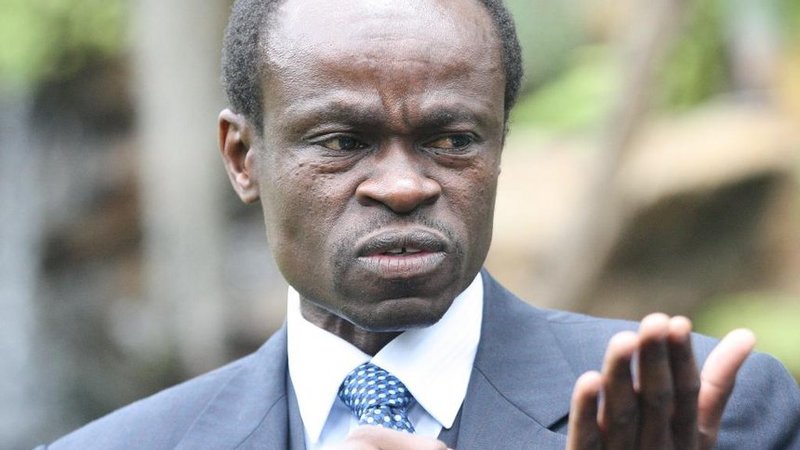
Renowned Kenyan Scholar, Lawyer and Pan-Africanist, Prof. Patrick Lumumba has revealed electricity as the major obstacle to industrialisation in Nigeria.
Prof. Lumumba revealed this as a guest speaker at the Delta State Economic and Investment Summit in Asaba on Monday.
Lumumba described the summit, that held with the theme, “Harnessing Our Strengths, Unlocking Our Potential”, as a step toward building a stronger economy, not only for Delta but for Nigeria and Africa as a whole.
While speaking on the major obstacle to industrialisation in Nigeria, he urged the Delta State government and the federal government to look beyond oil and embrace innovation, research, energy development and stronger African partnerships as pathways to sustainable growth.
“While Africa often boasts about its population of over 1.4 billion people, the real question is how the continent is harnessing that huge population for development.
“We are quick to say that Africa has 1.4 billion people but what are we doing with that population? Many young Africans are risking their lives trying to cross into Europe because opportunities are lacking at home,” he said.
Lumumba, nevertheless, lauded the Delta State government for identifying its strengths in oil, agriculture, minerals, the blue economy and other sectors, stressing that true development would depend on the effective management of those resources.
He urged the state and Nigeria to learn from global best practices, saying that Norway’s successful management of oil wealth was through a sovereign wealth fund.
“You are one of the leading oil-producing states in Nigeria. The question is not whether you have resources but how you use those resources to secure the future,” he said.
The scholar said that Delta’s economy was larger than that of more than 20 African countries, adding that such enormous potential should translate into higher living standards and economic prosperity.
He urged the country’s leaders to focus on sectors that would define the future, including technology, artificial intelligence, agriculture, pharmaceuticals and the blue economy.
Lumumba, however, said that Africa remained largely dependent on foreign technology and innovation, including artificial intelligence, and called for greater investment in local knowledge and research.
“The world is talking about artificial intelligence but Africans must ask themselves who controls the technology. We cannot depend entirely on others for our future,” he said.
He said it is time for Africa to harness potentials in its Continental Free Trade Area, saying that Africans must take ownership of the initiative and stop relying on foreign experts to define its economic future.
According to Lumumba, African countries should also begin to see fellow Africans as investors rather than looking only to Europe, Asia and America for investments.
“Our investors are not only in China, Brazil or Europe. Africans themselves have the financial and intellectual capacity to invest in Africa.”
He said that through the Pan-African Investment Movement, other stakeholders and him had been encouraging Africans to pool resources and invest across the continent.
He urged Delta government to attract investors from other African countries, including Kenya, Ghana, Sudan, Ethiopia, Morocco and Egypt to build a stronger intra-African investments and create more balanced and mutually beneficial partnerships with the rest of the world.
“Africa’s development efforts will remain limited unless there is greater regional integration, including easier movement of people, goods and services across the continent,” he said.
He said that Nigeria, as Africa’s largest economy, should champion policies that would make travel, trade and investments easier for Africans.
“I look forward to a time when an African investor can travel from Ethiopia to Asaba without unnecessary barriers. Africa must become more connected if we are to compete globally,” he said.
Lumumba commended Gov. Sheriff Oborevwori’s development efforts but urged him to ensure that Delta’s progress inspired other states and influenced national policies.
He also urged the state government to pay greater attention to young people, education, research and innovation.
“The state should look into equipping university graduates with relevant skills and invest more in research and development.
“Our universities must not only produce graduates; they must produce ideas and research that solve problems in agriculture, energy, industry and other sectors,” he said.
The guest speaker identified energy as one of the most critical foundations for development in the country, adding that countries with reliable electricity have greater industrial competitiveness.
He said: “Nigeria’s electricity generation is estimated at about 5,000 megawatts, with China’s capacity at over three million megawatts, that inadequate power supply remains a major obstacle to industrialisation.
“If we do not solve our energy challenge, we cannot compete globally. Energy must remain a priority,” he said.
Lumumba urged Delta to continue on its development path, saying the signs of progress were already visible.
“Our leaders should know that true success is measured not only by present achievements but by the ability to build systems that endured beyond their tenure.
“You are not successful until your successor succeeds. Development must outlive individuals and become a lasting legacy,” he added.