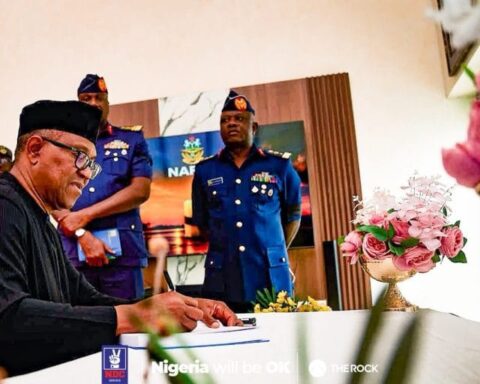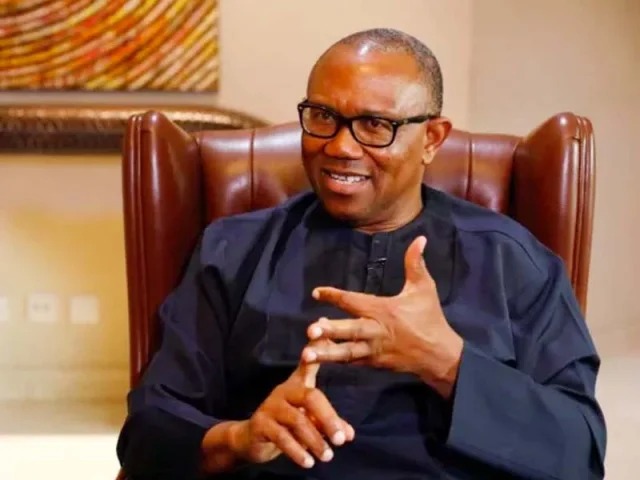
The Presidency on Monday launched a strong rebuttal against comments made by Labour Party presidential candidate in the 2023 election, Peter Obi, dismissing his call for the resignation of President Bola Ahmed Tinubu as “childish, hollow and an unworthy distraction.”
In a sharply worded statement issued by the Special Adviser to the President on Information and Strategy, Bayo Onanuga, the Presidency defended the administration’s performance, arguing that available economic indicators and governance achievements under Tinubu present a stark contrast to the narrative advanced by the opposition.
The statement marked the latest chapter in the growing political exchanges between the Federal Government and opposition figures as debates continue over the direction of the country, economic reforms, and the performance of the current administration.
According to the Presidency, Obi’s remarks were not only misplaced but also appeared to be politically motivated, coming shortly after the ruling party recorded victories in the recently concluded governorship election in Ekiti State and several senatorial by-elections.
Government officials suggested that the comments were aimed at diminishing the significance of the electoral successes recorded by the ruling All Progressives Congress, arguing that the opposition had become increasingly uncomfortable with the growing political influence of the party across the country.
The Presidency maintained that rather than acknowledging democratic outcomes, Obi had chosen to focus on criticism and comparisons that it described as inaccurate and misleading.
Central to the dispute was Obi’s reported comparison of Tinubu’s situation with that of Keir Starmer, whose resignation from office had generated international attention.
The Presidency argued that such a comparison demonstrated a misunderstanding of the constitutional and political systems of both countries.
According to Onanuga, Nigeria’s presidential system operates under a fundamentally different constitutional framework from the parliamentary system practised in the United Kingdom.
He explained that while parliamentary leaders may leave office under political circumstances linked to party confidence or legislative developments, Nigeria’s constitutional structure clearly outlines the tenure and removal processes applicable to elected presidents.
The statement stressed that the office of the President is governed by constitutional provisions and democratic mandates conferred through elections, making comparisons with foreign political systems inappropriate.
Beyond challenging Obi’s interpretation of constitutional governance, the Presidency also used the opportunity to highlight what it described as significant economic achievements recorded during Tinubu’s administration.
Government officials pointed to ongoing reforms in key sectors of the economy, including fiscal management, infrastructure development, investment attraction, and efforts aimed at stabilising public finances.
According to the Presidency, the administration inherited difficult economic realities and has since undertaken bold and often painful reforms designed to place the country on a path of sustainable growth.
Officials argued that while some of the reforms have generated short-term challenges for citizens, they were necessary steps toward long-term economic stability and national development.
The statement further suggested that Tinubu’s record in office should be assessed against measurable indicators rather than political rhetoric.
In defending the President’s performance, the Presidency also drew comparisons with Obi’s tenure as governor of Anambra State, contending that available records do not support the claims being made by the former governor regarding governance and economic management.
Although the statement did not delve extensively into specific figures, it maintained that the administration remains confident in its achievements and its vision for national development.
Political observers say the exchange reflects the increasingly heated political atmosphere as parties and political actors position themselves ahead of future electoral contests.
Since the conclusion of the 2023 presidential election, relations between the ruling party and opposition figures have remained tense, with both sides frequently clashing over issues ranging from economic policy and governance to electoral outcomes and democratic accountability.
Analysts note that Obi continues to command a significant following among young voters and supporters of political reform, while Tinubu’s administration remains focused on defending its policies and consolidating support across the country.
The latest disagreement has therefore reignited debates about governance, constitutional interpretation, and the role of opposition politics in a democratic society.
Supporters of the government argue that criticism should be accompanied by constructive alternatives and recognition of achievements where they exist. On the other hand, opposition voices maintain that holding leaders accountable remains a fundamental aspect of democratic engagement.
Meanwhile, the Presidency insisted that the administration remains focused on governance and delivering on its promises to Nigerians despite criticism from political opponents.
It emphasized that ongoing reforms and policy initiatives are designed to strengthen the economy, improve public services, and create opportunities for citizens.
As political debates continue to dominate the national conversation, the exchange between the Presidency and Peter Obi underscores the deep divisions that remain within Nigeria’s political landscape. It also highlights the growing importance of public discourse surrounding leadership, accountability, and the future direction of the country.
For now, both camps appear firmly entrenched in their positions, setting the stage for further political confrontations as Nigeria continues to navigate economic reforms, electoral politics, and the demands of democratic governance.