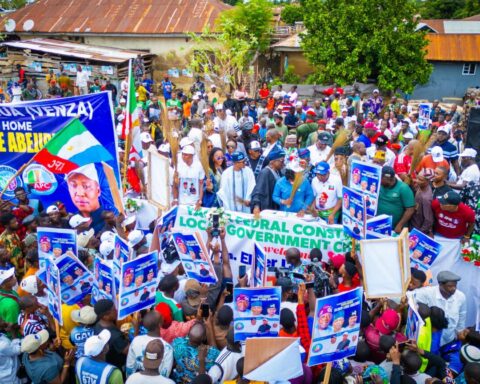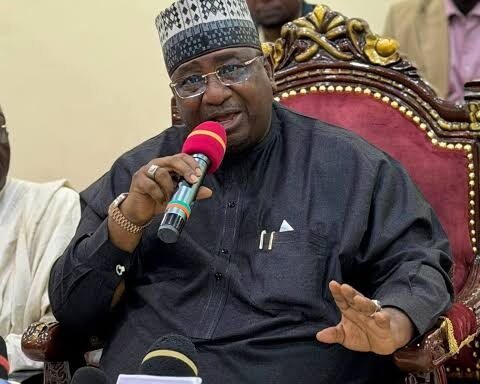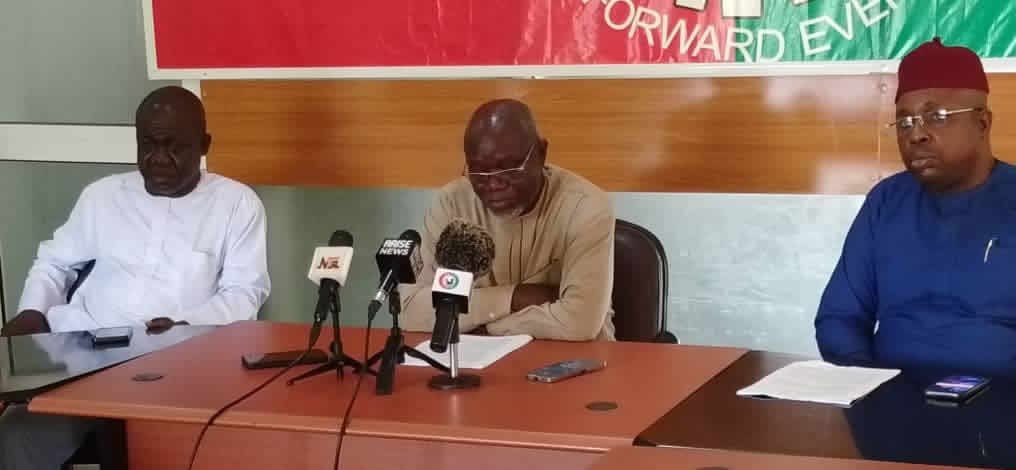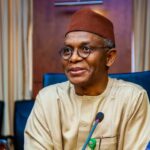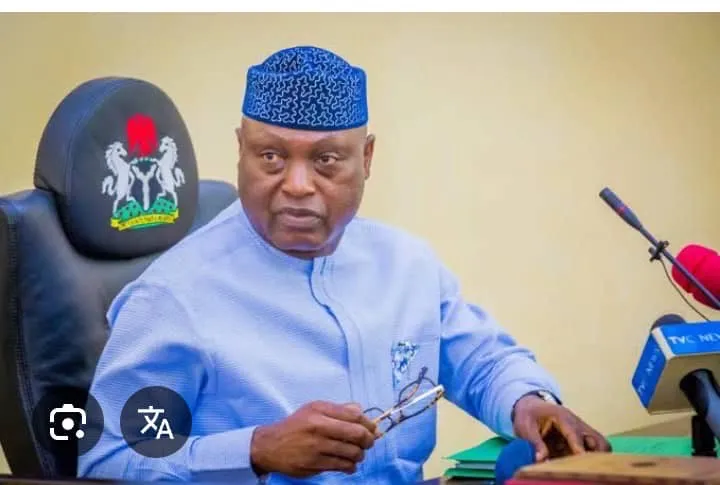
As political activities intensify ahead of the June 20 governorship election in Ekiti State, the candidate of the Peoples Democratic Party (PDP), Wole Oluyede, has thrown down a bold challenge to the incumbent governor and candidate of the All Progressives Congress (APC), Biodun Oyebanji, calling for a public debate that would allow citizens to directly assess their leadership visions. The challenge was issued on Sunday during a high-profile stakeholders’ meeting attended by party faithful from all 177 wards across the state.
The gathering, marked by enthusiasm and anticipation, served as a platform for Oluyede to outline his agenda while rallying support ahead of what is expected to be a fiercely contested election. Standing before party members and community representatives, Oluyede emphasized the importance of transparency and accountability in governance. He argued that a public debate between himself and the sitting governor would give the electorate a rare opportunity to weigh the achievements of the current administration against the promises and proposals of the opposition. “I challenge the governor to a debate,” Oluyede declared, his voice steady but resolute. “Such engagement will provide voters with the opportunity to assess the performance of the current administration against the proposal of the PDP.”
His call comes at a time when political discourse in Nigeria is increasingly shaped by media appearances and campaign rallies, with fewer direct engagements between candidates. By proposing a debate, Oluyede positioned himself as a candidate willing to subject his ideas to scrutiny while urging his opponent to do the same. Beyond the challenge, the PDP candidate used the occasion to present key elements of his campaign manifesto. Central to his promises is the prompt payment of gratuities, a pressing issue for many retired civil servants in the state who have long complained of delays and financial hardship.
He also pledged to introduce an affordable healthcare scheme aimed at improving access to medical services for ordinary citizens. Job creation, another cornerstone of his campaign, featured prominently in his address. Oluyede stressed the need for policies that would stimulate economic growth, empower young people, and reduce unemployment. He maintained that Ekiti’s potential could only be fully realized through deliberate investments in human capital and infrastructure. “I am ready to be questioned,” he told the audience. “The people of Ekiti deserve answers, and I am prepared to explain what I will do to make this state great.” Political observers note that debates, while common in some democracies, are not always a standard feature of gubernatorial contests in Nigeria.
However, when they do occur, they often play a significant role in shaping public perception, particularly among undecided voters. For the incumbent governor, Oyebanji, the challenge presents both an opportunity and a test. Having served in office, he brings the advantage of incumbency and a record that can be defended. Accepting the debate could allow him to highlight his administration’s achievements, while declining might invite criticism from opponents eager to portray him as unwilling to engage. As the election date draws closer, the political atmosphere in Ekiti continues to build. Campaigns are expected to intensify, with both parties seeking to win over voters across the state’s diverse communities.
For many residents, however, the focus remains on substance over spectacle. Issues such as economic stability, education, healthcare, and infrastructure dominate conversations, with citizens expressing a desire for leadership that delivers tangible results. Whether the proposed debate will materialize remains uncertain. But Oluyede’s challenge has already injected a new dynamic into the race, one that underscores the growing demand for accountability and meaningful engagement in Nigeria’s democratic process.
As Ekiti stands on the brink of another electoral decision, the question now is not just who will win, but how convincingly they can present their vision for the future to the people they seek to govern.