By Richard Benjamin
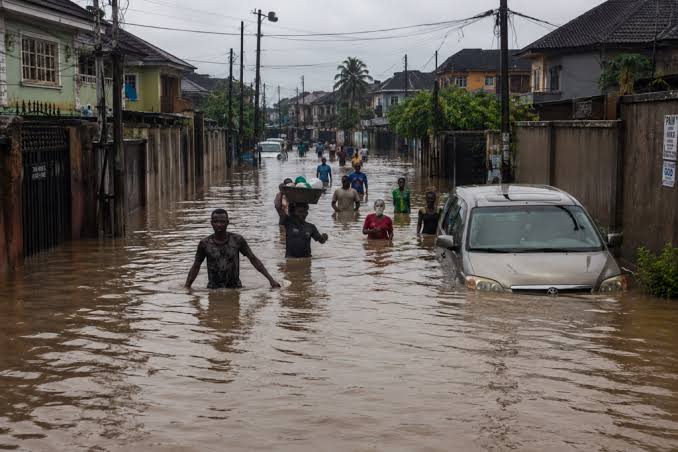
Lagos State Governor Babajide Sanwo-Olu and the Minister of Works, Sen. Dave Umahi, have dismissed claims that the Lagos – Calabar Coastal Highway is responsible for recent flooding in parts of Lagos, describing the allegations as false and misleading.
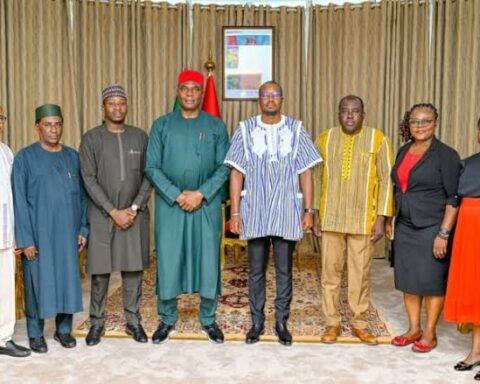
The two officials made the remarks on Tuesday during a courtesy visit by Umahi and members of the National Assembly to Governor Sanwo-Olu, where they inspected ongoing infrastructure projects and assessed flood-affected areas.
According to a statement issued by the governor’s Special Adviser on Media and Publicity, Gboyega Akosile, the inspection followed widespread claims on social media that the coastal highway had worsened flooding across the state.
Umahi said President Bola Tinubu directed the inspection to establish the facts behind the allegations. “Our assessment clearly shows the coastal highway did not cause the flooding,” the minister said, adding that the road was deliberately elevated to withstand ocean surges and protect the corridor from flooding over the next 20 to 30 years.
He explained that many of the flooded locations had historically been swampy areas and warned that buildings constructed below approved flood levels would remain vulnerable regardless of the highway project.
Sanwo-Olu described the Lagos – Calabar Coastal Highway as a transformative national infrastructure project that would improve connectivity, stimulate economic growth and enhance the quality of life for Nigerians.
“Two years ago, many regarded it as political rhetoric, but Nigerians are already using the road,” the governor said. “We appreciate President Bola Tinubu for delivering this transformative national infrastructure project.”
Addressing concerns over flooding in Lagos, Sanwo-Olu noted that the state’s coastal geography naturally makes it vulnerable to seasonal flooding, particularly during periods of heavy rainfall.
He added that while intense rainfall could temporarily overwhelm drainage systems, floodwaters usually recede after a short period. “We cannot allow social media to define Lagos,” he said.
“We acknowledge our challenges, confront them responsibly and understand the environmental realities associated with living in a coastal city.” The governor blamed indiscriminate refuse disposal for blocking drainage channels, describing poor environmental practices as one of the major causes of flooding in many parts of the state.
He recalled the state’s ban on polystyrene (commonly known as Styrofoam) food containers and announced plans to introduce additional environmental regulations alongside stricter enforcement to protect drainage infrastructure.
Sanwo-Olu also disclosed that the state had engaged a mechanised street-cleaning company to deploy specialised sweeping machines daily to maintain roads and the coastal highway corridor. He further advocated the construction of service lanes along the highway to improve access for nearby communities and businesses.
Umahi said the Federal and Lagos State governments would collaborate on additional drainage infrastructure and service roads, while consultations with stakeholders would take place before any structures affected by the expansion are removed.
He added that the project would also feature surveillance cameras, wind-monitoring stations, parking facilities and tourism infrastructure as part of efforts to maximise the economic potential of the coastal corridor.