EXPRESSO >>> By Steve Osuji
It is déjà vu! We have seen it all before: familiar scenes, old methods, and similar strategies. This column wonders: what does the US really want with Nigeria? The recent withdrawal of about 200 US military personnel after a three-month deployment to Nigeria is troubling, especially in the face of an unabated terrorist onslaught.
This is a repeat of 2014, following the global outcry that trailed the abduction of the schoolgirls in Chibok LGA, Borno State. Just as it was then, the insurgency in Nigeria remains alive and raging today. This reality forces people to keep asking: what is the US up to? Either the US is bumbling around Nigeria or playing games with her.
Some analysts have even stretched the argument to ask: does the US seek to dismember Nigeria? Meanwhile, some Nigerian politicians have long voiced suspicions that Western powers are holding Nigeria back to ensure she does not achieve her full potential.
All—or at least some—of these permutations and conspiracy theories are gaining credence, judging by the trend of events over the last decade. In 2014, when Boko Haram (BH) terrorists threatened to overwhelm the Goodluck Jonathan administration—especially following the abduction of 276 girls from Government Secondary School, Chibok—the US and a few NATO allies “invaded” Nigeria with military expats.
But while countries like Britain and Germany left almost immediately, the US tarried, ostensibly to help rescue the Chibok girls and assist Nigeria in defeating a then-fledgling Boko Haram. A few months later, however, the US team also left Nigeria without rescuing the girls.
Over 100 of those hapless schoolchildren remain un-rescued and unaccounted for to this day. Beyond the flimsy excuses offered by US officials blaming the ineptitude of Jonathan’s team for sabotaging their efforts, Boko Haram exploded and grew exponentially after the US exit.
While about 35,000 people were killed in terror-related activities during President Jonathan’s tenure (May 2011 – May 2015), casualties more than doubled during the succeeding Muhammadu Buhari administration (May 2015 – May 2023).
More than 63,000 people were killed in an escalating war of attrition that has since co-opted deadlier actors like ISWAP and Lakurawa. These figures are sourced from international terror databases.
Enter President Trump Last October, President Donald Trump declared Nigeria a “Country of Particular Concern” (CPC) for watching helplessly as Islamic jihadists unleashed genocidal attacks against Christians.
On December 25, 2025, the Trump administration announced it had struck a terror target in Sokoto, Northwest Nigeria, claiming to have neutralized high-tech surveillance equipment gathered in preparation for massive attacks.
In February 2026, following a series of bilateral engagements between Nigerian and US officials, US-Nigeria military collaboration was operationalized with the deployment of US personnel. Small teams of trainers and intelligence specialists, totaling about 200 personnel, were stationed in Nigeria between February and July 2026.
However, the withdrawal of these personnel began in July and is expected to be complete by the end of September 2026. While they were here, a dawn strike in the Lake Chad region by joint US-Nigerian forces neutralized a major terror kingpin, Abu Mainuki—said to be the second-in-command of the Islamic Salafi Jihadists operating across West Africa and the Sahel.
Another joint strike on May 18 killed about 20 ISWAP members in the same region. Like 2014, Like 2026: What is America’s Game Plan? Just as we witnessed in 2014, it has become apparent that the US cannot—or will not—fully resolve Nigeria’s insurgency epidemic.
The US only steps in when a problem goes global and threatens its own interests, as was apparent in the targeted elimination of Abu Mainuki and the destruction of Lakurawa’s surveillance haul. These were high-stakes operations bound to reverberate across global terror networks.
Despite the US’s best efforts, insurgents remain highly active, dealing death and massive destruction across Nigeria. Yes, Nigeria is a sovereign state, and there is only so much another sovereign nation can do short of taking over the government.
However, the US must endeavor to look beyond its immediate self-interest and recognize that a Nigeria rid of terror is in the overall best interest of the world. The US must do more than use Nigeria as a temporary tactical base and a wholesale buyer of outmoded, refurbished military hardware.
As US soldiers withdraw, we hear news of a fresh delivery of defense equipment to Nigeria. According to a release from the United States Africa Command (AFRICOM): “The equipment is part of a military sales agreement that furthers the US-Nigerian partnership and will aid in Nigeria’s efforts to counter terrorism in the region.”
It’s common knowledge that terror war is not a fire-fight combat. It is about surveillance and intelligence. Superior satellite facilities and better trained intelligence corps will sooner end the fight.
As US men beat a retreat, has an end date been set to completely squelch terror in Nigeria? If not then we ain’t started yet; the US has only wasted our time! Admittedly, successive Nigerian leadership, including the current administration, has been mediocre and highly corrupt.
A government alive to its responsibilities would never allow its unmanned territories to become safe havens for non-state actors. No serious government should have unmanned territories. No serious sovereign should be overawed by non-state miscreants.
Nonetheless, the US must take a more resolute, holistic stand that goes beyond merely selling arms. In 2014, this column published three articles in The Nation newspaper exploring the US’s role in Nigeria’s war on terror.
The first, on May 9, was titled “The Unfolding American Sorcery”; the second, on August 29, was titled “Boko Haram: Questions America Must Answer”; and the third, on September 19, was titled “BH: More Questions America Must Answer.”
Below are excerpts from the EXPRESSO column published in The Nation on May 9, 2014: THE UNFOLDING AMERICAN SORCERY: “Sabotage: Is America fueling the fire of Nigeria’s incipient disintegration and demise? America’s post-Nigeria strategies: If the US had foreseen the end of Nigeria, she surely must have a post-Nigeria script prepared.
What it means is that if Nigeria’s ‘life after life’ is more expedient for the US, it makes strategic sense to orchestrate the demise of this current, shambling contraption. Who is taking notes? Who is working? Here are a few posers:
Was the Yar’Adua-Jonathan ticket a happenstance after all? Is the Boko Haram insurgency ordinary? Who are the masterminds and tacticians? Who are the financiers, and how come we cannot track the massive funds required for an operation of this magnitude?
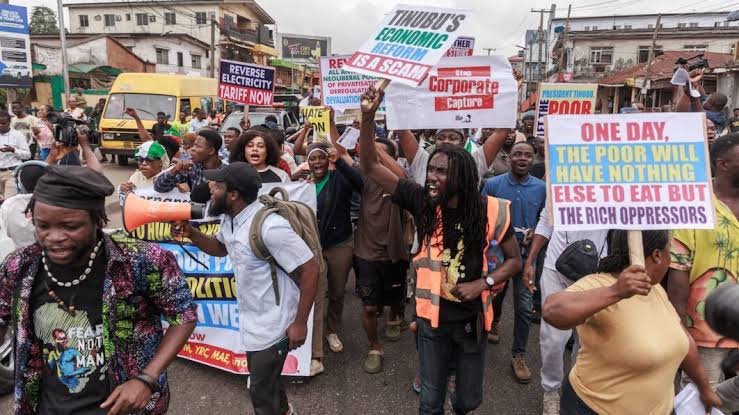
Where are the arms, ammunition (including tanks and RPGs), and logistical supplies coming from? How come the US paid only lip service to this incipient terrorism in Nigeria for five years…?” LAST LINE: Fuel at ₦1,500 and Diesel at ₦2,000 is Unacceptable The current, asphyxiating energy costs in Nigeria are single-handedly enough to cost the ruling APC the next election.
In an ordered political environment, the APC would crash like Humpty Dumpty if it went to the polls with these killer prices. There are no valid excuses for this. This column believes the problem lies within the confounding corruption that has beset Nigeria’s oil and gas industry since May 29, 2023.
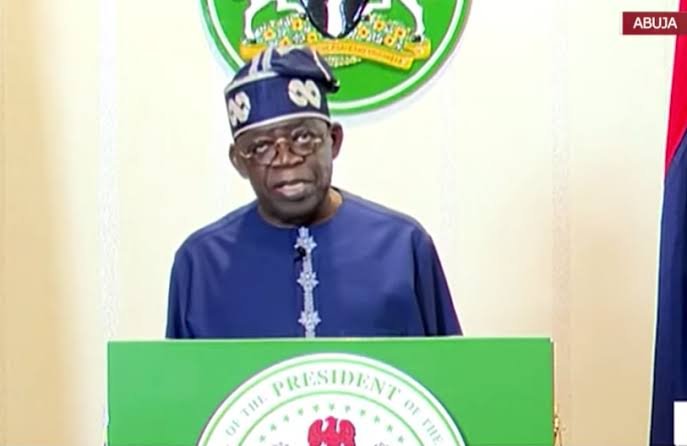
President Bola Tinubu, who also doubles as Nigeria’s Minister of Petroleum Resources, will have a hard time explaining how the fuel pump price—which was ₦200 at his ascension three years ago—is now ₦1,500.
That is a hike of more than 700%. Diesel, too, has risen about 200%. No economy can withstand the shock of such a sudden price jump. This is not a matter of subsidy removal; it is a crisis born of ineptitude, systemic opacity, and high-level graft. It reflects a total lack of knowledge regarding basic socioeconomic dynamics.
In simple terms, any economic reform that jettisons the welfare of the people is doomed. In other words, Tinubu’s reform agenda is DOD: Dead on Delivery.