Fresh tensions erupted across the Middle East on Wednesday after Iran launched missile attacks on American military bases in Jordan and Bahrain, dramatically escalating an already fragile regional crisis and threatening ongoing diplomatic efforts aimed at ending months of conflict.
The Iranian strikes came amid rising hostilities between Tehran and Washington following recent American attacks on Iranian targets in retaliation for the downing of a US military helicopter. The latest confrontation has further strained a ceasefire agreement that had only recently taken effect in April after weeks of intense fighting involving Iran, Israel, and allied forces.
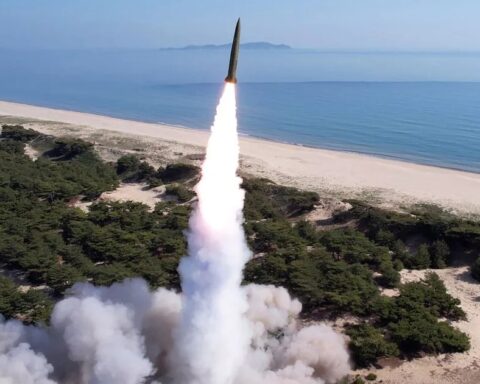
Iran’s Revolutionary Guards confirmed that “long-range missiles” were fired at American military installations in Jordan, while another strike targeted a US base in Bahrain. Iranian officials described the attacks as a direct warning to Gulf nations accused of allowing the United States and Israel to use their territories for operations against the Islamic Republic.
According to Iranian authorities, neighbouring countries hosting American military facilities could no longer remain neutral if their soil was being used to threaten Iran’s national security. The development immediately sent shockwaves across the region, with fears mounting that the conflict could spiral into a wider regional war involving multiple countries and armed groups.
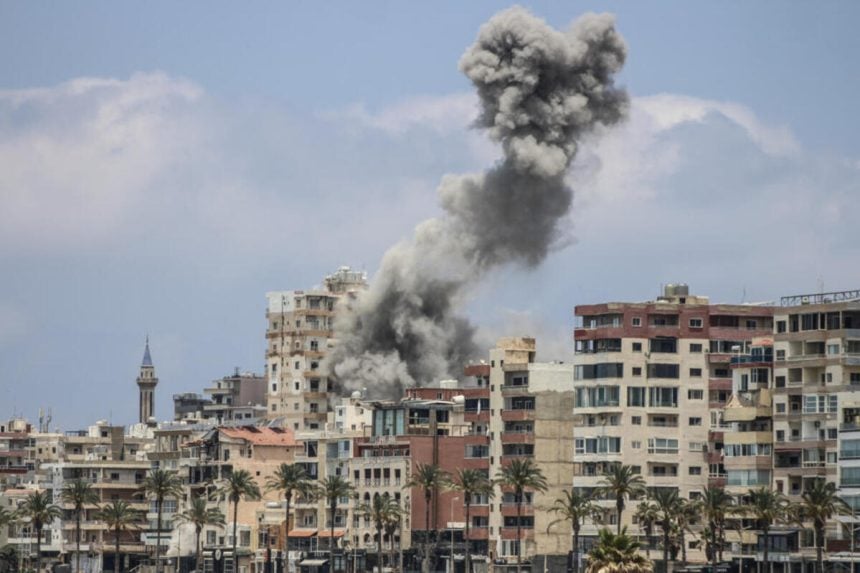
In Bahrain’s capital, Manama, residents reported hearing several loud explosions as air defence systems were activated shortly after warning sirens sounded across parts of the city. An AFP correspondent in the area described moments of panic as security forces tightened patrols around sensitive locations and military facilities. Jordanian authorities also heightened security measures following reports of missile launches targeting American assets within the country.
Though officials did not immediately disclose the extent of damage or possible casualties, military sources indicated that defensive systems had intercepted some of the incoming missiles. The attacks have intensified international anxiety at a time when diplomatic negotiations aimed at achieving a long-term settlement in the Middle East conflict appeared to be making progress.
Only days earlier, United States President Donald Trump had claimed that negotiations toward an enduring peace deal were in their “final throes,” suggesting that behind-the-scenes discussions involving regional powers were nearing a breakthrough.
However, Wednesday’s escalation has cast serious doubt over the future of those negotiations, with analysts warning that trust between the parties may now be severely damaged. The conflict originally erupted after coordinated US-Israeli strikes targeted Iranian military infrastructure and strategic sites, prompting retaliatory actions from Tehran and allied militant groups across the region.
The violence quickly disrupted trade routes, triggered fears over oil supply interruptions, and unsettled global financial markets before a shaky ceasefire was brokered in April. Although the truce temporarily reduced direct military confrontations, tensions remained high as both sides accused each other of provocations and ceasefire violations.
Iran has repeatedly insisted that any country assisting American or Israeli military operations against Tehran would be considered complicit in aggression against the Islamic Republic. Wednesday’s strikes appeared designed not only as retaliation against the United States but also as a message to Gulf allies hosting Western military forces.
The latest developments have prompted renewed calls for restraint from world leaders, international organisations, and diplomatic observers concerned about the possibility of a broader conflict engulfing the Middle East. Global attention has become even more focused on the crisis because of its timing ahead of the upcoming FIFA World Cup tournament, which the United States is co-hosting and in which Iran is expected to participate.
Security experts have warned that continued instability in the Middle East could complicate international travel, diplomatic cooperation, and security planning linked to the tournament. The United Nations and several European governments urged all parties to avoid further escalation and return to diplomatic channels.
International observers fear that continued missile exchanges and retaliatory operations could destabilise neighbouring countries and deepen humanitarian concerns already affecting millions across the region. Oil markets also reacted nervously to the renewed fighting, with investors closely monitoring developments around the Gulf, a critical route for global energy exports.
Analysts warned that prolonged instability could push fuel prices higher and create wider economic consequences internationally. Military analysts noted that Iran’s decision to target American bases in Jordan and Bahrain reflects a significant expansion of the confrontation beyond direct Iran-Israel hostilities, bringing additional regional players into the centre of the conflict.
The United States has yet to announce the full scope of its response, though Pentagon officials confirmed they were assessing the attacks and monitoring the situation closely. Meanwhile, citizens across several Gulf countries expressed concern over the growing possibility of wider military confrontations, as governments in the region increased security readiness and reinforced strategic installations.
Despite diplomatic efforts over recent months, the latest violence underscores the deep mistrust and fragile balance that continue to define relations between Iran, the United States, and their regional allies. As tensions rise once again, many observers fear that the Middle East may be edging closer to another prolonged and unpredictable phase of conflict with global consequences.