By Okoh Aihe
There is a way a little sense of history tries to educate and equip us with the capacity to withstand the present and shape the future.
History tells us a little bit of who we are and the things that shape our being. History is stubborn. It paints the bad leader with deserved odious colours and reserves a good place for the deserving. In whatever realm, the appropriateness of history is unquestionable.
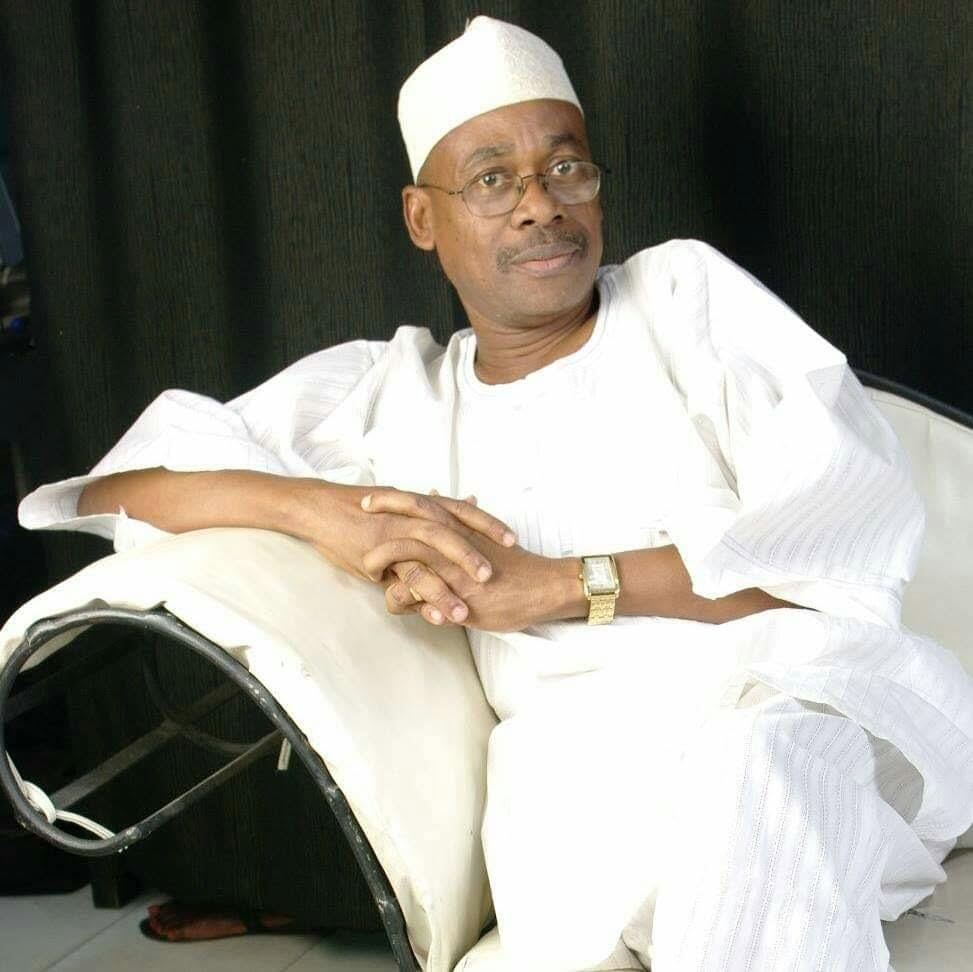
When the Nigerian Communications Commission (NCC), from May 20, 2026, organised a two-day stakeholders meeting for the review of the National Telecommunications Policy (NTP) 2000, Engr Titi Omo-Ettu came, arming himself with history to demonstrate how looking at the past can equip us to manage our expectations and be able to create a tech future that positions us strongly in the comity of nations.
Even in the field of telecommunications, like in every other field, history is important to locate our bearing and rid us of ignorance. Oh! Ignorance can be punishing. Like that young lady working in a respectable private organisation who doesn’t know that Alhaji Atiku Abubakar was once the Vice President of Nigeria. She completely lost the concept of history and getting a degree in the sciences, doesn’t insulate her from such abysmal ignorance.
History. There is something about history that troubles people so much that they once removed it from the education curriculum. As a former NITEL engineer, Omo-Ettu was most fitted to tell the nation’s telecommunications story with a warning that a different category of challenge has emerged.
’’The principal issue today is no longer whether Nigerians can communicate, but whether all Nigerians can participate meaningfully and productively in the digital economy,” he said.
Omo-Ettu didn’t have the opportunity to present his paper but he was kind enough to share it with us. Like most of us, he is of the opinion that the NTP 2000 was shaped to tackle some problems of the industry at the time but has become so inadequate to deal with freshly minted technology challenges.
He paints the picture of two different eras that are poles apart, or more like night and day, which carry no similitude apart from both melting into each other at some point.
According to Omo-Ettu, “Nigeria’s telecommunications journey has passed through two clearly distinct historical phases: the era of state monopoly and infrastructure scarcity, and the present era of digital expansion and liberalised competition.”
However, actions taken to address industry backwardness in uthe days of yore resulted in the following measures that have created a modern industry, he explained. Such measures include: the estblishment of the Nigerian Communications Commission in 1992; the National Telecommunications Policy of 2000; and the Nigerian Communications Act of 2003.
”Together, these reforms,” he pursued, “dismantled the old monopoly structure, introduced competition, attracted investment and laid the foundation for Nigeria’s digital transformation.”
However, while the reforms solved many of the problems of the past, they also introduced a new generation of challenges that are more complex and more closely tied to national development itself.
There is nothing edifying about the industry’s history of the past except that it offered a challenge which resolution has given us a better industry.
“Telephone penetration was extremely low. In many cases, obtaining a telephone line could take months or even years – when it happened at all. Fixed line infrastructure was concentrated in a few urban centres, while vast rural communities remained almost entirely disconnected,” Omo-Ettu recalled.
He is right. Even our children will not believe us today, that we once had to stay on a request line for over six months to get a telephone line. They won’t believe that a whole city have to migrate to a few NITEL offices to place an international call. The call you can now make at a small corner of the house to anywhere in the world, was once at the behest of a few arrogant NITEL staff. The infrastructure deficiency was extreme and, as it is always, we have never been used to resolving even simple problems. What a world!
Reality, without doubt, is stronger than fable. Reality confronts you on the street daily. It even confronts you in the home when the table is empty and you must make choices between school fees and children’s bread on the table.
Reality of the past was soon overtaken by new aspirations. The liberalised era introduced a multiplicity of operators whose investments opened up the industry and put phones in the hands of several millions of people, From a miserable figure of 500,000 lines for a population of about 120m, the nation presently boasts of over 185m mobile lines, quite a number of them operating from devices with more capacity than a fully equipped business centre in the days of the dodos.
Omo-Ettu acknowledged this development when he said, “Today, a handheld mobile device possesses more communication capacity than entire institutional systems available in Nigeria barely three decades ago.”
The flipside of history is that it can be distracting. It can take your attention away from reality and rivet it on the failures and successes of the past and make aspirational decisioning very hazy or even needless. It’s either one is too troubled by past failures or satisfied too early to want to set fresh targets. Omo-Ettu doesn’t want us to fall into any of those traps.
So, whatever document is being considered should note that present development has created the issue of a digital divide which puts the city dwellers far ahead of the rural counterparts who suffer everything including social exclusion. While the city dwellers still suffer capacity limitations and infrastructural deficit, the rural folks are more distressed, all round.
Although Omo-Ettu admitted that Nigeria has effectively moved from the problem of “telephone access” to the broader challenge of “inclusive digital participation,” he equally observed that yesterday’s policies were designed mainly to expand networks, while today’s policies must focus on expanding opportunity, productivity and inclusion through networks.
Omo-Ettu submits that any new policy review must take the following into consideration. They are stated as follows: Treat Broadband Infrastructure as Critical National Infrastructure; Address Right-of-Way and Multiple Taxation Challenges; Deepen Rural Connectivity and Universal Access; Priotise Indigenous Capacity Development; Integrate Energy Planning with Digital Infrastructure Planning; Elevate Digital Literacy to a National Development Priority; and Prepare for Emerging Technologies, which include: Artificial Intelligence, cloud infrastructure, Internet of Things systems, satellite broadband, digital identity systems, data governance, and cybersecurity regulation.
Concluding his document, Omo-Ettu declared that “the objective is no longer simply connectivity. It is now the creation of an inclusive digital society in which infrastructure, affordability, skills, security and innovation combine to support national productivity and human development.
Even as we thank the NCC for giving stakeholders the opportunity to participate in its policy review process, we want to suggest that the regulator takes Omo-Ettu’s document into consideration, including facing the reality that the new policy must aspire to trap the speed of new technologies to maintain relevance in a world where the speed of sound has been conquered long ago.