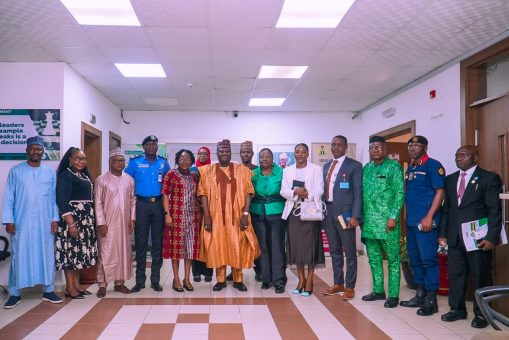
In a decisive step toward overhauling Nigeria’s complex security framework, the Federal Government on Wednesday inaugurated an Inter-Ministerial Committee tasked with reviewing the proliferation and rationalisation of security and para-military agencies operating across the country.
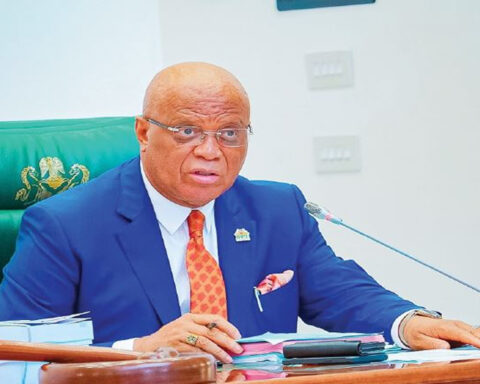
The initiative, unveiled by the Secretary to the Government of the Federation (SGF), George Akume, is aimed at strengthening coordination, eliminating duplication of roles, and enhancing overall efficiency within Nigeria’s security architecture.
Represented at the inauguration ceremony in Abuja by the Permanent Secretary, General Services Office (GSO), Ibrahim Abubakar Kana, the SGF said the move underscores the Federal Government’s determination to bring order to what has become an increasingly crowded and, at times, fragmented security landscape.
Over the years, Nigeria has witnessed a steady rise in the number of federal, state, and quasi-government security outfits, including auxiliary and specialised agencies. While many of these bodies were created to address specific security challenges, concerns have grown about overlapping mandates, weak coordination, and the emergence of unaccredited groups operating outside established legal frameworks.
Speaking on behalf of the SGF, Kana noted that the committee’s mandate goes beyond mere assessment. It is expected to recommend practical measures for streamlining operations, strengthening regulatory oversight, and ensuring that all security-related entities function within clearly defined boundaries.
“The proliferation of security and para-military agencies, if not properly managed, can undermine efficiency and accountability,” he said. “This committee will provide a roadmap for harmonising their activities, eliminating redundancies, and reinforcing the integrity of Nigeria’s security system.”
According to officials, the committee will conduct a comprehensive review of existing agencies, examining their legal status, operational scope, funding structures, and relevance to current security needs. Particular attention will be given to quasi-security organisations that have emerged in recent years, some of which operate with limited oversight or unclear mandates.
The Federal Government has expressed concern that the unchecked growth of such entities could pose risks, including jurisdictional conflicts, misuse of authority, and challenges in enforcing standards. By curbing unaccredited organisations, authorities aim to restore public confidence and ensure that only properly regulated bodies are entrusted with security responsibilities.
Analysts say the initiative comes at a critical time, as Nigeria continues to grapple with a range of security challenges, from insurgency and banditry to urban crime and communal conflicts. In such a context, effective coordination among security agencies is widely seen as essential for achieving meaningful progress.
The committee’s work is also expected to address longstanding issues related to inter-agency rivalry and duplication of functions, factors that have, at times, hindered swift and cohesive responses to security threats. By clarifying roles and establishing clearer lines of authority, the government hopes to foster greater collaboration among agencies.
Beyond operational efficiency, the rationalisation effort is likely to have financial implications. Streamlining agencies could reduce unnecessary expenditure and allow for better allocation of resources to critical areas such as training, intelligence gathering, and equipment.
Stakeholders have welcomed the move, describing it as a necessary reform that could strengthen governance within the security sector. However, they have also emphasised the importance of transparency and inclusiveness in the committee’s work, urging the government to engage relevant experts, civil society organisations, and security professionals in the review process.
For many Nigerians, the success of the initiative will ultimately be measured by its impact on safety and stability. A more coordinated and accountable security system could translate into quicker responses to threats, improved intelligence sharing, and greater protection for citizens.
The Federal Government has reiterated its commitment to implementing the committee’s recommendations once completed, signalling that the exercise is not merely a review but part of a broader strategy to modernise Nigeria’s security framework.
As the Inter-Ministerial Committee begins its work, expectations are high that it will chart a path toward a more efficient, transparent, and effective security architecture, one capable of meeting the evolving challenges of safeguarding lives and property across the nation.