By Stanley Nkwazema
A major battle is quietly unfolding within Nigeria’s power sector, and at the center of it lies a fundamental national question: should Nigeria continue to depend heavily on foreign suppliers for electricity meters when local manufacturers already possess the capacity to meet national demand?
That question has now moved beyond policy debate into a high-stakes confrontation involving the Federal Government, the World Bank-backed Distribution Sector Recovery Programme (DISREP), and the Association of Meter Manufacturers of Nigeria (AMMON), the umbrella body representing indigenous meter producers across the country.
The latest standoff emerged over the DISREP ICB 2 procurement framework, a major metering intervention programme designed to close Nigeria’s massive metering gap and improve electricity distribution efficiency nationwide. However, local manufacturers insist the programme, as currently structured, risks sidelining indigenous industries in favour of foreign suppliers despite years of investment by Nigerian firms.
In a strongly worded communication addressed to the Bureau of Public Enterprises, AMMON made it clear that while it appreciates ongoing negotiations with government authorities, it is unwilling to withdraw its pending court injunction without concrete guarantees and legally binding commitments.
At the heart of the dispute is not simply the supply of meters, but the future direction of Nigeria’s industrial policy.
For AMMON, the issue goes beyond procurement. The Association argues that the metering gap presents one of the biggest opportunities for Nigeria to deepen local manufacturing, create jobs, conserve foreign exchange, and strengthen domestic industrial capacity.
The group insists that Nigerian manufacturers have already demonstrated substantial delivery capability under previous interventions such as the Meter Asset Provider (MAP) scheme, the National Mass Metering Programme (NMMP), and other federal initiatives.
According to the Association, indigenous firms have invested billions of Naira in factory expansion, technical manpower, compliance certifications, logistics networks, and supply chains, often without the concessional financing, sovereign guarantees, or fiscal protections available to foreign competitors.
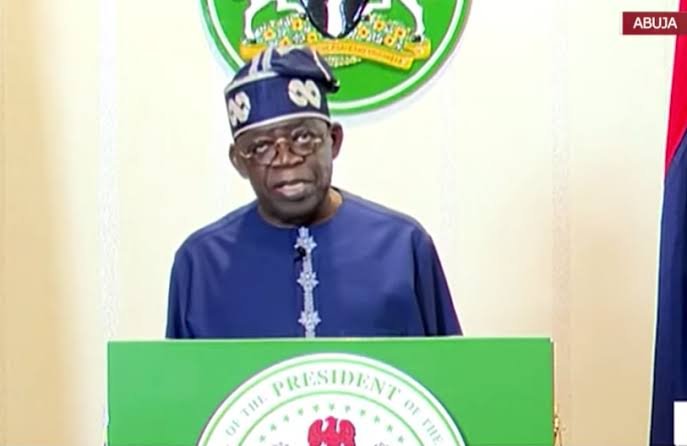
AMMON maintains that excluding local firms from large-scale metering interventions would undermine Nigeria’s broader industrialisation ambitions and contradict the Federal Government’s Nigeria First policy direction under Bola Ahmed Tinubu.
The Association is therefore demanding what it describes as “meaningful local participation” in the DISREP programme.
Specifically, AMMON wants at least 50 per cent of DISREP ICB 2 meter volumes allocated to qualified Nigerian manufacturers under a local content structure. Alternatively, the group proposes mandatory CKD/SKD arrangements requiring foreign suppliers to partner with licensed Nigerian manufacturers and assemblers for local assembly operations.
As a third option, AMMON is asking for an additional allocation of two million meters exclusively for Nigerian manufacturers under a separate financing framework running concurrently with DISREP ICB 2.
Industry observers say the demands reflect growing pressure within Nigeria’s manufacturing sector for stronger protection and domestication policies amid rising concerns over import dependence and foreign exchange instability.
AMMON argues that local manufacturers offer advantages that go beyond simple meter supply. According to the Association, meter deployment in Nigeria requires deep local operational knowledge, field responsiveness, technical integration, after-sales support, and logistical networks already maintained by Nigerian operators across the country.
The group also insists that domestication of production would help retain economic value within the Nigerian economy through employment generation, tax revenues, technology transfer, and supply chain development.
Another major issue fueling the current tension is trust.
AMMON repeatedly referenced previous experiences under earlier intervention programmes where local manufacturers reportedly incurred huge financial commitments during procurement processes but later faced prolonged implementation delays despite completion of tender stages and notifications of award.
For this reason, the Association says it cannot rely on future assurances without enforceable timelines and implementation milestones.
The group is therefore demanding immediate execution of NCB 1 contracts within 14 days as proof of government commitment to local manufacturers. It is also pushing for immediate commencement and execution of contracts under the Presidential Metering Initiative (PMI), covering about 750,000 meters.
In its response to proposals made by the Bureau of Public Enterprises, AMMON argued that several assurances currently on the table remain too vague and insufficiently binding to justify withdrawal of its legal action.
The Association noted that promises of “fast-tracking” approvals or “launching” procurement processes do not necessarily guarantee actual contract execution, citing previous industry experiences where procurement exercises dragged on for years without implementation.
For AMMON President Ahmed, the Nigeria First policy introduced under the administration of Bola Ahmed Tinubu is a clear indication that local manufacturing should be prioritised as a strategic tool for building Nigeria’s industrial base through investments in factories, machinery, engineering, and technology transfer.
Indigenous manufacturers argue that large-scale meter production can become a catalyst for broader industrial development rather than continued dependence on imported finished products.
They also maintain that domestic production creates direct and indirect employment opportunities across manufacturing plants, engineering and technical services, logistics and distribution, installation and maintenance, as well as supply chain industries.
Indeed, local manufacturers insist that meter production already supports thousands of Nigerian jobs and contributes significantly to technical skills development.
Nigeria also spends substantial foreign exchange importing fully assembled meters and related components. Local manufacturers argue that increasing domestic production would reduce pressure on foreign reserves by limiting imports and encouraging local value addition.
Despite its hardline posture, however, AMMON says it remains open to continued negotiations and is willing to support a temporary adjournment of ongoing legal proceedings to allow further discussions.
Analysts say the dispute highlights a broader dilemma confronting Nigeria’s economic managers: balancing urgent infrastructure delivery with the long-term need to build domestic industrial capacity.
For supporters of local manufacturing, the current metering gap presents a strategic opportunity for Nigeria to reduce import dependence and nurture indigenous industrial growth. For others, concerns remain around financing, production costs, delivery timelines, and the ability of local firms to meet large-scale demand quickly enough to address the country’s electricity challenges.
Observers note that while President Bola Ahmed Tinubu has consistently promoted the Nigeria First policy under his Renewed Hope agenda, some procurement frameworks within Ministries, Departments and Agencies still appear inconsistent with that policy direction.
The Nigerian Electricity Regulatory Commission, despite industry pressures, has continued to support the growth of the MAP and MAF frameworks over the last six years with STS smart prepaid meters sourced largely from Nigerian AMMON members.
Similarly, the Presidential Metering Initiative is seen by industry players as part of a broader strategy to move local manufacturing to the next level through stronger domestic participation and backward integration.
Industry stakeholders say backward integration has already been achieved in areas such as local production of meter boxes, trunking pipes, cables, personal protective equipment, and other supporting materials tied to metering infrastructure.
Still, AMMON insists Nigerian manufacturers have already proven their capacity under difficult operating conditions and should not be relegated to the margins of one of the country’s largest metering interventions.
As negotiations continue, the outcome of the DISREP impasse may ultimately shape not only the future of Nigeria’s metering programme, but also the direction of local manufacturing participation in major national infrastructure projects for years to come.