By Chidi Anselm Odinkalu
The contest for the presidency of Nigeria in the election on 11 August 1979 was between five candidates. Nnamdi Azikiwe of the Nigerian Peoples Party was born on 16 November 1904. On election day in 1974, he was over 74 years. Obafemi Awolowo of the Unity Party of Nigeria was over 70. He was born on 6 March 1909. Aminu Kano of the Peoples’ Redemption Party was born on 9 August 1920. He was 58. Shehu Shagari, the candidate of the National Party of Nigeria, was born 25 February 1925. He was 54. That was one year older than Waziri Ibrahim of the Great Nigerian Peoples’ Party who was born on 26 February 1926.
All of them were active in the politics of Nigeria before independence. Their average age in August 1979 was just under 62 years. The contest was in many ways a re-litigation of positions that all five had respectively canvassed over a period going back more than two decades previously.
The year before the election, in 1978, a new organisation threw itself into the contest for recognition as a political party in Nigeria. It called itself the Nigeria Advance Party. Organised under the imaginative acronym, NAP, this formation articulated an ideology of egalitarian humanism that was both fresh and refreshing.
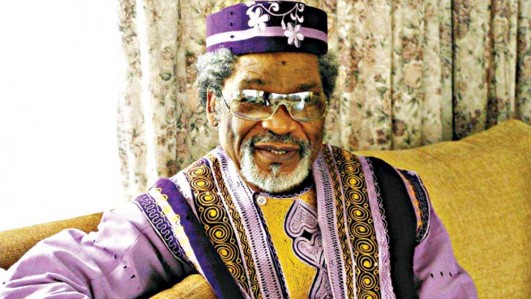
His causes were egalitarian. They included political participation anchored on a clear ideology as well as the protection of trade union rights. Less than two years into his legal practice, Tunji Braithwaite was on the legal team that represented Obafemi Awolowo in his infamous trial for treasonable felony. Afrobeat legend, Fela Anikulapo-Kuti, was his client.
When Tunji Braithwaite became a lawyer in 1961, Nnamdi Azikiwe was Nigeria’s Head of State; Obafemi Awolowo was the official leader of the opposition in the federal parliament; Waziri Ibrahim and Shehu Shagari were both ministers in the federal cabinet; and Aminu Kano was Deputy Chief Whip in the Federal House of Representatives.
When he founded the NAP in 1978, Tunji Braithwaite was 44. His application to the Federal Electoral Commission (FEDECO) to register the party for the 1979 election was ultimately unsuccessful. The Commission claimed that the political organisation did not have sufficient footprint across the country.
Rather than deter him, the rejection seemed to inspire Tunji Braithwaite. Four years later, in 1982, FEDECO eventually registered NAP, bringing to six the number of political parties in the country at the time. The following year, Tunji Braithwaite joined the principals from 1979 as the sixth presidential candidate on the ballot.
Handsome, hirsute, and heterodox, Tunji Braithwaite represented the ambitions of a successor generation in 1983. His language was direct and his mantra was an appeal to build a country of equal citizenship for everyone. His central message was simple: “together we take the destiny of Nigeria in our hands.” In pursuit of this, he promised to rid the country of apestilential generation of political “rats, mosquitoes, and cockroaches.”
The old machine politics was not about to allow him. The manufactured “landslide” of the ruling National Party of Nigeria saw to that in the 1983 elections. Three months after their return to office, Muhammadu Buhari, the soldier who formerly headed the Nigerian Army Corps of Supply and Transport, put the short-lived experiment in civil rule out of its misery on the last day of 1983.
Tunji Braithwaite was not done with the law or with improving himself. He returned to school and over the following three years acquired two graduate degrees, including a doctorate. He also became a published author in the field of legal philosophy.
In 1997, a 63-year-old Tunji Braithwaite was the first senior figure to challenge the design of military dictator, Sani Abacha, to impose himself on the country as an unopposed ruler. His courage eventually inspired others to step forward, including former Inspector-General of Police, Maigari Dikko Yusuf.
Upon the return to civil rule in 1999, the Independent National Electoral Commission eventually restored the registration of the NAP as a political party in Nigeria. In 2012, the Commission de-registered the party for not having won any seat in the election cycle.
By this time, however, ideology and the pursuit of the public good had fled from Nigeria’s politics. Political parties had become special purpose vehicles for grabbing and running away with power. Tunji Braithwaite was clear about his goals: “Who wants to win an election by bribery and all sorts of evils? I don’t want to win election through such means.” The problem, he argued, was that “the electoral system cannot, I repeat, cannot contain people with integrity.”
At his death on 28 March 2016, Tunji Braithwaite had been a lawyer and defender of the public interest in Nigeria for over 55 years. Along the way, he amassed a record of multi-dimensional impact with no need for the adornments of office or accoutrements of power. His entire armoury comprised his intellect, his values, and the force of his belief in the public good.
Amidst all this, he also found time to raise a family. Tunji Braithwaite was married to Grace Simisola Olubanwo Braithwaite, one of Nigeria’s most senior living medical doctors. Together, they raised five children, including one medical doctor and four lawyers.
1933, the year in which Tunji Braithwaite was born, was significant abroad and at home. In January 1933, German President Paul von Hindenburg swore in Adolf Hitler as the new Chancellor of Germany. Two months later, on March 23 of the same year, Hitler enacted the Law to Remedy the Distress of the People and the Reich (so-called Enabling Act), which empowered him to effectively scrap the institutions of democracy. Twenty days earlier, across the Atlantic, Franklin Delano Roosevelt was sworn in as the 32nd president of the USA.
In Nigeria, 1933 was an election year. It was the year in which the colonial government organised the third Legislative Council election. The first was in 1923. It was followed by another in 1928. In 1946, the Legislative Council comprised 46 members of whom 23 were ex-officio, 15 were appointed, four were nominated officials, and four were elected (three from the Colony of Lagos and one from the Colony of Calabar).
In the election in Lagos, Theophilus Adebayo Doherty was elected to the Council for the first time. He joined two re-elected members, Olawolu Eric Moore and Crispin Adeniyi-Jones. Within one year, however, many members of the Council, including the representatives for Benin-Warri and for the Oyo Province were replaced by colonial governor, Donald Cameron.
In Nigeria today, many will argue that the whimsical arbitrariness with which the colonial governor could appoint and replace members of the colonial Legislative Council is substantially replicated in outcome if not in remit in the unpredictability with which judges and courts today can now chop and change election outcomes with no regard to the will of the people.
What happened in Germany in the year of the birth of Dr. Tunji Braithwaite shows that democracy has the capacity to subvert itself from within. One of the defining controversies of the durable presidency of FDR was the ultimately unsuccessful effort to pass the Judicial Procedures Reform (Court Packing) Bill in 1937 and expand the composition of the Supreme Court of the United States. It was a dramatic illustration of the need to maintain firm boundaries in the delicate balance between the judiciary and democratic politics.
In Nigeria these days, it is clear that some judges are actively undermining the idea of government founded on the will of the people. But, if the life of Dr. Tunji Braithwaite taught any lesson, it is that citizens remain the ultimate source of legitimate power and that power that does not derive its source from their will always endangers both itself and the people. This is where Nigeria currently finds itself. In the year of the 10thanniversary of his passing and the 93rd anniversary of his birth, these are timely lessons to take to heart ahead of the 2007 elections.
•A lawyer and a teacher, Odinkalu can be reached at chidi.odinkalu@tufts.edu