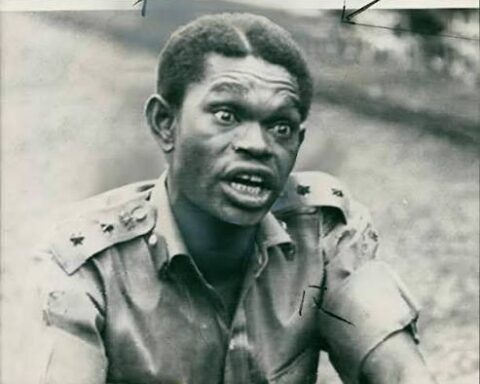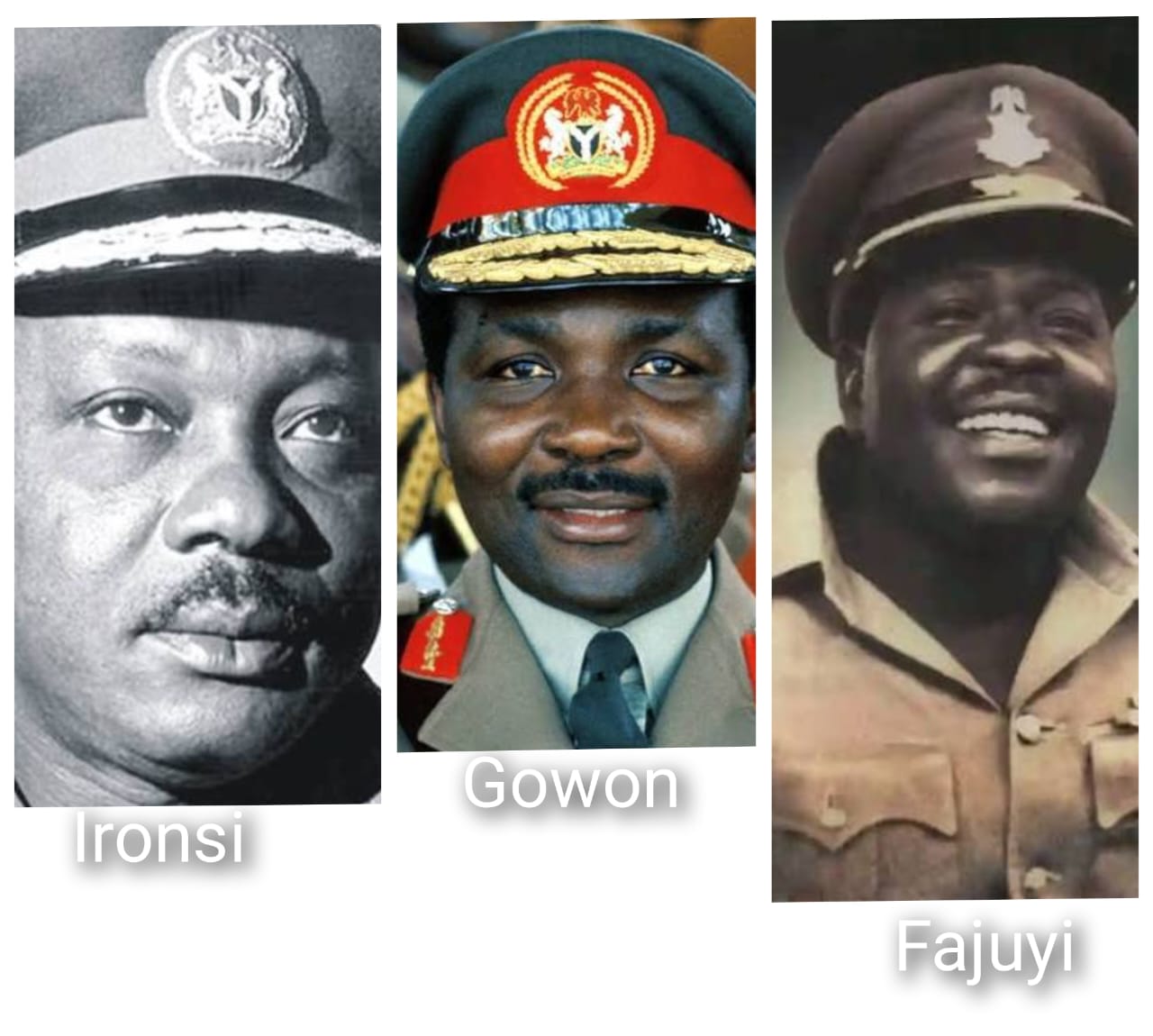
The road to Golgotha soon got to a stream, a little stream in fact, which Ironsi and Fajuyi since inebriated with blows and punches, no longer had the strength to cross. Bello and Nwankwo did, being very much younger and not having been subjected to the same overdose of punishment as the General and the Colonel. It was here that something dramatic happened, just as the soldiers conferred on what to do next. Bello pushed Nwankwo with the plea that he made a dash for it.
The 21- year old, six-footer fled into the bushes, moving away as fast as he could until he hid in a large hole covered by undergrowth. From there, he heard the burst of rapid gunfire as General Aguiyi-Ironsi and Lieutenant Colonel Adekunle Fajuyi were finished off. The execution took place at around 1040 hours. The rebels returned first to Ibadan with a “triumphant” Numan brandishing his trophy of a stuffed toy crocodile. Those that belonged to the 4th Battalion joined their mates in carrying out what killing remained to be done.
The ones from Lagos returned to the Federal capital and they had been many, moved early to Ibadan to await Ironsi’s arrival and quartered in the home of a northern medical doctor who later became a controversial Education Minister. These were the troops Danjuma used to replace the regular soldiers on guard duty at Fajuyi’s Government House. Now back in Lagos, they also joined the killings there. In terms of its primary reason of exacting revenge, the counter-coup was proceeding with ruthless efficiency.
Meanwhile, Nwankwo sat pat in his dungeon, not venturing out until about 1900 hours. Then he traced his steps back to the little stream. Yes, indeed, the deed had been done. For some moments, he stared at the stream into which the machine-gunned bodies of General Aguiyi-Ironsi and Colonel Fajuyi had fallen. He then did his duty by them, dragging the bodies to terra firma, positioning them and placing a cap over the head of one as a from of identification. Next, he trekked back to Ibadan. A curfew had come into force, but he was unaware of it. His only observation was the sparsity of human and vehicular traffic. When he got to the first house with the lights on at Mokola, he walked into its compound.
Surprisingly, it belonged to an Igbo couple, for he heard the man of the house instruct the wife to shut the door and put out the lights. Nwankwo responded to this by telling them in Igbo what had happened during the morning hours. As it turned out his listeners were from Umuahia, Ironsi’s home town. They flatly refused to believe that the General had been assassinated. Still, they helped to move Nwankwo, who remained in hiding, to another location. Finally, he returned to Lagos where he was given sanctuary at the Ethiopian Embassy. He had trained in Ethiopia and been one of numerous pilots in the service of Emperor Haile Selassie. But his stay there was not a total secret for soon American news hunters were about, offering dollars and asking for his story. He refused to cooperate, but remained there until he was smuggled to the sanctuary of Eastern Nigeria.
According to Hans Anagho, it was reliably gathered that Lieutenant Shelleng returned to Iwo a day later as the head of troops who buried Ironsi and Fajuyi in a shallow grave. On August 4, 1966, Colonel Robert Adeyinka Adebayo was appointed acting Governor of Western Nigeria. One of his first tasks was to locate the bodies of the fallen leaders. He got Joseph Adeola, the police officer who had first broken the news of the start of the counter coup to Government House, Ibadan, and gave him the assignment. A few days later, the bodies were found, exhumed and taken to the University College Hospital, Ibadan. There, morbid anatomists worked on the bodies before they were re-buried at the Ibadan cemetery.
It would take another six months before it was officially announced that both General Aguiyi-Ironsi and Lieutenant Colonel Francis Adekunle Fajuyi, the Governor of Western Nigeria had been murdered. As Ndigbo would metaphorically talk of an act that they abominate, those who killed Ironside and his host had, in fact, defecated inside the place of worship and used the very pages of the holy writ to wipe their rears. Such was the criminal act’s unspeakability. Those not conversant with the details of the preparation that went into the storming of Government House, Ibadan often say that Ironsi and Fajuyi had been taken on the cheap.
This point of view is rather too simple. The counter coup of July 29, 1966 was painstakingly planned. It succeeded to the extent it did because of the major role played by betrayal. Those Ironsi trusted most, planned his death and the overthrow of his government, right from Lieutenant Colonel Yakubu Gowon down to the junior officers he had promoted and given salary increases. Only a miracle would have saved Ironsi. Lieutenant Colonel Joe Akahan, the commander of the 4th Battalion, Ibadan was one of the leaders of the conspiracy. Lieutenant Umar, Fajuyi’s ADC, was the mole inside Government House Ibadan. Lieutenant William Walbe, the commander of ironsi’s security escort was in on the plan and party to the killing of Ironsi.
That was why he slept blocking the door of the ADCs’ room on the night of the coup. By so doing, he got woken up and became alert once action started and word about it got to Ironsi. Major Danjuma who accompanied Ironsi on the tour was not qualified to play that role. He got included in the entourage by Army Headquarters for the simple reason that he was the coups’ points man. In like manner he was given “loyal” troops from Lagos to go get the Supreme Commander at Ibadan.
Yet it was important to make sure that all the loose ends had been tied. So on the night of July 28, after the meeting between the Head of State and traditional rulers, and after the banquet that followed, Major Danjuma made an important trip, a short one, right inside the 4th Battalion barracks. He visited Major Hans Anagho, the Second-in-Command of the battalion. Being a Cameroonian, Anagho’s base was narrow. He could hardly have stayed in the way of a rampaging Leviathan. Still, he could still have thrown a monkey wrench in the works and, by so doing, compromised a plot developed and consolidated over many months.
Therefore, it was important that what Anagho knew or thought was determined. Anagho’s disposition confirmed the coup plotters’ assumptions. He posed no problems. He took Danjuma’s visit as just the goodwill of a fellow officer visiting from Lagos. He even offered drinks which Danjuma declined. Then Danjuma left. And it was time. Time to move against the Supreme Commander.
In Danjuma’s biography, it is claimed that once the Major “had made his decision (to arrest the Supreme Commander) he did not hesitate in his next move, but he emphatically denies that he was acting under orders from any officers in Lagos or that his actions on that day were part of a concerted and pre-planned move. He was simply spontaneously along what he thought was the most natural line of action under the circumstances and once he had made up his mind, he acted decisively.
That was thirteen years after the event. In an interview which he granted to a weekly magazine in 1993 (fourteen years after the biography and twenty-seven years after Ironsi’s demise), General Danjuma admitted that he had, contrary to what his biographer had written, been a part of a concerted and pre-planned action:
Question: To what extent were you induced to participate in the second military coup (July 1966)?
Danjuma: It’s a very complex affair but what persuaded me was the death of my bosses and colleagues in the first coup. ”
It is thanks to Major General Joe Garba (Rtd.), a central character in the July 1966 coup that Danjuma has been outed, not just as one of the perpetrators of the bloody action but as one of its ringleaders. According to Garba, “The counter-coup of 29 July by predominantly Northern officers led by Murtala Muhammed, Yakubu Danjuma and Martin Adamu has been described as an attempt to avenge the killings of January.” In a similar vein all those denials that Gowon not only knew about but was one of the planners of the July 1966 coup are beginning to come apart.
When General Ejoor published Reminiscences, his autobiography, in 1989, he gave a clean slate to Gowon in the matter of complicity in the coup. But in “How Nigeria Can Survive Without Coups”, a 1993 newspaper article, Ejoor talked about “the overthrow of General Ironsi by Yakubu Gowon, a northern army officer, who was then a Lieutenant Colonel, and who had taken over power in a bid to return the control of political administration of Nigeria to the north.” With this kind of development, it is possible that in the foreseeable future, General Gowon will come clean on his role in the coup d’état that cost Ironsi his life. There is hardly anyone who does not need that catharsis.
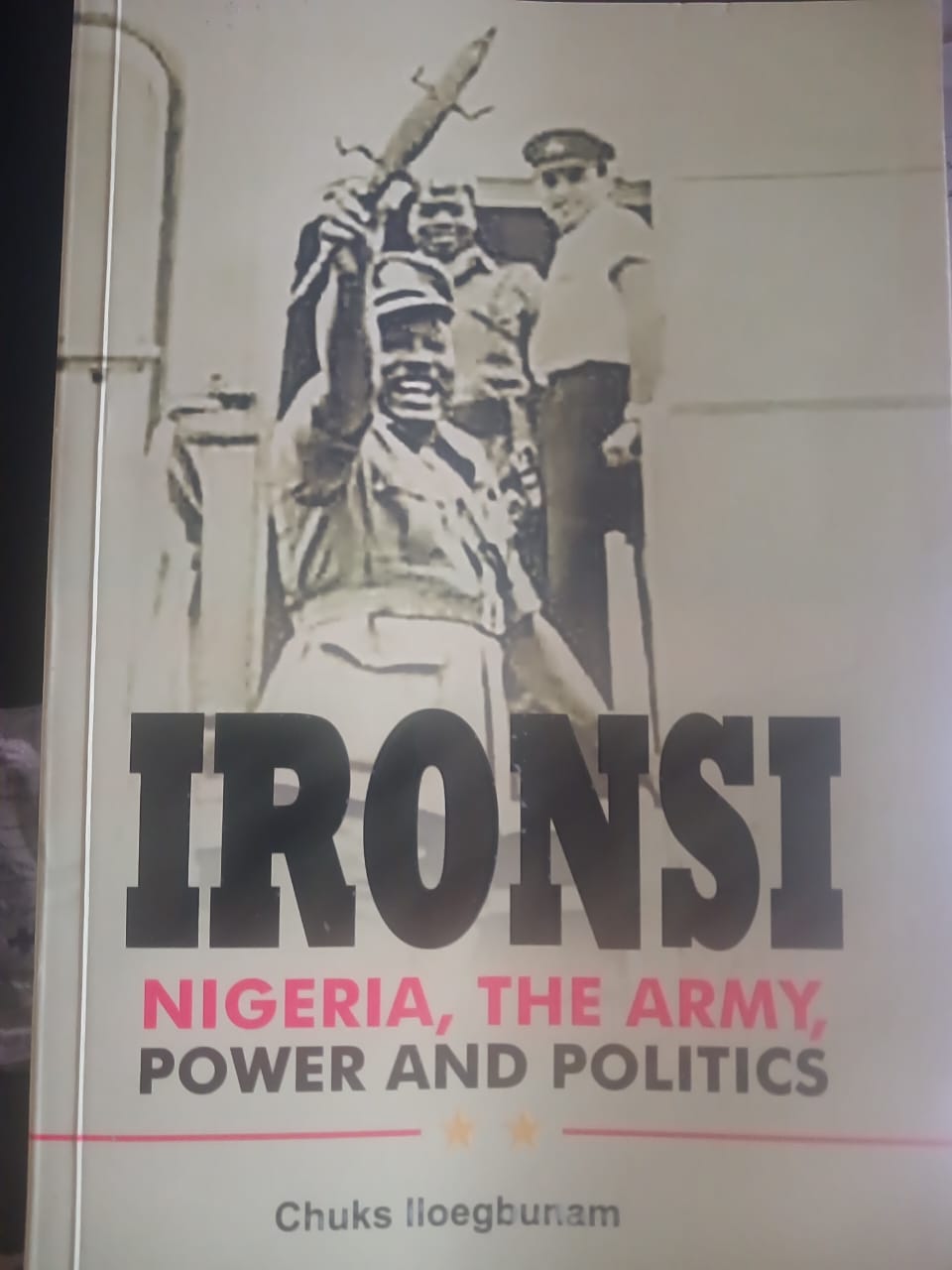
Excerpts from IRONSI NIGERIA, THE ARMY, POWER AND POLITICS By Chuks Iloegbunam
Published in Nigeria by EMINENT BIOGRAPHIES