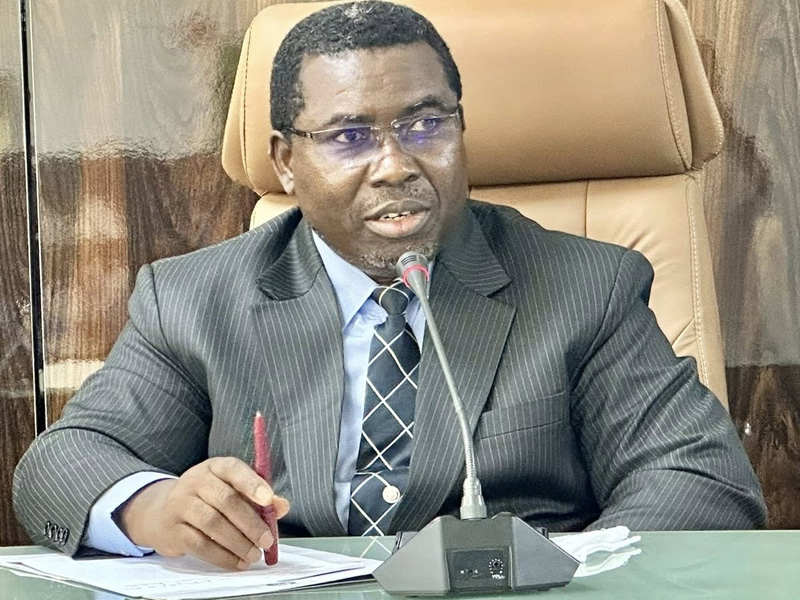
The Chairman of the Independent National Electoral Commission (INEC), Professor Joash Amupitan (SAN), has issued a stern warning to Resident Electoral Commissioners (RECs) across the federation that the credibility, smoothness, and public legitimacy of the 2027 general elections depend squarely on their precision, vigilance, institutional neutrality, and administrative rigour.
Addressing National Commissioners and RECs from all 36 states and the Federal Capital Territory (FCT) during a strategic consultative meeting in Abuja on Wednesday, November 25, 2026, Amupitan declared that “margin for error simply does not exist” with only 51 days remaining before voters head to the polls.
With the Presidential and National Assembly elections scheduled for January 16, 2027, and the Governorship and State Houses of Assembly polls fixed for February 6, 2027, the INEC boss demanded immediate, documented compliance and personal accountability from every state office.
Reflecting on the off-cycle elections conducted since he assumed office in October 2025, including governorship polls in Anambra, Ekiti, and Osun states, the FCT Area Council elections, and 16 legislative bye-elections, Amupitan insisted that every operational bottleneck identified during post-election reviews must be permanently resolved ahead of the upcoming national exercise.
The immediate test of that readiness arrives this Saturday, November 28, 2026, when the commission conducts a nationwide mock accreditation and result transmission exercise between 8:30 AM and 2:00 PM. According to an official notice issued by INEC’s Director of Voter Education and Publicity, Mrs. Victoria Eta-Messi, the simulation will take place across 17,676 selected polling units, comprising two units in each of Nigeria’s 8,838 Registration Areas.
Amupitan directed every REC to personally supervise the simulation in their respective states and submit a comprehensive post-exercise report to Headquarters by Monday, November 30, 2026. Beyond supervising the mock exercise, the INEC chairman laid out strict operational expectations for the state commissioners in pure administrative terms. He instructed them to enforce tight monitoring of both forward and reverse logistics so that sensitive and non-sensitive voting materials arrive safely and on time.
He also mandated strict adherence to upgraded technological safeguards, noting that Saturday’s simulation will stress-test newly procured Bimodal Voter Accreditation System (BVAS) machines, whose maximum voter load has been reduced from 1,250 to 850 per device, alongside enhanced result-validation protocols on the INEC Result Viewing Portal (IReV) that subject Form EC8A figures to automated arithmetic and over-voting checks before upload.
On security and personnel management, Amupitan directed state offices to deploy Election Risk Management mapping tools in close collaboration with security agencies to neutralize potential flashpoints before and during voting. He further charged the commissioners to guarantee the transparent recruitment, rigorous training, and prompt payment of allowances for the more than 1.41 million ad hoc personnel required to run the elections, while maintaining regular engagement with political parties, civil society organisations, observers, and the media to curb disinformation.
Speaking directly as the commission’s chief spokesman at the Abuja consultative session, Amupitan cautioned RECs against relying on unverified briefings from subordinates in their state offices. “Stay close to your Electoral Officers, supervise field audits personally rather than relying solely on secondhand assurances, and report realities on the ground with complete candour so Headquarters can support you swiftly,” he charged.
With Nigeria’s verified national voter register now exceeding 100 million citizens, Amupitan reiterated that the commission will neither tolerate partisanship nor shield any official caught compromising institutional neutrality. “Every detail you verify today, every contingency plan you test on Saturday, and every standard of neutrality you uphold in your state brings us closer to an election whose outcome reflects the genuine, peaceful choice of the voters,” he concluded.