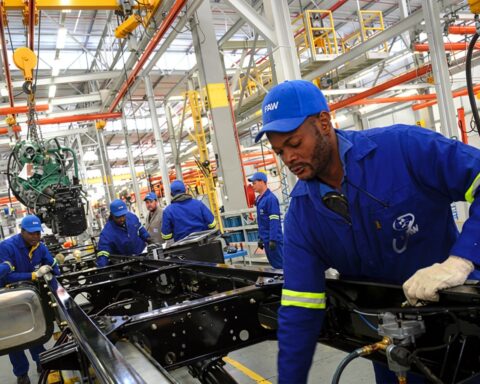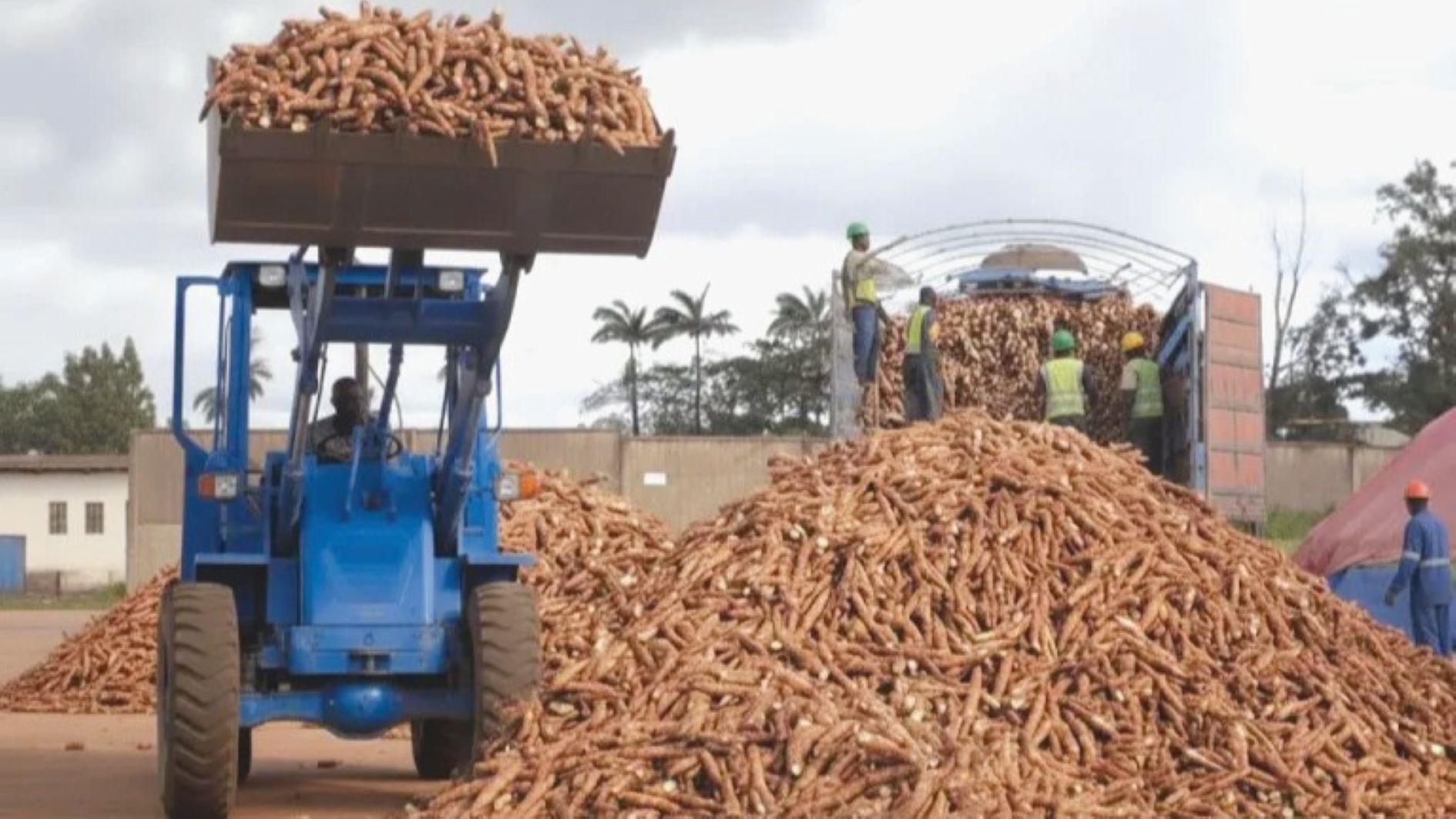
Nigeria’s cassava processing industry is grappling with an acute operational crisis as cassava starch imports surged by 13,293 per cent over a five-year period, forcing local processing factories to operate at a dismal 15 per cent of their installed capacity and leaving smallholder farmers counting heavy financial losses.
Despite retaining its status as the world’s largest producer of cassava, with annual output exceeding 60 million metric tonnes, Nigeria remains heavily dependent on foreign imports to meet industrial demand for starch, ethanol, and High-Quality Cassava Flour (HQCF).
Industry data shows that following a brief, exchange-rate-induced dip in 2023, when imports fell by 98 per cent year-on-year to 4.1 tonnes valued at $32,080, shipments rebounded sharply in 2024 by 73,004.9 per cent to 2,997.3 tonnes worth $2.34 million, with import volumes climbing further throughout 2026.
Speaking during an agro-industrial stakeholders’ forum held at the Lagos Chamber of Commerce and Industry (LCCI) Conference and Exhibition Centre in Alausa, Ikeja, Lagos, industry leaders warned that local mills face existential threats unless urgent policy and structural reforms are implemented.
According to sector operators, domestic processors are being priced out of the market by high energy costs, expensive logistics, and federal trade policies that inadvertently favor foreign suppliers.
Specifically, stakeholders pointed to the Federal Government’s Executive Order on Increasing Local Production of Healthcare Products, which grants import-duty and Value Added Tax (VAT) exemptions for pharmaceutical raw materials, including pharmaceutical-grade corn starch under HS Code 1108121000, thereby making imported starch significantly cheaper than locally refined cassava starch.
Engr. Charles Adeniji, a prominent cassava value-chain investor and industry stakeholder, noted in Lagos that structural bottlenecks and short-term credit facilities are crippling domestic production.
”About 80 per cent of our cassava is consumed locally as food, five per cent goes into industry, and about 15 per cent is for export. So when we are talking about industrialisation, there is still a lot of room to make improvements,” Adeniji stated.
He further emphasized the impact of soaring input costs on future harvests: “A lot of people are not doing any serious farming this year. The cost of diesel is very high, so the cost of transportation is very high. When you look at all the factors surrounding production, people are not farming the way they should, and it is going to affect us next year. Furthermore, cassava processing requires long-term financing; if the government wants to provide loans, it must be almost a three-year cycle.”
Beyond import competition, manufacturers in the brewing, pharmaceutical, and flour-milling sectors cite inconsistent supply volumes and quality standards as key reasons for turning to foreign suppliers in Thailand and Vietnam.
Addressing off-take requirements from her facility in Ogun State, Mrs. Bola Adeyemi, Chief Executive Officer of GoldenGrain Mills Ltd, explained that industrial buyers require strict reliability to sustain round-the-clock operations.
”First is quality. Bread flour needs HQCF with less than 12 per cent moisture and no cyanide, and most local processors cannot meet that yet,” Adeyemi said. “Second is supply reliability. We run 24/7. If a processor fails to deliver, our production is delayed, whereas imports arrive on schedule. I would consider guaranteed off-take with local processors if they can present Standards Organisation of Nigeria (SON) certification for every batch and a cooperative or aggregator that can guarantee 500 tonnes monthly.”
The downturn in industrial demand has cascaded down to rural farming communities across key producing belts in Ogun and Delta states, where plummeting farm-gate prices and prohibitive transport fares have forced growers to abandon mature crops.
In Sagamu, Ogun State, commercial cassava farmer Abiodun Rasheed revealed he left an entire hectare unharvested after haulage quotes exceeded the market value of his tubers.
”Haulage to the city costs ₦70,000 for a truckload worth ₦45,000,” Rasheed lamented. “Government policies make it easier for big companies to bring in a container than to deal with 200 small farmers. If we stop planting cassava, Nigeria will import garri next year.”
Similarly, at her farm in Otovwodo, Delta State, smallholder farmer Okiemute Obarisi harvested only half of her two-acre plantation this season.
”There is no factory near us to buy fresh tubers. They want us to deliver to Lagos, but transport alone will finish the money,” Obarisi said, warning that a mass exit of farmers from cassava cultivation could drive the price of a bag of garri up to ₦30,000 and threaten national food security.
To reverse the trend, agro-processing experts, including Yemisi Iranloye, Chief Executive Officer of Psaltry International Company Limited, who has championed rural value-chain integration in Oyo State, have consistently advocated for targeted infrastructure investments rather than reliance on subsidies alone.
Industry analysts stress that establishing regional aggregation centers, expanding rural mechanization, providing alternative energy solutions for mills, and enforcing local-content off-take mandates are critical to reviving idle factories and safeguarding Nigeria’s multi-billion-naira cassava economy.