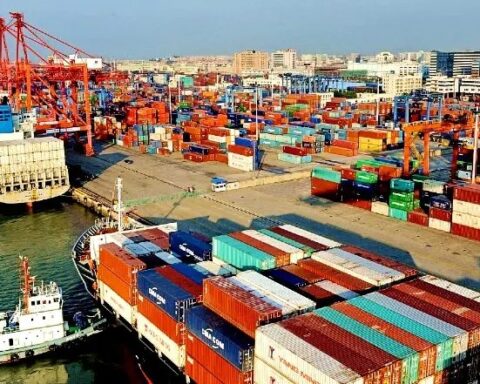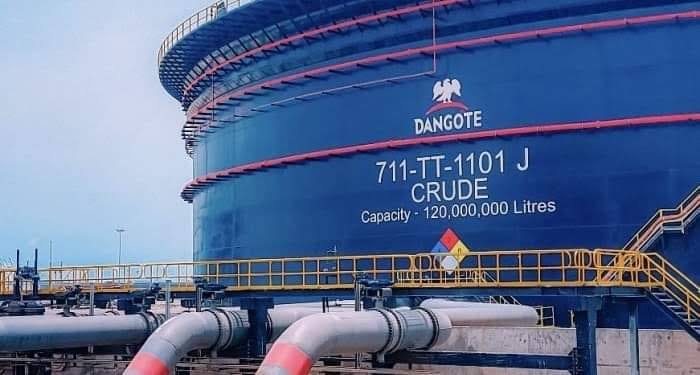
The United Kingdom imported £1.02 billion worth of refined petroleum products from Nigeria in the 12 months ending June 2026, marking a historic reversal in bilateral energy trade driven by the Dangote Petroleum Refinery in Ibeju-Lekki, Lagos.
According to the UK government’s Trade and Investment Factsheet published by the Department for Business and Trade in London on November 6, 2026, British purchases of processed fuel from Nigeria more than doubled, rising by over 100 per cent compared to the preceding 12-month period ending June 2025.
The surge elevated refined petroleum to Nigeria’s single largest merchandise export category to the United Kingdom, pushing Nigeria’s total merchandise exports to Britain up by 10.4 per cent, or £180 million, to approximately £1.9 billion.
For decades, Nigeria’s energy relationship with Britain was defined by exporting unrefined crude oil while spending substantial foreign exchange importing finished fuel.
The latest figures confirm a decisive structural shift in that dynamic. While UK imports of Nigerian refined fuel jumped to £1.02 billion, British exports of refined petroleum to Nigeria dropped by 42.7 per cent to £772.3 million,though fuel still accounted for 51.5 per cent of all British merchandise exports to the West African nation.
As a result, Nigeria recorded a refined petroleum trade surplus of approximately £245 million with the United Kingdom.
At the same time, UK imports of Nigerian crude oil fell by roughly 56 per cent, representing a reduction of about £575.5 million from an estimated £1.35 billion in the prior year, as domestic refineries absorbed more local feedstock. In value terms, Nigeria’s refined fuel exports to Britain exceeded its crude oil shipments by roughly 85 per cent, or £467 million.
The milestone coincides with the steady operational ramp-up of the 650,000-barrel-per-day Dangote Petroleum Refinery located at the Lekki Free Zone in Lagos. Following the closure of its oversubscribed initial public offering in late October 2026 ahead of a planned November listing on the Nigerian Exchange, management led by Group President Aliko Dangote has outlined plans to further expand refining capacity.
Corroborating the shift in trade flows, an August 2026 report by the United States Energy Information Administration (EIA) in Washington, D.C., noted that Nigeria’s seaborne petroleum product exports had surged sevenfold since 2023, averaging 350,000 barrels per day in the second quarter of 2026 compared with 46,000 barrels daily in 2023. Over the same period, shipments to Europe rose to 130,000 barrels daily, up from 40,000 barrels in 2025.
”With the increased supply of petroleum products in Nigeria from the country’s largest refinery, imports fell, exports increased, and Nigeria became more self-sufficient in refined petroleum products,” the EIA stated in its August assessment.
Trade flows into Britain were further supported after the UK government exempted Nigeria from stricter compliance requirements under new sanctions targeting fuel refined from Russian crude in third countries, which took effect on May 20, 2026.
Neither the UK Department for Business and Trade nor Dangote Petroleum Refinery held a press briefing or issued an individual spokesperson statement alongside the November 6 statistical release.