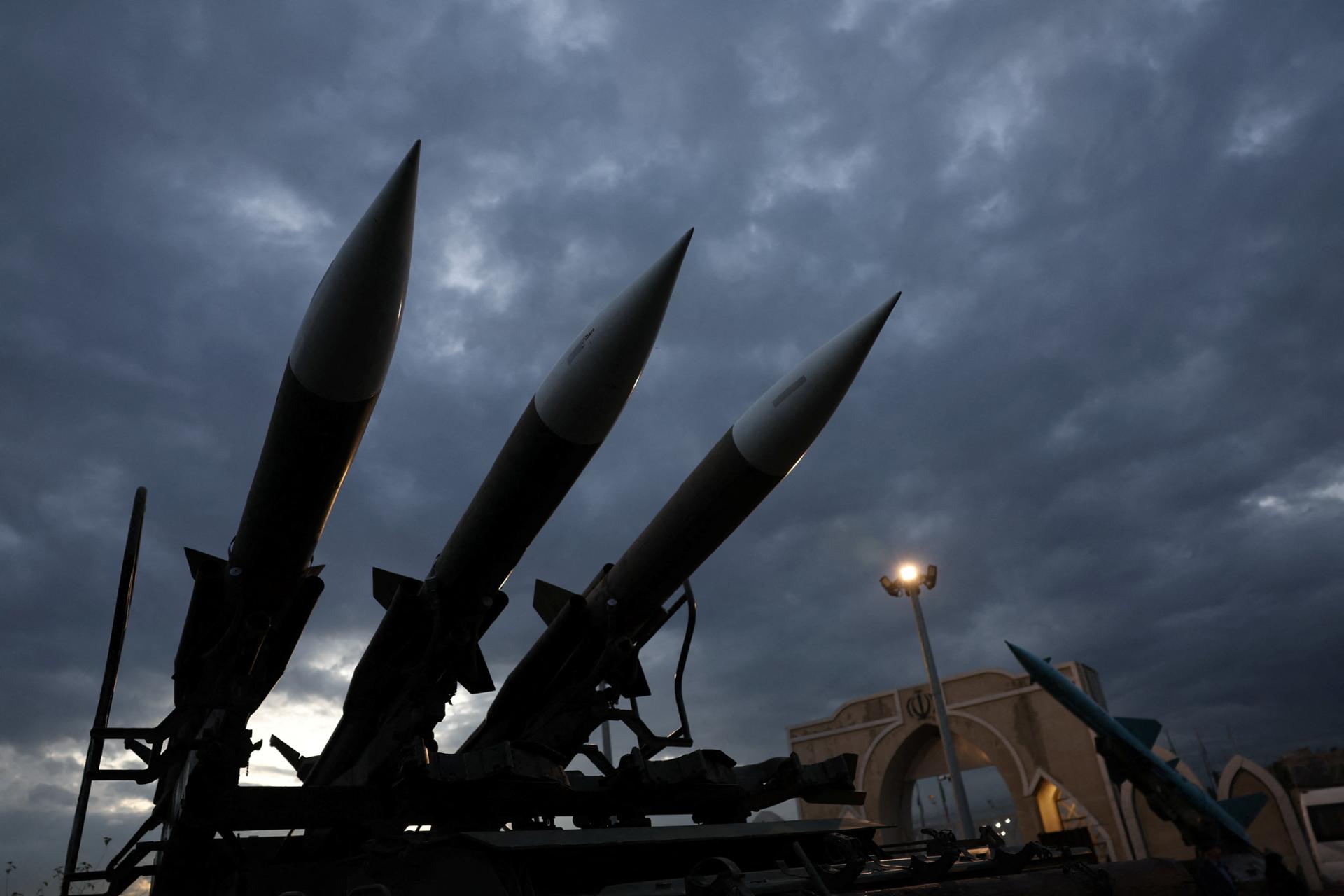
Air defense systems in Bahrain intercepted multiple incoming aerial threats early Sunday morning after Iran’s Islamic Revolutionary Guard Corps (IRGC) claimed responsibility for launching a six-drone attack against a United States military installation in the Gulf kingdom.
According to witnesses and journalists in the capital, Manama, initial explosions and warning sirens sounded across the island nation around 4:00 a.m. local time on Sunday, November 15. A second wave of blasts was reported by residents roughly two and a half hours later, around 6:30 a.m.
In an official statement broadcast via Iranian state media and posted on Telegram, the IRGC Aerospace Force asserted that it had deployed six attack drones targeting a U.S. air-defense radar system stationed at the Al-Riffa helicopter base (also spelled Al-Rifaa), located roughly a 30-minute drive south of Manama.
The IRGC claimed the strike was carried out in retaliation for “hostile U.S. actions” and asserted that the impacts were heard across several parts of Bahrain, though Tehran provided no independent verification of damage or casualties.
The General Command of the Bahrain Defence Force (BDF) confirmed that its air defense units engaged and destroyed several Iranian aerial targets, preventing them from reaching their intended objectives. In its statement, the BDF accused Tehran of pursuing a “systematic hostile approach” against the kingdom and affirmed that all military units remain at maximum combat readiness.
During the early morning barrage, Bahrain’s Ministry of Interior issued two separate public safety alerts on the social media platform X, marking the country’s first nationwide threat warnings since September.
The ministry urged citizens and residents to remain calm, move immediately to the nearest safe location, and monitor official channels for updates. Meanwhile, Bahrain’s Foreign Ministry condemned the strikes as a violation of the kingdom’s sovereignty under the UN Charter and called on the United Nations Security Council to hold Tehran accountable.
While U.S. Central Command (CENTCOM) did not immediately release a separate casualty or damage assessment for Sunday’s incident, the strike follows a nearly identical confrontation on Friday, November 13, 2026.
During that incident, the IRGC claimed to have destroyed a U.S. early-warning radar facility in Bahrain, a claim CENTCOM formally rejected in a public fact-check, stating that American forces had shot down both incoming one-way attack drones with zero injuries or structural damage.
Sunday’s attack marks the second direct aerial strike on Bahrain, which hosts the U.S. Navy’s Fifth Fleet, within 48 hours, ending a two-month lull in attacks on Gulf states.
The renewed hostilities unfold on Day 261 of the broader regional conflict that began on February 28, 2026, following joint U.S. and Israeli strikes on Iran. Despite ongoing diplomatic efforts led by Washington, Tehran, and regional mediators to broker a ceasefire, tensions remain acute over Iran’s closure of the Strait of Hormuz and an active U.S. naval blockade on Iranian ports.
In statements carried by state media on Sunday, Iranian Parliament Speaker Mohammad Bagher Ghalibaf warned that any further U.S. military action would trigger an expanded Iranian response, stating that Tehran would not remain in a state of “neither war nor peace.” Simultaneously, in a separate statement via the Islamic Republic of Iran Broadcasting (IRIB), the IRGC reiterated that the Strait of Hormuz remains closed to unauthorised shipping.
Elsewhere in the Gulf on Sunday morning, the Saudi-led coalition reported intercepting two ballistic missiles launched toward Riyadh and three drones over Saudi Arabia’s Eastern Province by Iran-backed Houthi forces in Yemen. Saudi officials subsequently issued a statement condemning the attacks on Bahrain and expressing full solidarity with Manama.