Liberian security forces seized nearly four tonnes of Europe-bound cocaine valued at approximately $317 million during a targeted raid on a warehouse in Duazon, Margibi County, on Tuesday, July 21, 2026.
Officially confirmed by police leadership on Friday, July 24, 2026, the historic interception, the largest in the nation’s history, underscores how transnational drug cartels are increasingly exploiting West Africa as a primary storage and transit corridor for international narcotics.
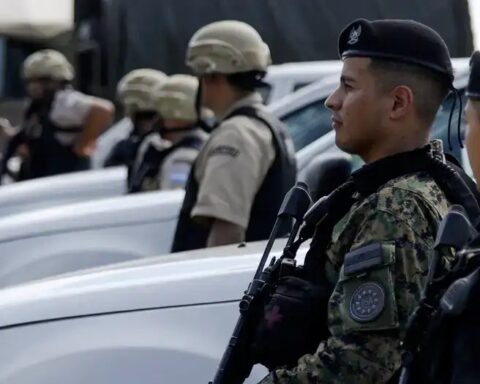
Armed with a court-issued search and seizure warrant, operatives from the Liberia Drug Enforcement Agency (LDEA), backed by the Liberia National Police (LNP), the Executive Protection Service (EPS), and other units under Liberia’s Joint Security architecture, stormed a residential compound and warehouse in Duazon, a town situated roughly 20 to 28 kilometres east of Monrovia along the corridor toward Roberts International Airport.
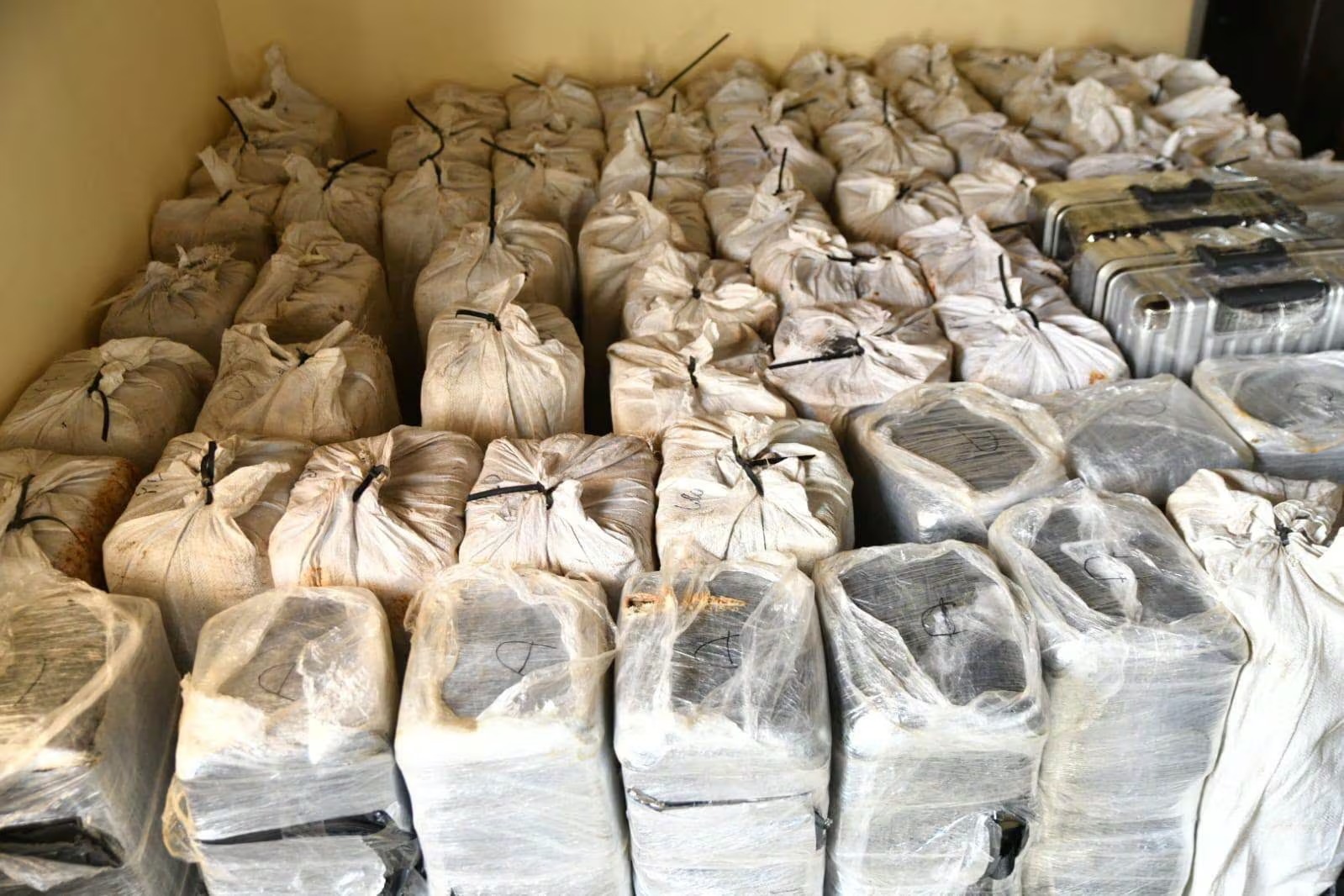
Inside the facility, officers uncovered dozens of sealed suitcases and boxes packed inside a cargo truck.
Subsequent forensic and laboratory testing confirmed the cache weighed 3,971 kilograms, nearly four metric tonnes, with an estimated street value of $317 million, a figure cited in court documents at up to $317.68 million.
During the raid, authorities arrested two foreign nationals on-site: Johann David Garces Grajales, a dual Colombian and Spanish passport holder, and Srdan Seles, a Serbian national.
Addressing reporters during official press briefings in Monrovia, including a major joint press conference held at the Ministry of Information on Thursday, July 30, 2026, Liberia National Police Inspector General Gregory Coleman revealed that the seizure was the culmination of an 18-month intelligence and surveillance operation. “Between 2018 and 2023, apparently there was a resurface of major trafficking and transiting in Liberia.
Over the last one-and-a-half years, we’ve been surveilling them, and this is the result of that operation,” Inspector General Coleman stated. Coleman noted that forensic analysis and examination of package markings were underway to trace the exact Latin American origin of the shipment.
Though investigators confirmed the consignment was destined for European markets. Alongside Coleman, Information Minister Jerolinmek Piah participated in the government briefings, while Vice-President Jeremiah Koung commended the joint security forces and warned that all culpable actors would face prosecution “regardless of who you are.”
Later that same day on Thursday, July 30, 2026, Liberian authorities publicly destroyed the seized narcotics at a designated Liberia Medicines and Health Products Regulatory Authority (LMHRA) waste incineration site in Forzohn, District #1, Margibi County, near Careysburg.
The burn destroyed 4,208.6 kilograms, or 4.2 metric tonnes, of cocaine with a combined value of roughly $336 million, merging the July 21 Duazon haul with an earlier June 8, 2026, seizure of 237.6 kilograms worth $19.2 million that had been intercepted at Roberts International Airport.
While police indicated the two shipments originated from separate networks, the back-to-back busts triggered sweeping institutional fallout across Liberia’s security apparatus and political establishment.
Following evidence of internal collusion, President Joseph Boakai dismissed 11 officials and suspended another across the police, airport authority, and National Security Agency (NSA).
Among those removed were Police Commissioner for Criminal Investigation, Intelligence, and Interpol Johnny Bolar Dean, who reportedly admitted to accepting a $10,000 bribe, as well as senior LDEA and airport security commanders.
By August 19, 2026, Attorney-General N. Oswald Tweh announced criminal indictments extending into the political elite, naming former Vice-President Jewel Howard-Taylor alongside foreign suspects charged in absentia.
International narcotics analysts warn that Liberia’s record seizure reflects a broader structural shift in global trafficking routes. According to François Patuel, head of research for West and Central Africa at the United Nations Office on Drugs and Crime (UNODC), cartels are aggressively diversifying maritime and air corridors while increasing shipment volumes.
Lucia Bird Ruiz-Benitez de Lugo, director of the Observatory of Illicit Economies in West Africa at the Global Initiative Against Transnational Organised Crime, noted that some of the world’s most sophisticated criminal syndicates now use West African coastal nations to warehouse multi-tonne stockpiles before moving them northward to Europe, turning the region into a critical front line in global counter-narcotics enforcement.