By Valentine Obienyem
There are political relationships that begin as a matter of convenience and others that grow out of a convergence of convictions, records and aspirations. My appreciation of Senator Rabiu Musa Kwankwaso belongs to the latter category. As he celebrates his 70th birthday on 21 October 2026, I find it worthwhile to reflect not merely on the man, but also on his political journey, his achievements, his influence and the relevance of his record to Nigeria’s search for purposeful leadership.
In 2023, we worked and prayed towards the emergence of a Peter Obi–Rabiu Kwankwaso presidential ticket. We believed that the combination of the two men offered an opportunity to bring together complementary political strengths, administrative experience and a shared aspiration for a Nigeria that works for its people. When that arrangement could not materialise, the Labour Party settled for the Peter Obi–Datti Baba-Ahmed ticket. That was the path history took at the time.
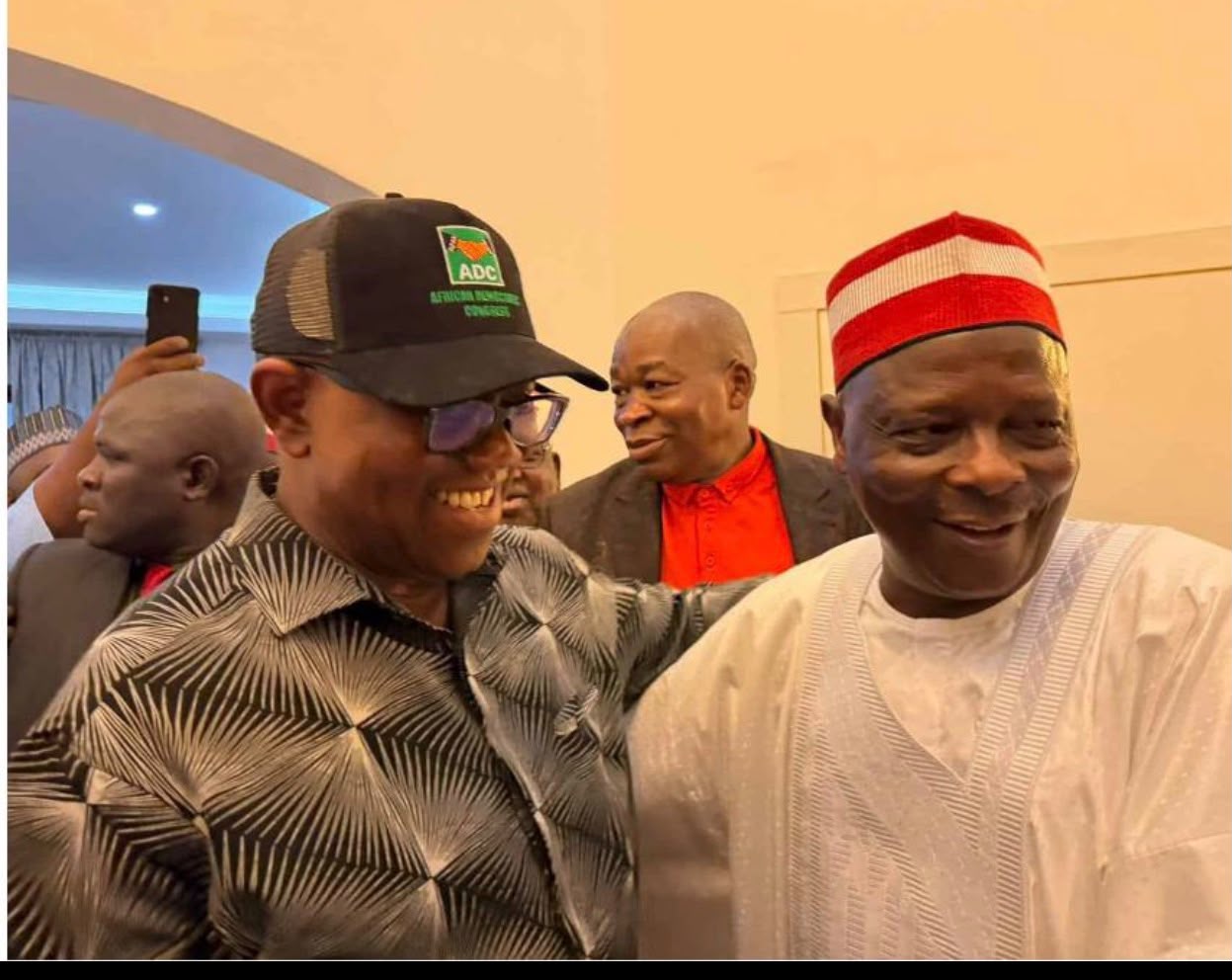
Today, however, the political alignment we once hoped to see has come to fruition in the Nigeria Democratic Congress (NDC), with Peter Obi and Rabiu Musa Kwankwaso now associated in the same political project. Sometimes, political possibilities require time before they find their proper expression. My interest in Kwankwaso is not based on political sentiment alone. I have always maintained that politics should be assessed substantially through records. In China, for instance, considerable attention is paid to how an individual performed in lower positions before being entrusted with higher responsibilities.
The underlying principle is simple: past performance, though not an infallible guarantee of future success, provides an important basis for assessing capacity. Leadership should not be reduced to eloquence, promises or the ability to command crowds. What did the person do when entrusted with public resources? What institutions did he build? What changed in the lives of the people under his watch? These are the questions that matter. This is where Kwankwaso deserves serious consideration. His political influence in Kano State is not an accidental phenomenon.
It has been sustained by a political movement built around his leadership, known as the Kwankwasiyya movement, with its distinctive red cap and its considerable following. To understand the phenomenon, one must look beyond the colour of the cap to the political history and social networks that sustain it. Whatever one’s political preferences, it is difficult to discuss Kano politics without reckoning with Kwankwaso’s influence.
There is an interesting parallel here with Mr. Peter Obi. Obi’s political following has been shaped substantially by his performance as Governor of Anambra State, particularly his emphasis on fiscal discipline, savings, education, healthcare and prudent management of public resources. His supporters often point to these records as the foundation of their confidence in him. Kwankwaso, similarly, commands a committed following whose roots are connected to his years in public office, his political organisation and his impact on Kano.
The two movements have different histories and expressions, but both illustrate how a politician’s record and the public’s interpretation of that record can become the basis of enduring political loyalty. Kwankwaso served as Governor of Kano State from 1999 to 2003 and again from 2011 to 2015. His years in office were associated particularly with investments in education, including overseas and domestic scholarship programmes, as well as initiatives aimed at expanding access to education and developing human capital.
His administration also pursued infrastructure projects and programmes intended to improve opportunities for young people. These interventions, alongside his political organisation, helped consolidate his standing in Kano. Indeed, in assessing Kwankwaso’s legacy, education deserves special attention. A society that neglects the education of its young people mortgages its future. Roads and buildings are important, but the development of human beings is more fundamental. A government that enables a young person from a modest background to acquire an education creates possibilities that can extend across generations.
This is one of the reasons Kwankwaso’s education initiatives remain an important part of discussions about his years as governor. Their outcomes, costs and long-term effects can be debated, as they should be, but their place in the assessment of his administration cannot be ignored. Would I describe him as the best governor Kano State has ever had? That is a judgement on which some people may differ, and a definitive conclusion would require a careful comparison of successive administrations against common criteria.
What can be said is that Kwankwaso remains one of Kano’s most consequential political figures, and his gubernatorial record is central to understanding why. His influence has endured beyond his immediate tenure, extending through successive political contests and the network of political loyalists associated with him. His career also demonstrates that Nigerian politics cannot be understood solely through the lens of party labels. Political parties change, alliances shift, and yesterday’s opponents sometimes become today’s partners.
What remains important is whether political cooperation can be translated into a credible programme of governance. A political alliance is not an end in itself; it must be judged by what it proposes to do for the country and, ultimately, by what it accomplishes for the people. This is particularly relevant to the relationship between Obi and Kwankwaso. Their political strengths emerge from different geographical and social constituencies. Obi’s appeal has grown through his emphasis on prudence, accountability and the redirection of public expenditure towards productive sectors.
Kwankwaso’s strength is rooted in Kano’s politics, his experience in public office and the organisational reach of the Kwankwasiyya movement. The challenge before any political partnership involving them is to translate these different strengths into a coherent national vision that transcends regional interests. At 70, Kwankwaso belongs to a generation whose experiences offer both lessons and questions for Nigeria’s future.
His career invites us to examine the relationship between political organisation and public service, between popular loyalty and measurable achievement, and between the experience acquired in state administration and the responsibilities of national leadership. These are not questions to be answered by birthday tributes alone. They require sober reflection on the record. As I celebrate him, I do so with the hope that the experience he has accumulated over the years will continue to serve Nigeria.
The country needs leaders who understand that public office is a trust, not a personal possession; that political popularity must be matched by responsibility; and that the ultimate measure of leadership is the improvement of people’s lives. At 70, Rabiu Musa Kwankwaso has earned a place in Nigeria’s political history. The more important question, however, is how the experience of his past will contribute to the future we seek to build. For those of us who believed in the possibility of an Obi–Kwankwaso partnership in 2023, the present political alignment revives an old hope.
Whether that hope fulfills its promise will depend not on nostalgia or the excitement of political reunion, but on the clarity of its vision, the integrity of its methods and the quality of the service it renders to Nigerians. Happy 70th birthday, Senator Rabiu Musa Kwankwaso. May the years ahead bring wisdom, good health and renewed opportunities to contribute meaningfully to the progress of our country.
May your political journey with Peter Obi come to fruition and ultimately lead to the emergence of a Nigeria where leadership is defined by competence, character, compassion and a genuine commitment to the welfare of the people. May Nigeria win, and may the hopes of millions of our people for a better country become reality.