The Federal Government’s reliance on local capital markets expanded sharply in 2026, with total domestic borrowings surging by 90.5 per cent year-on-year to N24.7 trillion in the eight-month period ending August 31, 2026. This represents a significant jump from the N12.98 trillion recorded during the corresponding period in 2025 (8M’25).
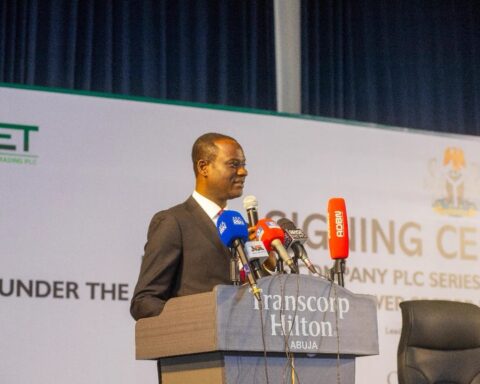
The figures were outlined in financial market reports reviewed during a press briefing held on Monday, September 7, 2026, at the Debt Management Office (DMO) headquarters in Maitama, Abuja.
Presenting the operational breakdown, DMO Director-General Patience Oniha noted that the elevated domestic issuances, primarily across Federal Government Bonds and Nigerian Treasury Bills were required to fund the expanding deficit in the 2026 Appropriation Act.
Under the current 2026 fiscal framework, the Federal Government budgeted N68.32 trillion in total expenditure against N36.87 trillion in anticipated revenues, resulting in a deficit of N31.45 trillion. The government designated N29.20 trillion of this deficit to be covered via domestic and external borrowing.
According to data presented at the briefing, the N24.7 trillion raised between January and August accounts for roughly 84.7 per cent of the government’s total domestic borrowing target for the year.
Speaking on behalf of the Ministry of Finance, the Director of Information, Mohammed Manga, emphasized that the government is actively prioritizing domestic market stability while meeting critical obligations.
Financial analysts, however, expressed concern regarding the crowding-out effect on private businesses due to high interest rates.
”The current trajectory shows an average monthly domestic borrowing pace of N3.08 trillion,” noted Dr. Tilewa Adebajo, Chief Executive Officer of CFG Advisory, during a financial review session in Lagos.
“If the government maintains this rate through the final quarter, total domestic debt issuances for the year could significantly exceed initial fiscal projections, adding further pressure to debt servicing costs.”
The government maintains that its borrowing strategy remains within managed debt-to-GDP limits, though market watchers continue to monitor the impact on domestic liquidity and credit access for the private sector.