The International Monetary Fund (IMF) expressed a strong commitment to working alongside member-countries to resolve widening global economic imbalances, while sounding an urgent alarm over surging sovereign debt burdens across the globe.
According to the multilateral lender, worldwide public debt has approached nearly 100 percent of global gross domestic product (GDP), surpassing its post-World War II peaks and showing no sign of slowing.
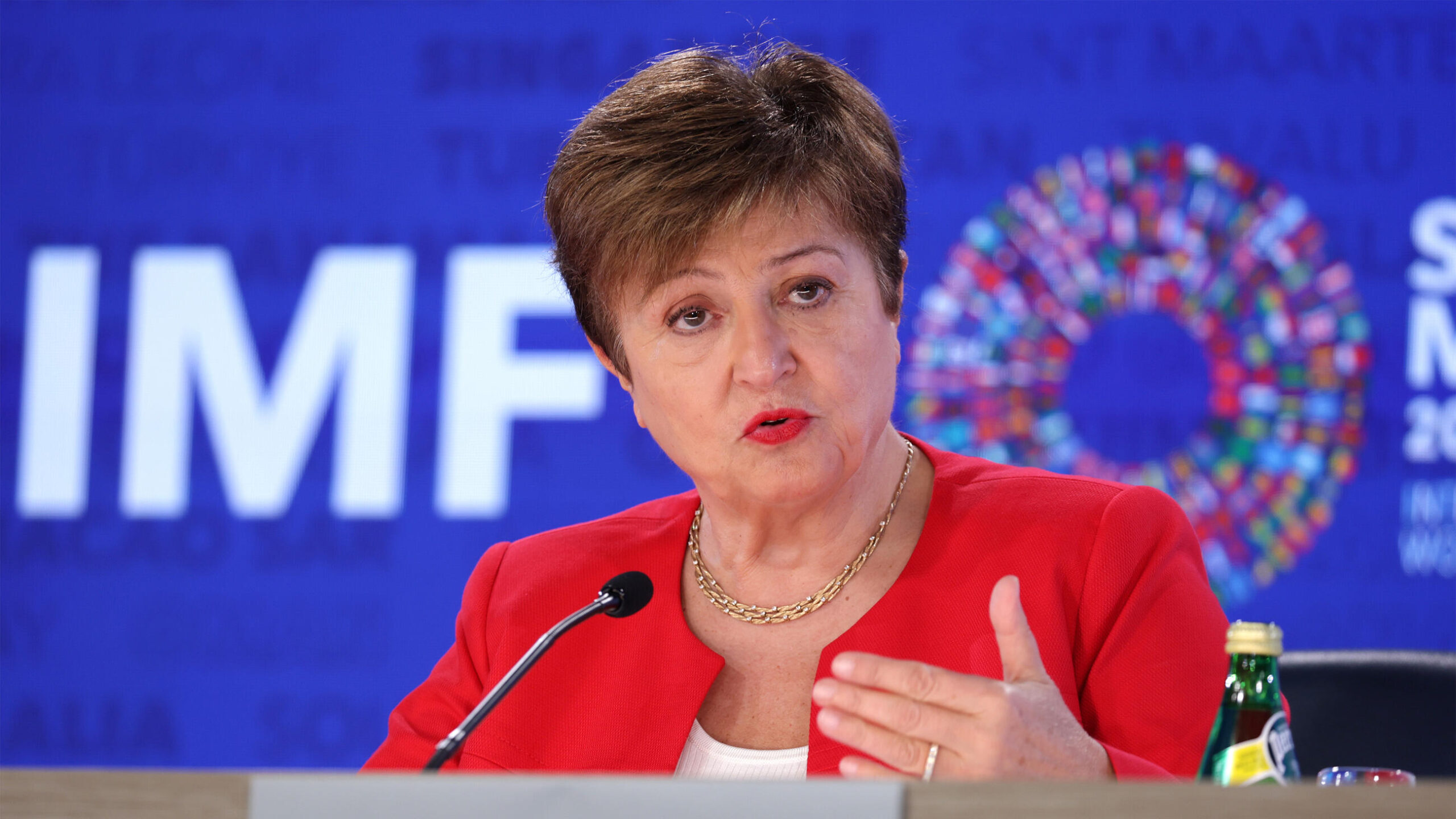
Speaking at the IMF headquarters in Washington during a global macro-policy briefing on September 4, IMF Managing Director Kristalina Georgieva warned that the world’s fiscal trajectories resemble a “staircase” experiencing sharp vertical climbs during crises with little to no policy reduction during periods of recovery.
Public debt is currently projected to cross the 100% threshold, driven by protracted energy market dislocations, high borrowing costs, and compounding demographic and defense expenditures.
The IMF’s latest External Sector Report revealed that excess global imbalances widened by 0.7 percentage points of GDP, marking the sharpest single-year rise in over a decade, heavily amplified by policy divergence in the world’s two largest economies, the United States and China.
Central banks face renewed pressure as disinflation stalls due to lingering commodity supply shocks. In response, core sovereign bond yields have surged to nearly two-decade highs, severely escalating debt-servicing costs for both developed and low-income economies.
Developing nations face the brunt of high refinancing needs and shrinking net external capital flows, including cuts in official development assistance (ODA).
”Looking back, the debt trajectory resembles a staircase: big vertical steps when shocks occur, little or no reduction afterward,” remarked Georgieva. “Starting from excessively high deficits and debts, the persistence of spending above tax revenues will push debt to ever higher heights, threatening financial stability and long-term global growth.”
To stabilize the worsening outlook, the IMF recommended a multi-pronged approach for member nations; Rebuilding fiscal buffers by broadening tax bases, cutting unproductive expenditures, and gradually eliminating energy and fuel subsidies.
Promoting market-oriented domestic reforms in surplus nations to lift internal consumption, alongside structural regulatory rollbacks to jumpstart productivity growth.
Enhancing debtor-investor relations and improving cross-country statistical reporting via the G20 dialogue platform.
The Fund reiterated that it will continue providing technical assistance and structural assessment frameworks to help member countries maintain macro-financial stability amid rising geopolitical and financial volatility.