Nigeria’s foreign exchange reserves expanded to $54.08 billion as of September 3, 2026, marking the country’s highest external buffer since December 2008 and exceeding the Central Bank of Nigeria’s (CBN) full-year target.
Data released by the Central Bank of Nigeria in Abuja on Friday, September 4, 2026, fixed gross external reserves at $54,083,850,797.49.
The figures reflect an upward trajectory throughout early September, rising from $53.90 billion on September 1 and $53.99 billion on September 2. The current level edges closer to the record $54.21 billion benchmark set during the oil boom of December 22, 2008.
Since January 2026, when reserves stood at $45.57 billion, the country has added $8.51 billion (+18.7%) to its foreign holdings. This places the total $3.04 billion above the apex bank’s macroeconomic end-of-year baseline projection of $51.04 billion.
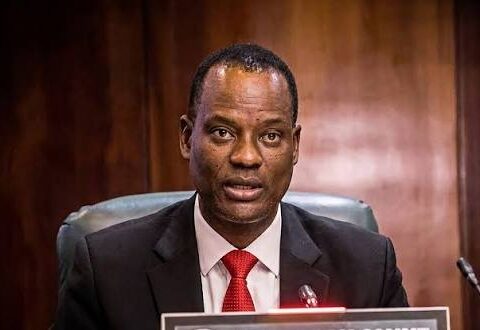
During a monetary policy update at the CBN Headquarters in Abuja, CBN Governor Olayemi Cardoso stated that the reserve buildup stems from sustained foreign exchange reforms, higher diaspora remittance inflows, and improved domestic revenue streams.
Remittance inflows through International Money Transfer Operators (IMTOs) hit a monthly record of $947 million in July 2026, pushing year-to-date inflows to $3.8 billion.
The growth momentum gained momentum through August, climbing from $51.94 billion on August 3 to $52.83 billion on August 21, and reaching $53.81 billion by August 31, a $2.14 billion gain in 30 days.
Operational reports from the Nigerian National Petroleum Company (NNPC) Limited showed crude oil and condensate output maintaining stable averages of 1.68 million barrels per day in July. Gross oil revenues expanded from N2.57 trillion in January to N4.97 trillion in April before settling at N3.09 trillion in July.
At the 306th Monetary Policy Committee (MPC) meeting held in Abuja on July 20–21, 2026, the committee retained the benchmark Monetary Policy Rate (MPR) at 26.5% and the Cash Reserve Ratio (CRR) for commercial banks at 45% to manage inflation and support market stability.
Speaking on behalf of the federal government’s economic management team in Abuja, Special Adviser on Information and Strategy, Bayo Onanuga, noted that the rising foreign reserves demonstrate the success of ongoing macroeconomic stabilization policies and enhance the nation’s capacity to meet external debt service obligations while maintaining currency stability.