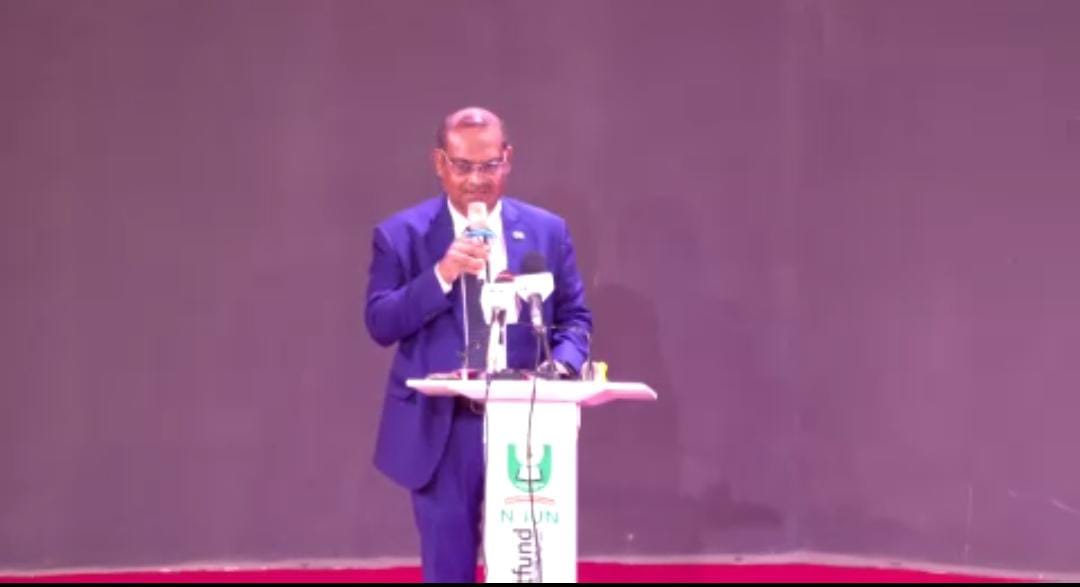
The Bangladesh High Commissioner to Nigeria, Miah Kabir, says his country remains committed to promoting peace, human dignity and justice in its quest for a democratic and non-discriminatory society.
Kabir said this on Tuesday while speaking as the Special Guest of Honour at the 2026 International Hybrid Conference organised by the Department of Peace Studies and Conflict Resolution, Faculty of Social Sciences, National Open University of Nigeria (NOUN).
The conference has the theme: “Peace, Security and Human Condition: Navigating Conflict, Displacement, Gender Issues and Artificial Intelligence in a Fractured World.”
The envoy said the aspiration for a peaceful and inclusive society had been demonstrated during Bangladesh’s recent mass uprising.
“We always aspire to establish a peaceful and anti-discriminatory democratic country and this has been reflected during our recent mass uprising.
“We profoundly appreciate the values of peace, human dignity and justice,” he said.
Kabir said Bangladesh had pursued a foreign policy based on peaceful engagement since its independence and had contributed significantly to international peace and security.
He said the country was also one of the leading contributors to United Nations peacekeeping operations.
According to him, Bangladesh’s peacekeeping efforts extend beyond the deployment of personnel to protecting civilians and supporting the recovery of societies affected by conflict.
“Right now, peacekeeping is not only a deployment of personnel; it is about protecting civilians in which societies can recover from conflict,” he said.
The High Commissioner also highlighted Bangladesh’s achievements in poverty reduction, life expectancy, food security, education and access to basic services.
He said the country’s economic growth, with a Gross Domestic Product (GDP) of about half a trillion dollars annually, demonstrated the important role of government institutions in driving national development.
Kabir said Bangladesh’s experience shows that peace and security must be pursued alongside social and economic development.
He further stressed the need for emerging technologies, particularly Artificial Intelligence (AI), to promote inclusion rather than worsen existing inequalities.
“We therefore need to ensure that artificial intelligence becomes an instrument of inclusion,” he said.
The conference attracted heads of institutions, academics, students, media practitioners and other stakeholders who discussed contemporary challenges to peace, security and the human condition.
The participants examined issues including conflict, displacement, gender concerns and the impact of Artificial Intelligence (AI) in an increasingly fractured world.