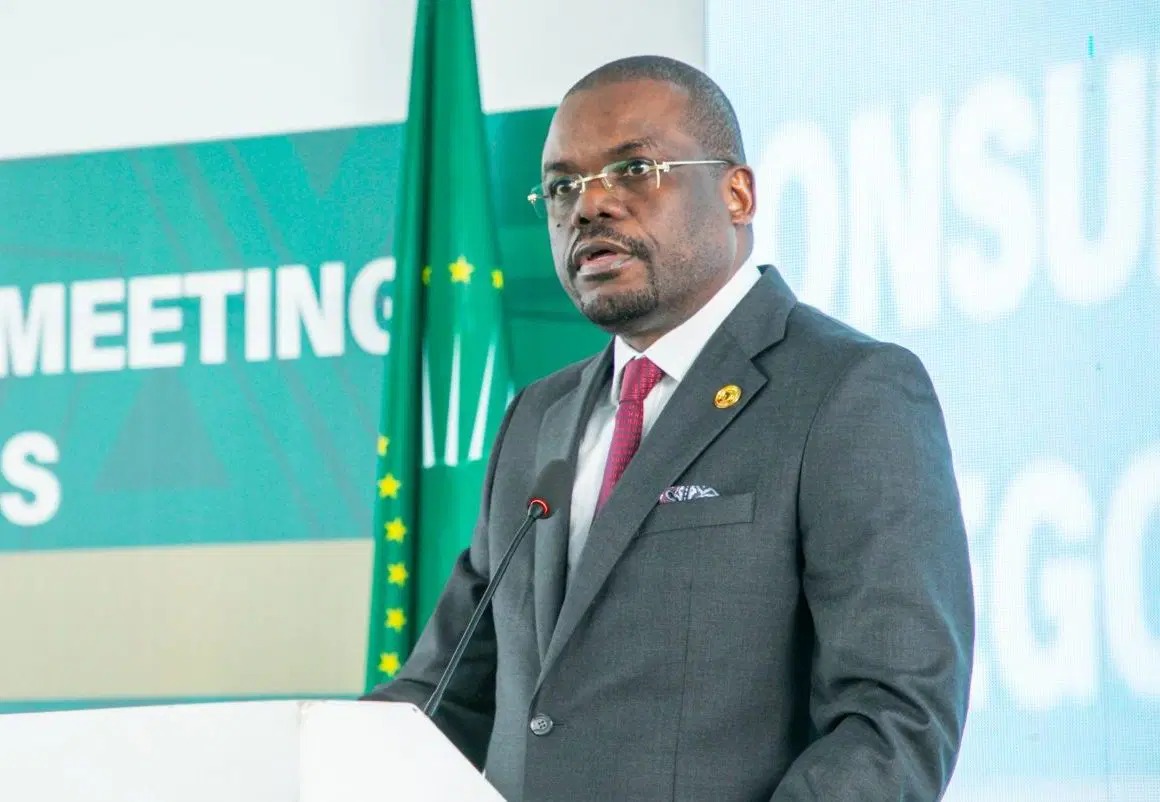
The Director-General of the Africa Centres for Disease Control and Prevention (Africa CDC), Dr. Jean Kaseya, has strongly criticised international partners and global pharmaceutical actors for a systemic lack of interest, blaming it for the total absence of an approved vaccine against the Bundibugyo strain of the Ebola virus.
Speaking during an exclusive interview broadcast live on Channels Television on Thursday morning, October 22, 2026, Dr. Kaseya argued that the medical response would look dramatically different if the pathogen were threatening Western nations.
”Why is this vaccine today not available? Because some of our partners decided to consider this issue as an African issue; they were not interested,” Dr. Kaseya stated. “If this outbreak were in Western countries, vaccines would already be available.”
Dr. Kaseya’s remarks come amidst heightened alarm across the continent as the current Bundibugyo Ebola outbreak becomes the most geographically widespread in recorded history. The virus has hit the Democratic Republic of the Congo (DRC) hardest, where over 4,600 deaths have been recorded and mortality rates hover between 48% and 50%, before spreading across regional borders.
Public health surveillance was escalated further this week after Nigerian health officials confirmed the country’s first case on Tuesday, October 20, 2026. The patient, a woman who arrived in Lagos from Uganda on October 3, is currently under isolation while contact-tracing teams monitor 44 individuals. Cases and heightened vigilance have also been reported in Kenya and Uganda.
Existing approved vaccines, such as Ervebo, were specifically developed for the Zaire strain of Ebola and offer limited to no targeted protection against the Bundibugyo variant.
Addressing the severe gap in medical countermeasures, Dr. Kaseya revealed during the broadcast from the agency’s headquarters in Addis Ababa that Africa is taking decisive steps toward self-reliance. Clinical trials targeting candidate vaccines for the Bundibugyo strain are currently underway via an African manufacturer in Egypt.
Additionally, the Africa CDC is collaborating with health authorities in the DRC and Uganda to explore compassionate-use protocols and cross-reactive clinical trials using existing platforms.
Dr. Kaseya reiterated that African nations possess the intellectual and technical infrastructure required to solve their own public health crises.
”We don’t want to see Africa left behind. We have the knowledge, we have people with intelligence, we have the capacity to manufacture vaccines, and we need to move on,” Dr. Kaseya emphasized, noting that 28 African member states have already contributed direct domestic funding toward the response efforts.
Despite highlighting internal efforts, Dr. Kaseya stressed that immediate, unbureaucratic international assistance remains crucial to prevent a multi-year global disaster. In a joint declaration issued alongside the African Union late Tuesday, the Africa CDC chief appealed for immediate flexible financing, diagnostic supplies, field equipment, and deployment support for frontline health workers.
”Every day of delay costs lives. Africa’s health security is global health security,” Dr. Kaseya warned. “Stopping Ebola in Africa today means protecting the world. We cannot allow this outbreak to spread to more countries or continue for another year.”