There are people whose death leaves a vacuum. Then there are those whose departure quietly closes an era.
Oloye AbdulRasheed Olalekan Alabi belonged unmistakably to the latter category.
His passing on August 1, 2026 was not merely the loss of an accomplished journalist, distinguished public relations practitioner, prolific author or revered traditional chief. Nor was it simply the end of an extraordinary career that traversed journalism, broadcasting, government, corporate communications and cultural advocacy. It marked the departure of one of the last authentic custodians of a generation that regarded character as a greater asset than reputation, discipline as the bedrock of success and public service as a sacred trust rather than an avenue for self-promotion.
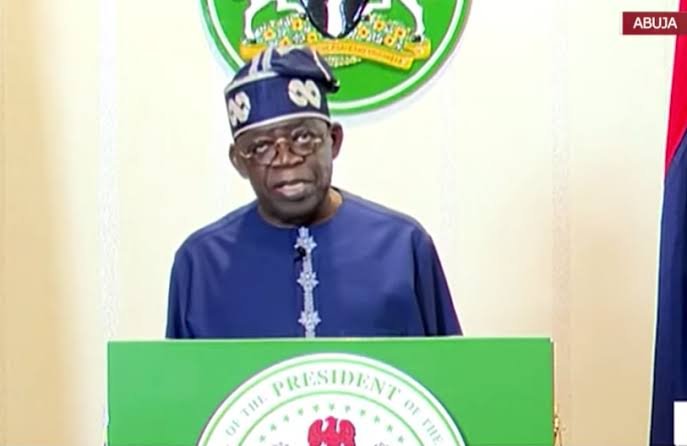
The tributes that followed were entirely deserved. President Bola Tinubu remembered him as a consummate journalist, public relations icon and cultural ambassador. Governor Seyi Makinde described his passing as a monumental loss to Oyo State. The Olubadan of Ibadanland mourned one of his most dependable high chiefs. Journalists, public relations practitioners, traditional rulers and countless protégés all spoke eloquently about the remarkable imprint he left on their professions and communities.
Yet, admirable as those tributes were, they still left an important question unanswered.
Who really was Oloye ’Lekan Alabi?
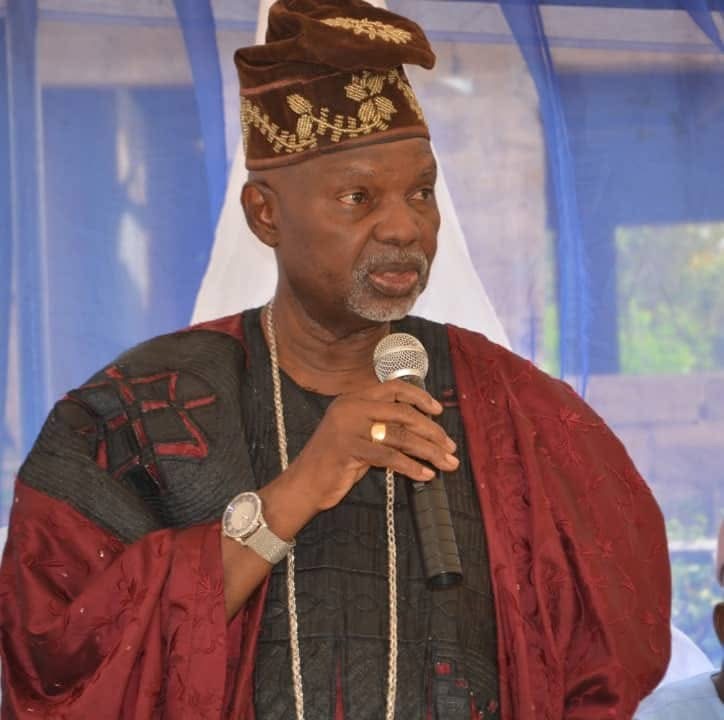
The public knew the impeccably dressed high chief whose command of Yoruba history seemed almost supernatural. They knew the columnist whose remarkable memory effortlessly recalled names, dates and forgotten episodes from decades earlier. They knew the elegant raconteur whose historical essays made the past feel vividly present and whose Iwe Iranti radio commentaries became essential listening for those who understood that history is too important to be left to historians alone.
I knew the mentor.
I had the privilege of watching Oloye from much closer quarters, where reputation gives way to reality.
For more than two decades, our paths crossed repeatedly in editorial sessions, strategy meetings, official assignments, private conversations and the ordinary moments that rarely find their way into public tributes. Those encounters revealed a man who was far more interesting than the already accomplished public figure Nigerians had come to know.
Like every relationship between mentor and protégé, mine was inevitably personal. But it was also built on prolonged observation rather than hero worship. I saw enough of his strengths to understand why he commanded unusual respect, and I saw enough of his human frailties to appreciate that they were often the inevitable excesses of virtues he pursued with uncompromising consistency.
Years before we worked together, our paths had crossed briefly at the now defunct Daily Sketch, after Odu’a Investment Company Limited revived the newspaper. Those encounters were courteous but entirely unremarkable. Neither of us could have imagined that they were the prelude to a professional relationship that would shape much of my own career.
That defining moment arrived in 2003.
Having decided to leave The PUNCH, where I had worked as an investigative reporter, I attended an interview at the headquarters of Odu’a Investment Company Limited within the Cocoa House complex in Ibadan.
I arrived thinking I was merely seeking another job. In retrospect, I was unknowingly walking into one of the most consequential classrooms of my professional life.
The interview secured me employment. More importantly, it placed me under the guidance of the finest practical teacher of public relations I have ever encountered.
Looking back now, I realise he never consciously set out to become anyone’s mentor. Mentorship simply became the natural consequence of the way he approached work. Anyone who worked closely with him and paid attention could hardly escape learning something valuable.
To say he taught me public relations scarcely captures what actually happened. He taught me how to think before teaching me what to write.
He insisted that every public statement had a life beyond the day’s newspaper. Words released into the public space, he often reminded us, could not be recalled once they had escaped into the marketplace of opinion. That was why accuracy mattered. That was why judgement mattered even more.
He had little patience for writing that tried too hard to sound impressive.
Everything I know about practical corporate communications rests on foundations he patiently laid, sometimes without either of us recognising it at the time.
Like every gifted teacher, he rarely lectured. He preferred to delegate.
As Senior Manager and Head of Group Corporate Communications at Odu’a Investment Company Limited, he routinely entrusted responsibilities to those of us who had not yet acquired the years or experience ordinarily associated with such assignments. Victor Ayetoro, Soji Obalele and I, then Assistant Managers, frequently found ourselves handling responsibilities that many senior managers elsewhere would have been reluctant to surrender.
At the time, we simply thought he trusted us. Years later, I came to understand that he was doing something more deliberate. He was reproducing himself.
He believed confidence could not be transferred through seminars or training manuals. People grew only when responsibility arrived slightly ahead of their comfort zone. He was prepared to allow younger officers make mistakes, provided they learnt from them and never repeated them.
That was one of the reasons working under him was both demanding and strangely reassuring.
He never embarrassed anyone publicly for an error. Neither did he pretend errors did not matter.
There was a method to the way he corrected drafts. Quite often, he would call the officer responsible into his office, place the marked copy on the table and patiently explain not merely what had been changed but why. Occasionally, what began as a discussion over a press release drifted into a conversation about politics, history, literature or human nature. Long after the document had been corrected, the lesson remained.
Those conversations were never announced as mentoring sessions. They simply happened.
He expected high standards because he demanded even more from himself than he demanded from everyone else. That was evident in almost everything he touched. A speech, a press statement or a commemorative message would go through several careful readings before it left his office. It was never perfectionism for its own sake. He simply believed that once an institution spoke publicly, it should do so with clarity, accuracy and dignity.
Looking back today, what seemed like ordinary supervision was, in reality, a carefully structured apprenticeship.
Many managers assign work. Far fewer deliberately prepare others to surpass them. Oloye belonged to that increasingly rare category.
By the time I joined Odu’a, my writing had already benefited enormously from the guidance of the late Nosa Osaigbovo, my Features Editor at Daily Sketch, whose celebrated Mosaic column later became essential reading in the Nigerian Tribune.
But the two men shaped different parts of my professional life. Osaigbovo taught me how to write with greater discipline. Oloye taught me how to think with greater responsibility.
The difference only became clearer as the years passed.Measured over an entire career, no individual influenced my professional development more profoundly than Oloye ’Lekan Alabi.
He never demanded that influence. He earned it, quietly, one assignment, one correction and one conversation at a time.
Looking back now, I sometimes wonder whether he fully appreciated the extent to which those seemingly routine interactions shaped the careers of many of us who passed through his office. My suspicion is that he probably did not. He simply considered it part of the job.
Perhaps that, more than anything else, explains why so many former colleagues now speak of him not merely as a former superior officer, but as a teacher whose lessons continued long after the office lights had gone out.
If journalism gave Oloye ’Lekan Alabi a public voice, culture gave him a lifelong mission.
Long before cultural preservation became fashionable within academic and policy circles, he had already made it the organising principle of his life. It explained not only what he wrote, but also how he lived. It could be seen in the effortless dignity with which he dressed, the care he took to speak Yoruba with elegance and precision, the reverence with which he approached history and the quiet pride he took in being an authentic son of Ibadan.
For Oloye, culture was never something to be displayed on ceremonial occasions. It was identity. It was memory. It was moral instruction.
He often argued, both in conversation and in his writings, that culture and religion should never be presented as enemies. One shaped spiritual consciousness; the other preserved a people’s historical consciousness. He lamented the tendency of many educated Africans to mistake modernity for cultural amnesia, as though becoming enlightened required becoming detached from one’s roots.
That conviction explained why he could remain a deeply committed Muslim while emerging as one of the country’s most respected interpreters of Yoruba civilisation.
His appointment as Cultural Ambassador of the National Commission for Museums and Monuments was therefore less an honour bestowed upon him than an acknowledgement of work he had already been doing for decades.
Yet he was never imprisoned by the past. Whenever he wrote about Yoruba proverbs, ancient customs or traditional institutions, his real subject was almost always contemporary Nigeria. The stories belonged to yesterday, but the lessons were intended for today’s leaders.
That was why his essays never read like dusty historical records. They read like conversations between generations.
One of the clearest expressions of that philosophy remains his memorable lecture, Wanted! Youths Who Dream. Although first delivered to a gathering of young people before its publication in The Guardian, it was far more than a motivational address. It was an appeal for a generation prepared to imagine a better society and disciplined enough to build it.
Characteristically, he offered no shortcuts. Dreams, he insisted, demanded sacrifice, preparation, discipline and hard work.
Looking back on his own life, one sees little contradiction between what he preached and how he lived.
His journey from village schoolteacher to journalist, broadcaster, press secretary, corporate communications executive, celebrated author and senior chief in the Olubadan chieftaincy hierarchy was not the product of sudden fortune. It was the cumulative reward of decades spent preparing for responsibilities long before they arrived.
Another essay that revealed much about his philosophy bore the intriguing title, Move Close to Kabiyesi, Keep a Safe Distance from Kabiyesi, as Kings Consume the Haughty. Like many of his writings, its wisdom extended well beyond its immediate subject.
Power, he argued, deserved respect but never careless familiarity. Proximity should not breed complacency.Influence should not produce arrogance.
Those principles shaped the way he conducted his own public life.
Few communications professionals served successive administrations, under different political and military dispensations, without attracting enduring controversy or leaving office amid bitterness. Oloye managed that delicate balance because he understood where loyalty ended and institutional responsibility began.
His widely recounted disagreement with Chief MKO Abiola while serving as Press Secretary remains instructive. He defended the position of the office he occupied without allowing personal friendship to cloud his judgement. When the disagreement passed, mutual respect remained intact because both men understood that official responsibility and personal affection need not become casualties of one another.
That ability to separate friendship from duty became one of the quiet strengths of his career.
Relationships were, in fact, among his greatest assets.
He cultivated them patiently and sustained them with remarkable consistency across journalism, politics, royalty, business, academia and the creative arts. Yet what impressed me was not the number of prominent people who knew him. It was the care with which he nurtured those relationships over many years.
He remembered birthdays without reminders. He preserved old letters that many people would have discarded. He never seemed to lose interest in people simply because they were no longer influential.
His countless tributes to eminent Nigerians were therefore never mere commemorative essays. They were records of enduring friendships and, in many respects, fragments of his own intellectual autobiography.
Behind the respected public figure stood an equally devoted family man.
He spoke often of his grandmother, Mama Asma’u Odunola Alabi, whose influence he acknowledged throughout his life. Even in casual conversations, he would occasionally return to lessons she had taught him as a young boy, almost as though those early experiences continued to guide his judgement decades later.
He also wrote affectionately about his parents, recalling his father’s integrity and adventurous spirit and his mother’s resilience with obvious gratitude.
His own family reflected those same values.
His marriage to Chief Mrs Adetokunbo Alabi, the Yeyemeso of Lalupon, projected quiet stability rather than public display. He celebrated his children not simply because of what they had become professionally, but because he believed they had embraced the values he considered most important.
Those who listened carefully whenever he spoke about family quickly realised that success, in his estimation, meant very little if achieved at the expense of character.
His progression through the Olubadan chieftaincy line represented another chapter in that deliberately lived life.
Beginning as Mogaji of the Ile Ekerin Ajengbe family before advancing steadily through the civilian line to become Abese Olubadan of Ibadanland, each elevation reflected years of recognised service rather than inherited privilege.
Like every high chief in the uniquely merit-based Ibadan succession system, he undoubtedly hoped that one day destiny would place the beaded crown upon his head.
That opportunity never came. Yet to measure his life by the crown he never wore would be to misunderstand the man completely. His influence had already travelled far beyond the palace.
He had mentored generations of journalists, public relations practitioners and public servants.
He had preserved historical memory at a time when collective forgetfulness increasingly threatened cultural identity.
He had demonstrated, throughout a long and distinguished career, that integrity, intellectual discipline and cultural confidence remained perfectly compatible with modern professionalism.
Those achievements seemed even more significant after news of his passing broke.
In the days that followed, I found myself thinking less about the appointments he held than about the many conversations we had shared over the years. Public records will faithfully preserve the offices he occupied, the honours he received, the books he wrote and the speeches he delivered.
Those achievements deserve every recognition they will continue to receive.
But they tell only part of the story.
His more enduring legacy resides in lives quietly transformed through his wisdom, encouragement and example.
It survives in young professionals who approach public communication with greater care because he taught them to think before they wrote.
It survives in those who learnt from him that credibility remains an institution’s greatest asset.
It survives in historians, scholars and future generations who will continue to benefit from the records he painstakingly preserved.
I consider myself particularly fortunate.
Joining Odu’a Investment Company Limited in 2003 changed much more than my place of employment. It brought me under the influence of a man whose lessons reached well beyond corporate communications into the larger questions of leadership, integrity and public service.
He taught me that excellence becomes visible only after it has first become habitual.
He demonstrated that communication draws its authority from truth rather than cleverness.
He reminded me, by personal example, that professional success should deepen humility rather than diminish it.
Those lessons have remained with me far longer than either of us could have imagined.
As the years passed, he gradually became more than a former superior officer.
He became someone whose opinion I valued because it was invariably offered without self-interest.
Someone whose approval carried weight because it was never casually given.
Someone I could turn to for perspective whenever experience mattered more than excitement.
It is often said that every generation produces a handful of individuals who become institutions in their own lifetime.Oloye ’Lekan Alabi belonged to that distinguished company.
His influence never depended on noise or self-promotion. It grew steadily through faithful service, intellectual discipline, cultural conviction and an unwavering willingness to invest in younger people without seeking recognition for doing so.
Influence of that kind rarely disappears. It simply continues in the lives of those who carry its lessons forward.
For those of us privileged to have learnt directly from him, that responsibility now rests with us. To preserve the standards he upheld. To defend the values he represented. To encourage younger professionals with the same patience he extended to us. And to remember, especially in an age increasingly fascinated by visibility, that the finest legacies are often built quietly.
In mourning Oloye ’Lekan Alabi, we celebrate a life lived with uncommon purpose.
And in celebrating him, we recommit ourselves to the principles that gave that life its enduring significance.
That, perhaps, is the finest tribute any grateful protégé can offer a remarkable mentor.
May the gentle soul of Oloye AbdulRasheed Olalekan Alabi continue to rest in perfect peace.