Inside Tinubu’s 2027 Reelection Dilemma
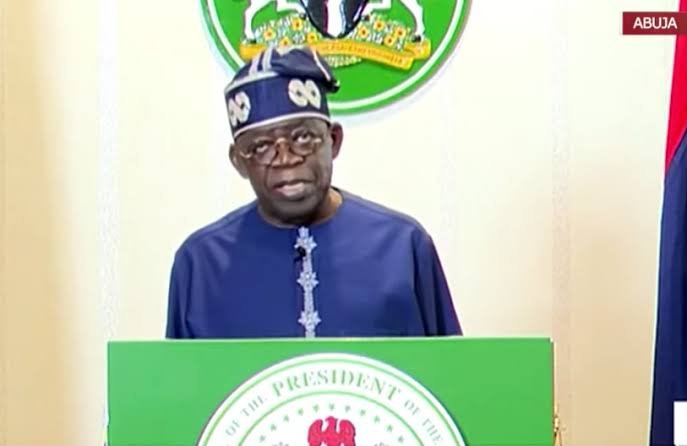
When President Bola Ahmed Tinubu launched his re-election campaign in Kaduna on October 24, the country was already arguing over the central question of his presidency: are the economic reforms introduced in 2023 beginning to deliver the recovery Nigerians were asked to endure hardship to achieve?
Tinubu had an answer for those who raised hunger and poverty. “Who created it? They did!” he told the rally, blaming his political opponents and insisting that his administration was working to eradicate the hardship. It was a revealing opening to a campaign in which the economy will be both the government’s principal defence and its greatest vulnerability.
The administration’s argument is straightforward. Nigeria had become trapped in an expensive fuel-subsidy regime, a distorted foreign-exchange system and a fiscal structure that left government with inadequate resources. Subsidy removal and exchange-rate liberalisation were presented as painful corrections to problems that could no longer be postponed. The government says the reforms have improved public finances, strengthened external buffers, attracted investment and created room for infrastructure and social programmes. Its case is that the country had to undergo surgery before it could recover.
There is substance to parts of that argument. The World Bank reported that Nigeria’s economy grew by 4.2 per cent in the first half of 2026, compared with 3.9 per cent in the corresponding period of 2025. It also reported improvements in public finances and the external position. Economic stabilisation matters. A country cannot indefinitely spend money it does not have or build a sustainable budget around an opaque subsidy arrangement.
But a government cannot ask citizens to judge its success only from the operating theatre. The patient matters too.
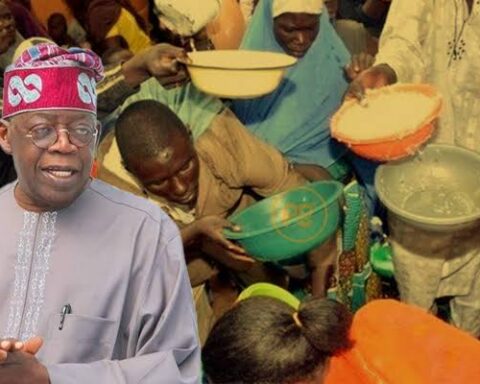
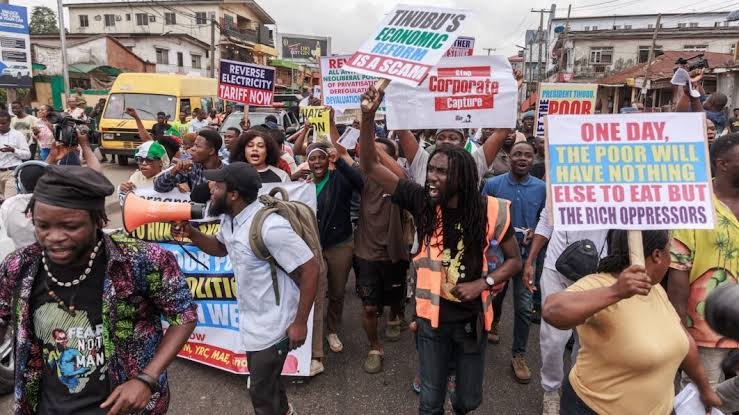
For households, the reforms arrived not as entries in a fiscal document but as higher transport fares, more expensive food, rising production costs and the daily struggle to stretch income to the end of the month. The removal of the fuel subsidy sent shock waves through the economy. Transport became more expensive; moving food from farms to markets cost more; businesses dependent on petrol and diesel faced higher operating expenses; and consumers ultimately paid for those increases.
Small businesses struggled with generator costs while customers, whose purchasing power had weakened, bought less. Salaried workers found that monthly incomes that once covered basic expenses no longer did. Families adjusted meals, postponed medical care and deferred school expenses. The middle class experienced the crisis through the steady erosion of its ability to maintain a decent standard of living.
This is why the distinction between disinflation and falling prices matters. A lower inflation rate means prices are rising more slowly; it does not mean they have returned to what people could afford before. Families are still paying prices built on earlier increases. For many, the relief suggested by improving inflation figures has yet to arrive at the market stall.
The government’s own numbers raise another question: what happens after the money is collected? The Finance Ministry’s August 2026 scorecard put estimated subsidy savings across the federation at ₦15.8 trillion between June 2023 and December 2025. The Federal Government’s share was ₦5.43 trillion, states received ₦6.52 trillion and local governments ₦3.88 trillion. The argument over subsidy removal cannot end with how much government saved. It must include what the three tiers of government did with the additional resources and what citizens can point to in return.
Higher revenues must translate into better services, jobs and living standards. The question is whether that money is visible in functioning primary healthcare centres, better-equipped schools, safer roads, reliable water, support for farmers and opportunities for people to earn a living.
There is also the question of the safety net that was supposed to cushion the transition. The International Monetary Fund has acknowledged progress in enrolling households in the cash-transfer programme but noted that, since 2023, individual households had received at most three payments of ₦25,000. Such limited support is difficult to reconcile with the scale and duration of the economic shock. Reform cannot be measured only by the removal of distortions; it must also be judged by whether government protects those least able to absorb the consequences.
Surgery may be necessary, but a surgeon’s responsibility does not end when the operation is completed. There must be aftercare, monitoring and a credible recovery plan. A patient cannot be told indefinitely that the operation was successful while being denied the treatment needed to regain strength.
The political implications are already visible. Tinubu has reminded the opposition that elections are not conducted on social media platforms but by Nigerians. He is right that elections are won through voters, polling units, party structures, alliances and the ability to mobilise beyond the digital arena. Online anger, however loud, is not a substitute for a ground operation. But neither is a political structure a guarantee that voters will ignore what they experience in their homes, workplaces and markets. Social media does not create hardship; it gives hardship a public language and a wider audience.
The opposition, for its part, cannot assume that public frustration will carry it to the presidency. Its divisions have weakened the possibility of a common front. Peter Obi, Atiku Abubakar and other opposition figures must demonstrate not merely that they can criticise the government, but that they can build a credible political arrangement and present an economic programme that survives scrutiny. Nigerians have a right to ask what would change, how it would be financed and how an alternative would protect the poor without recreating the failures of the past.
That is the real test facing both sides. Tinubu cannot win an argument about recovery by reciting macroeconomic indicators while households remain unconvinced. The opposition cannot win an election by treating hardship as an automatic endorsement of its own promises. The government must show that its reforms are producing broad-based benefits; its challengers must show that they have a practical and believable route to something better.
The administration must also demonstrate that the burden was not simply transferred from the public purse to the kitchen table. It must explain how increased revenues are being used, strengthen support for vulnerable households, reduce the cost of doing business, improve security for farmers and make electricity more dependable. Improved balance sheets matter, but citizens need to see the connection between those achievements and the price of food, the availability of work and the money left after paying transport and rent.
An economy is not healthy merely because its vital signs have improved. Recovery is measured by whether people can live, work, plan and provide without being pushed from one emergency to another.
As the 2027 election approaches, Nigerians will be asked to decide whether the surgery was necessary, whether it was competently performed and whether the promised recovery is finally within reach. The President will ask for more time. His opponents will ask for a chance. Neither request should be accepted on faith.
The question is not whether Nigeria needed reform. It is whether the people asked to make the sacrifice can now see, feel and share in the recovery.
Sacrifice for whom?
Shaakaa can be reached on: shaakaastephanie@yahoo.com