By Chido Nwakanma, FNIPR.
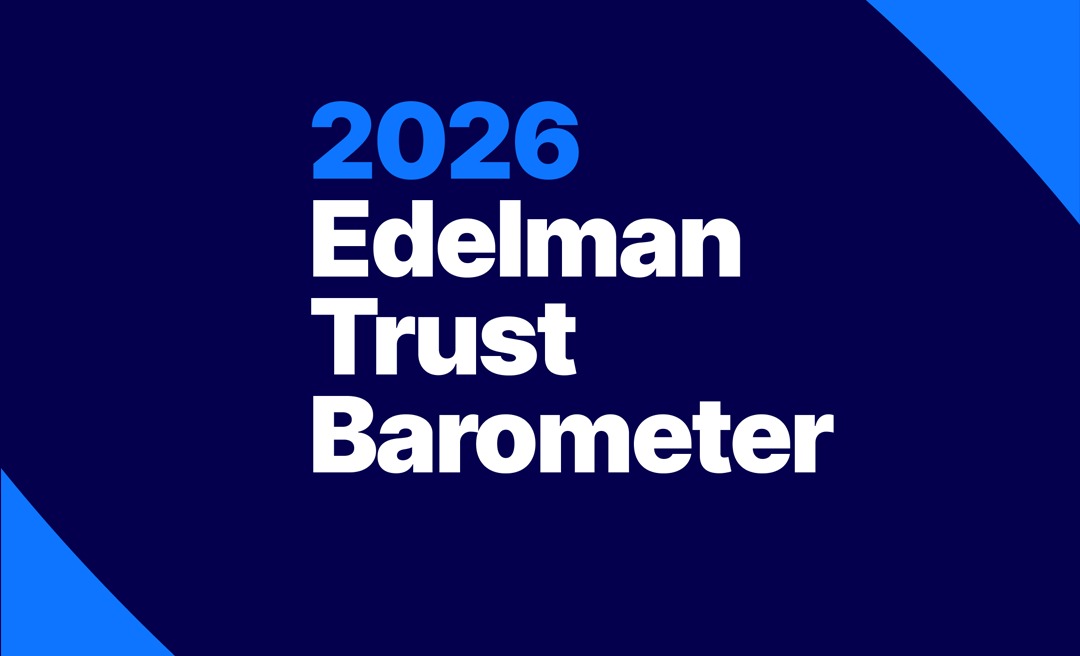
NIPR has brought to the front burner a discourse on issues arising from the 2026 Edelman Trust Barometer. Edelman released it in January 2026.
We must interrogate the matter alongside Edelman’s second survey. It is the June 2026 Edelman Trust Barometer Special Report: Brand Growth in an Insular World.
Both reports, in my view, validate what we do in public relations.
1. We focus on narrow casting to clearly identified niche audiences to drive our messaging.
2. PR developed the concept of differentiated stakeholder groups.
3. PR also brought up the concept of influencers.
4. Edelman Barometer identifies creators as the central influencers today. They are pivotal to driving discourses around brands and issues.
5. Public Relations has additional data points to assert its role as the lead communication discipline in the Information Age.
A central thing to note is how the world has become more insular and fearful about the future.
In a world increasingly gripped by pessimism, Nigeria stands out as a beacon of hope. Two landmark reports from the Edelman Trust Barometer 2026 reveal that while optimism about the future has plummeted globally, Nigerians remain remarkably confident in a brighter tomorrow for the next generation.
1. Resilience in Optimism
– 65% of Nigerians believe the next generation will be better off – the highest rate globally, tied with Saudi Arabia.
– This represents a 15-point increase in optimism, making Nigeria one of the very few countries worldwide – and the only one with a double-digit gain – showing rising hope amid widespread global decline.
– Globally, only 32% of respondents believe the next generation will fare better, highlighting a sharp collapse in future-oriented confidence.
Resilience is particularly notable across Kenya, Nigeria, and South Africa, with Nigeria leading this positive outlook despite economic pressures and widening inequality. This Nigerian exceptionalism underscores a deep-seated national belief in progress, rooted in the youthful energy, entrepreneurial spirit, and communal resilience that define the country.
*Source: January 2026 Edelman Trust Barometer and the June 2026 Edelman Trust Barometer Special Report: *Brand Growth in an Insular World.
[https://www.edelman.com/trust/2026/trust-barometer](https://www.edelman.com/trust/2026/trust-barometer)
2. Insularity: Lower Than Global Average, Yet Rising
Despite this optimism, Nigeria is not entirely insulated from the global trend toward insularity, defined as the tendency to retreat into like-minded circles and distrust those with differing values, backgrounds, or information sources.
– 51% of Nigerians report being unwilling or hesitant to trust people whose perspectives differ from their own.
– This is significantly lower than the global average of 70%, and below South Africa (68%) and Kenya (66%).
– However, the report cautions that this mindset is gaining ground across Africa, fueled by concerns over foreign-driven misinformation.
Nigeria’s relatively lower insularity may stem from its youthful population (median age ~18) and rich cultural traditions of communal openness and dialogue. Yet, the report notes these foundations are “beginning to move in a very different direction,” signalling the need for proactive trust-building efforts.
Core Insights from the Edelman Trust Barometer Special Report: Brand Growth in an Insular World
The June 2026 report paints a picture of trust contracting inward. Globally, seven in ten people are retreating into familiar, values-aligned communities, making traditional mass marketing less effective and fracturing shared reference points.
Key Implications:
– Trust as a Growth Gap: Earning trust is no longer merely reputational – it is a business imperative for growth, collaboration, and competitive advantage.
– Income Divides: Higher-income groups retain stronger confidence in business and media, while lower-income segments hold more tempered expectations shaped by daily realities.
– Brands as Identity Markers: More than half of consumers feel connected to others who use the same brands, turning brands into signals of identity and belonging.
Strategic Shifts for Brands and Leaders
The old playbook of “broadcasting louder” is losing relevance. Success now depends on being invited into insular communities:
– Employers as Trust Brokers: With workplace trust remaining relatively high, companies and business leaders are uniquely positioned to bridge divides and foster inclusive dialogue.
– Creators as Essential Partners: Trusted creators serve as genuine “introductions” into communities. Brands must engage them as strategic, authentic partners rather than mere amplification tools.
– CEO Influence: Executive communication generates 4x impressions and 8x engagement compared to brand content – a powerful lever in an AI-driven discovery era.
– Local Relevance: Nearly 70% of consumers value brands headquartered in their own country.
Action Framework for Brand Leaders
1. Position businesses as active trust brokers that connect rather than divide.
2. Leverage CEO visibility and authentic storytelling.
3. Prioritise earned media, creator partnerships, and community-aligned initiatives in the age of AI search.
4. Demonstrate genuine localised relevance that respects cultural nuances and shared values.
Closing Reflection
Nigeria’s story in the 2026 Edelman Trust Barometer is one of defiant optimism amid global headwinds. This national spirit provides a strong foundation for brands, institutions, and leaders who invest in trust-building, cultural resonance, and inclusive growth. In an insular world, those who earn an invitation to Nigerian communities – through authenticity, relevance, and shared purpose – will be best placed to thrive.