By Emmanuel Gandu
HIGHLIGHTS
1. Empires, Kingdoms and Kings
2. Segregation, Status, and Servitude
3. Leadership failure in Nigeria
4. Kingship, leadership, and subjects : Christ the King as a flagship
(a) A Kingly celebration for over 2000 years
(b) Radical Jesus as servant leader
5. Concluding Remarks
EMPIRES, KINGDOMS, AND KINGS
Throughout history, kingdoms and empires have flourished to greater heights due to the able guidance and leadership provided by their rulers. These achievements was evidently and glaringly observed through the gallantry, heroism, strength, and prowess of their armed forces and troops, especially in the number of battles/war victories, conquests, annexation, and territorial expansion.
While the kings, rulers, and military generals boasted of the annexation of territory from weaker neighbours, and other spoils of war, inhabitants of the conquered territories kept groaning under excruciating and draconian conditions.
This therefore made kingship not only viewed as agents of subjugation, but associated with oppression, domination, elimination and assassination of opposition elements.
Some of the older Empires and Kingdoms, many of them Monarchical include the following :
Carthaginian Empire, Greek Empire, Egyptian Empire, Babylonian Empire, Assyrian Empire, Roman Empire, British Empire, Umayyad Empire, Spanish Empire, Russian Empire, Mongol Empire, Ottoman Empire, Kingdom of Morocco, Sokoto Caliphate, Yoruba Empire, Kanem Bornu Empire, and Mali Empire.
SEGREGATION, STATUS, AND SERVITUDE
Unfortunately, and as worrisome as could be experienced in many other situations and climes across the world, the governed were subjected to servitude by the rulers.
This gave rise to master and servant status, free born and slave status, first class and second class status, royalty and commoner status, aristocrat and proletariat status, blue bloods and ordinary people status, feudal lords and serfs status, and etc.
Regrettably, these class symbols, stratification, and structures still exist in the society today.
Unfortunately, these are some of the major factors leading to series of violent struggles by the marginalized peoples in order to free themselves from the chains and shackles of slavery.
LEADERSHIP FAILURE IN NIGERIA
Leadership in Nigeria have assumed a notoriety for visiting violence on the people so much so that the precarious situation leaves much to be desired.
The spate and rate of state sponsored terrorism, the inability or refusal of governments to end acts of terrorism, the rising cases of high profile corruption and financial/economic banditry is as worst an offence as murder.
These acts of official dereliction of responsibility smacks of leadership failure.
Surely, these acts of sabotage perpetrated by leaders aggravates the level of loss of life and property, hunger, economic deprivation, unemployment, have reduced Nigerians to the state of anomie.
Of inglorious ignominy of the Nigerian situation is the use of all forms of political terrorism by the leadership and political class to manipulate the vulnerable populace through the use of state force and other coercive measures to perpetuate themselves in Power.
Little wonder, this creates a situation of hopelessness and helplessness that subdues people to resign themselves to any available situation.
The most appalling evidence of leadership failure is that Nigerians are yet to be free from leaders that deploy all forms of draconian, dictatorial, machiavellian, and totalitarian policies in governance that ultimately leads to human rights violation.
Unfortunately, the resultant effects and consequences of all these friction between the leaders and the led is the rise of a radicalized citizenry with a fast growing army of radical extremists, opposition activists, war lords and freedom fighters that have ultimately turned Nigeria into vicious enclaves and theatres of war/banditry, rape and kidnapping for ransom, and all forms of criminality across the country.
If the leadership does not change from the bad governance, Nigeria may not be far from a people’s revolution or a military coup.
CHRIST THE KING (over 2000 years)
(1) AS A REFERENCE POINT
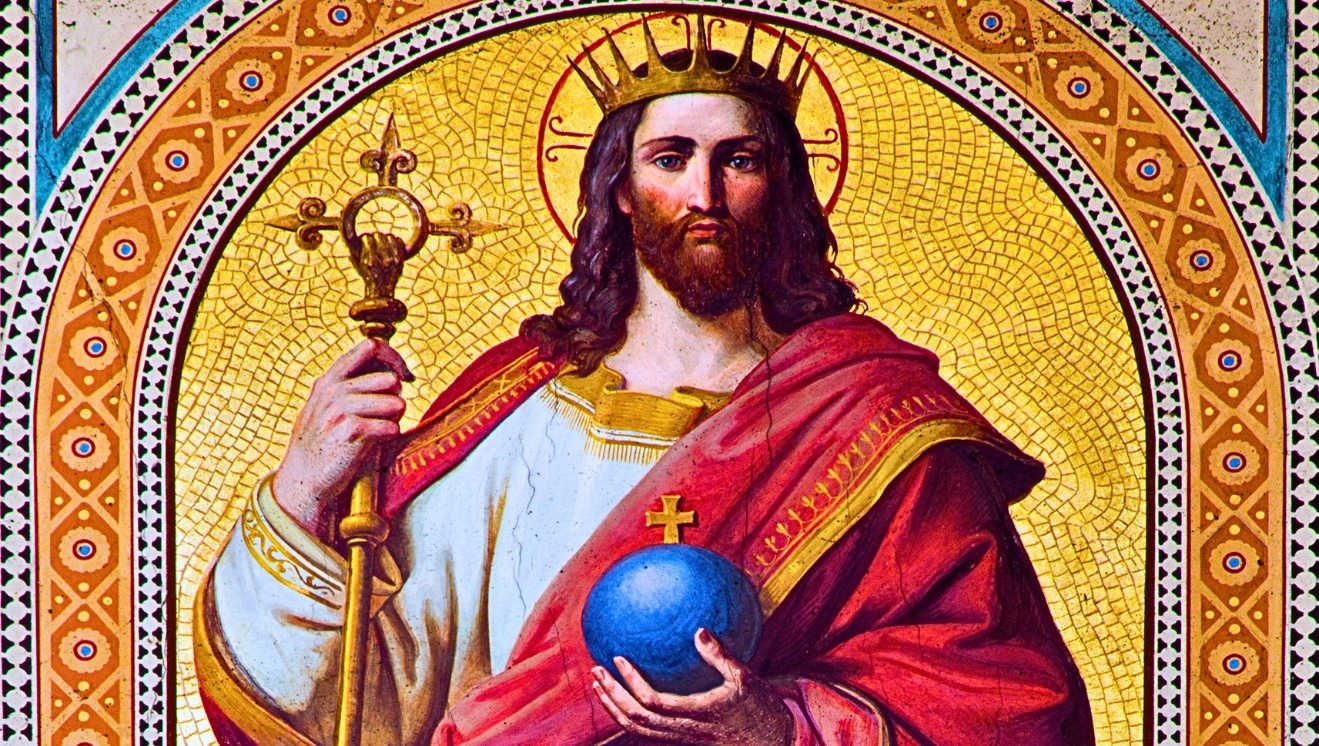
For the past well over two thousand years ago, the world has been celebrating Jesus and his reign as King in :
(a) During advent when we wait for his second coming – Mark 1, Luke 1, Matthew 1, Isaiah 11, Zachariah 5, Micah 5, Malachi 3.
(b) At Christmas when born as King of the Jews – Luke 2, Matthew 1.
(c) At Holy Week when he is the crucified King – Matthew 27, Mark 15, Luke 23, John 19.
(d) At Easter when he is resurrected in Power and Glory – Mark 16, Matthew 28, Luke 24, John 20, and Acts 1.
(e) At the Ascension when He returns to the Glory he had with the Father – Mark 16, Luke 24, and Acts 1.
(2) RADICAL JESUS AS SERVANT LEADER
Do we have servant leaders in the Nigeria of today?
We may be disappointed in our civil/political, military, religious, and the traditional Leadership especially the way and manner of Kingship in the Nigerian society.
However, we must recall that Jesus radically redefined the nature of leadership and kingship in his kingdom when he said – “Rather, whoever wishes to become great among you will be your servant. Whoever wishes to be first among you will be the slave of all. For the Son of man did not come to be served, but to serve, and to give his life as a ransom for many.” — Mark 10 : 42 – 45.
As Christians celebrate the feast of Christ the King instituted by Pope Pius XI in 1925 in honour of Jesus as Lord, and the authority of Christ as King, and Messiah of the Universe, we will be reminded of several situations that plague our humanity.
May we therefore, be reminded that in our position as leaders and followers, politicians, civil servants, rich and poor, teachers and students, priests and preachers, armed forces and civilians, business men and women, farmers, unemployed, housewives, parents, children, rich and poor, etc, of our duties and responsibilities to one another.
We will be expected to do all that is humanly possible to our fellow man so that Christ will reign in our hearts, minds, wills, and bodies.
CONCLUDING REMARKS
May the blessings that come with the celebration of Christ the king take away the agony of the hardship imposed by human and leadership failure in Nigeria.