Public health authorities across Nigeria are facing a severe health emergency as worsening cholera outbreaks claim dozens of lives and infect thousands across northern and central regions of the country. Fueled by the intensifying annual rainy season, the highly contagious water-borne disease has put health systems on high alert, with Borno and Plateau states currently bearing the brunt of the crisis.
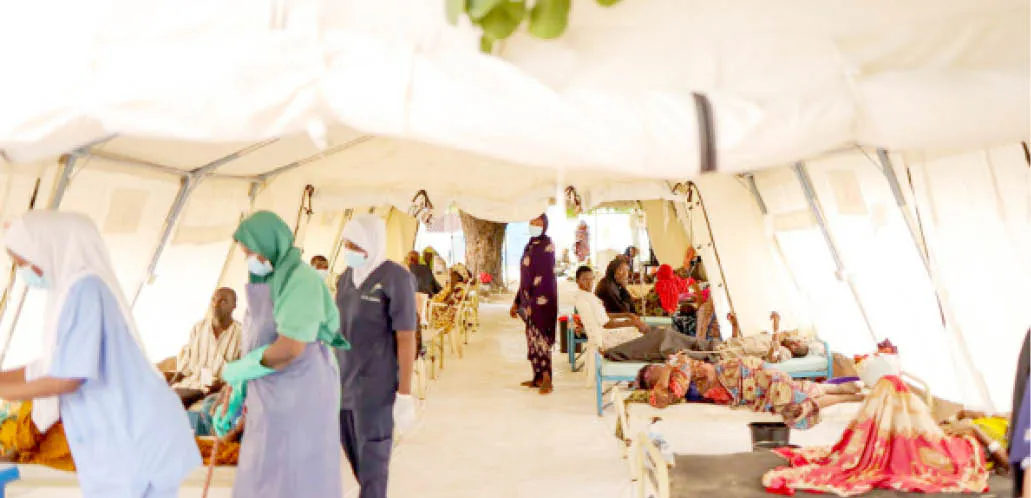
In Borno State, the Ministry of Health and humanitarian agencies are battling a massive surge that has overwhelmed local infrastructure. Since the outbreak began in May, authorities have recorded over 8,400 suspected cases and at least 85 deaths across multiple Local Government Areas (LGAs), including Maiduguri and Jere.
International medical groups, including Médecins Sans Frontières (MSF), have been forced to rapidly expand bed capacities at Cholera Treatment Centers to handle hundreds of daily admissions driven by contaminated water sources and overcrowded displacement camps. Meanwhile, in Plateau State, officials have officially activated the state’s Incident Management System following a sharp spike in infections in Mangu LGA.
State Commissioner for Health, Dr. Nicholas Ba’amlong, confirmed that the localized outbreak has expanded across several wards, recording dozens of cases and a worryingly high case fatality rate of over 9%.
”The evolving situation indicates expansion of the outbreak, continued community transmission, and a level of severity that demands immediate attention,” Dr. Ba’amlong stated during a press briefing in Jos, urging sustained government intervention and strict community cooperation.
Cholera, an acute diarrheal infection caused by ingestion of food or water contaminated with the Vibrio cholerae bacterium, remains a seasonal menace in Nigeria. In response to the escalating crisis, neighbor states and federal authorities are rapidly reinforcing their defenses to prevent the epidemic from breaching their borders.
Public health officials emphasize that while securing oral cholera vaccines remains a priority, vaccination is not a standalone cure. Authorities are aggressively campaigning for communities to practice safe hygiene, such as boiling drinking water, avoiding open defecation, and practicing rigorous handwashing to break the chain of transmission before the rainy season reaches its peak.