By Rukayat Moisemhe
The Centre for the Promotion of Private Enterprise (CPPE), an NGO, has urged the House of Representatives to reject the sugar-sweetened beverage tax bill, describing it as ill-timed and insensitive to prevailing economic realities for manufacturers.
The Chief Executive Officer, CPPE, Dr Muda Yusuf made the call in a statement issued on Sunday in Lagos.
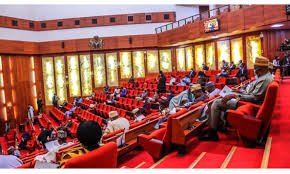
The source reports that the Senate had passed a Customs, Excise Tariff, etc. (Consolidation) Act (Amendment) Bill 2025, to reform excise duties on sugar sweetened beverages.
The bill also aims to strengthen public health financing and addressing the growing burden of non-communicable diseases in Nigeria.
Yusuf, however, stressed that the move was inconsistent with the Federal Government’s commitment to reducing the tax burden on businesses and detrimental to Nigeria’s manufacturing sector.
He expressed deep concerns that the Senate had proceeded with the passage of the bill in spite of strong objections from private sector stakeholders, particularly the Manufacturers Association of Nigeria (MAN).
He noted that manufacturers were already contending with high energy costs, elevated interest rates, foreign exchange pressures, logistics challenges, weak consumer purchasing power, and multiple taxes and levies.
Yusuf described the food and beverage industry as one of the strongest pillars of Nigeria’s industrial economy, contributing significantly to manufacturing output and employment.
He said that the sector’s strong linkages with agriculture, packaging, logistics, retail trade, hospitality and distribution made it a key driver of inclusive economic growth.
According to him, imposing additional taxes on the non-alcoholic beverage subsector would increase production costs, raise consumer prices, weaken demand, reduce capacity utilisation and threaten jobs across the value chain.
“The food and beverage industry is one of the strongest pillars of Nigeria’s industrial economy, accounting for a significant proportion of manufacturing output and jobs.
“The non-alcoholic beverages subsector is a major contributor to this ecosystem and should be supported, not burdened with additional taxation.
“Any additional tax burden on the industry would inevitably increase production costs, raise consumer prices, weaken demand, reduce capacity utilisation and threaten jobs across the value chain,” he said.
The CPPE boss also expressed concern over what he described as policy inconsistency, noting that the 2026 fiscal policy framework already provides for an excise duty of N10 per litre on non-alcoholic beverages.
He warned that introducing further taxes through additional legislation would heighten regulatory uncertainty and undermine investor confidence.
“Investors thrive on predictability. Frequent additions to the tax burden send the wrong signal to both existing and prospective investors” .
On the public health justification for the tax, Yusuf acknowledged the need to address the rising incidence of diabetes and other non-communicable diseases.
He, however, argued that sugar taxes alone had limited effectiveness in improving health outcomes.
He said major drivers of diabetes and related illnesses in Nigeria included poor dietary habits, excessive consumption of carbohydrate-rich foods, physical inactivity, sedentary lifestyles, inadequate health awareness and genetic factors.
According to him, lawmakers should instead prioritise nutrition education, public health awareness campaigns, promotion of exercise and physical activity, healthier food choices, preventive healthcare and urban infrastructure that supports active living.
Yusuf maintained that such measures would deliver more sustainable public health benefits without harming production, investment and employment.
He urged house to decline concurrence to the bill in the interest of manufacturing sustainability, job preservation, investment confidence and policy coherence.
“The house has historically demonstrated sensitivity to the welfare of citizens and the concerns of productive enterprises.
“We urge members to uphold that tradition by rejecting this legislation in the interest of manufacturing sustainability, employment preservation, investment confidence and policy coherence,” he said.