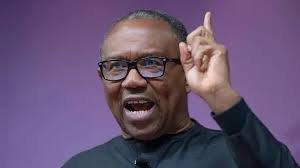
Former Kano State Governor and prominent northern politician, Rabiu Kwankwaso, on Saturday threw his weight behind the decision of the Nigeria Democratic Congress (NDC) to zone its 2027 presidential ticket to the South, declaring that the move aligns with the party’s internal power-sharing arrangement and long-standing commitment to equity and fairness.
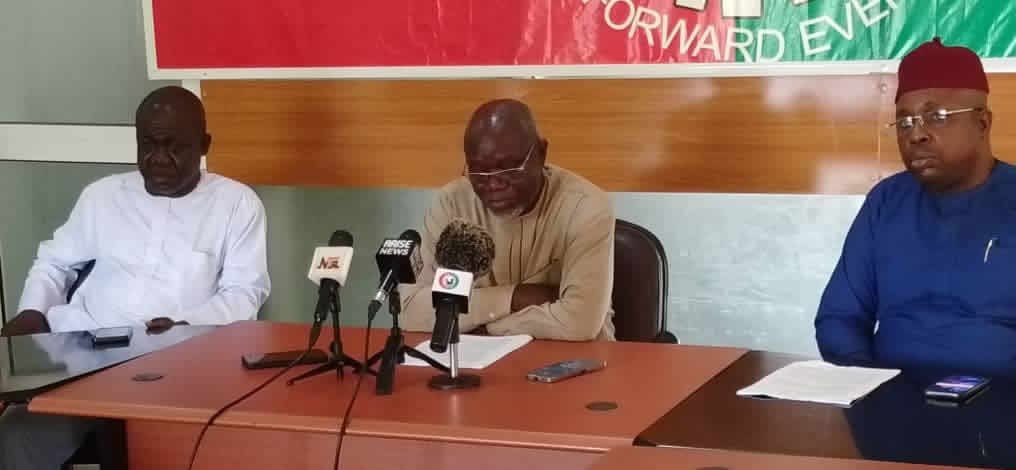
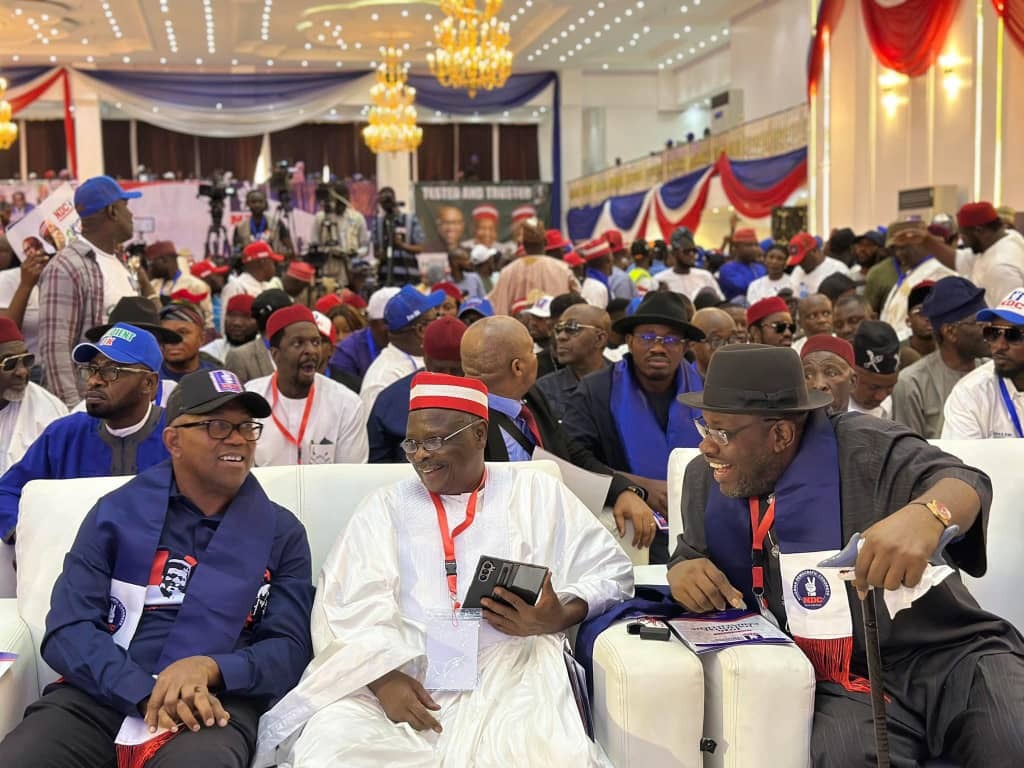
Kwankwaso made the declaration while addressing party delegates, supporters and stakeholders at the NDC national convention held in Abuja, where party leaders formally adopted a resolution reserving the party’s presidential ticket for Southern Nigeria in the next general election.
The former governor, who remains one of the most influential political figures from Northern Nigeria, said the decision was necessary to preserve unity within the party and sustain the principle of rotational leadership across the country’s geopolitical regions.
“I support the decision to zone the presidential ticket to Southern so that the region can complete its eight years,” Kwankwaso told a cheering audience at the convention venue.
“This is in line with the zoning process and party agreement,” he added.
His endorsement came only hours after the party officially ratified the zoning arrangement, declaring that the South would produce the NDC presidential candidate for a single four-year tenure in the 2027 election cycle.
The announcement immediately became one of the defining moments of the convention, with party faithful describing Kwankwaso’s support as a major boost for the NDC leadership and a signal that northern stakeholders within the party were willing to respect existing political understandings.
Party insiders said the zoning resolution was aimed at reducing internal tension and preventing a repeat of the regional disagreements that have affected several political parties in recent election cycles.
Observers at the convention noted that Kwankwaso’s position may also influence political calculations ahead of 2027, especially given his strong political following in Kano State and across parts of Northern Nigeria.
The former governor used the occasion to call on Nigerians, especially young people and first-time voters, to actively participate in the party’s mobilisation drive ahead of the next election season.
“Please register now,” he appealed, urging supporters to strengthen the party’s grassroots structures nationwide.
Delegates at the convention applauded the remarks, with many describing the former governor’s speech as conciliatory and strategic at a time political alignments ahead of the next general election are gradually taking shape.
The NDC leadership maintained that zoning the ticket to the South was intended to uphold balance and inclusiveness within the party, insisting that all regions must feel represented in the nation’s political leadership.
Several speakers at the convention also stressed the need for unity within opposition ranks, arguing that only a cohesive political platform would be capable of mounting a strong challenge in the 2027 elections.
Political analysts believe the decision could trigger fresh realignments within the opposition space, particularly among aspirants from the North who may now have to suspend presidential ambitions or negotiate alternative arrangements within the party.
The development is also expected to intensify consultations among southern political figures interested in the NDC presidential ticket, as attention gradually shifts toward possible contenders for the race.
Saturday’s convention attracted party chieftains, delegates from across the federation, youth groups and women leaders, all of whom reiterated the need for internal democracy and adherence to party agreements.
For many participants, Kwankwaso’s public backing of the zoning arrangement represented an attempt to build consensus early and avoid divisions capable of weakening the party before the election cycle fully begins.
As the convention ended, party leaders expressed optimism that the zoning formula would strengthen internal cohesion and position the NDC as a competitive force ahead of the 2027 presidential contest.