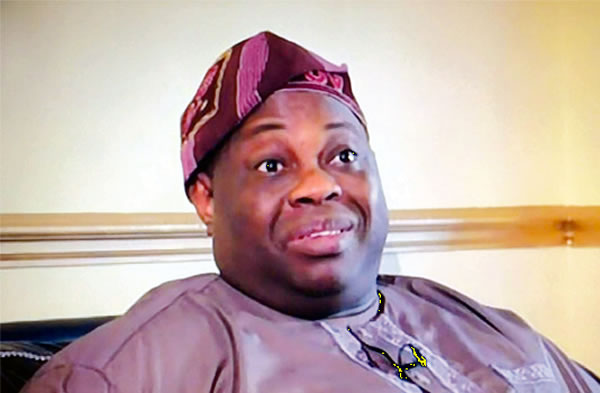
A fresh wave of political debate has erupted ahead of the 2027 presidential race, as prominent voices within Nigeria’s opposition space clash over the future of leadership and generational transition. At the center of the latest exchange is Dele Momodu, a chieftain of the African Democratic Congress, who has come out strongly in defense of former Vice President Atiku Abubakar.
Momodu, known for his outspoken political commentary, dismissed growing calls for Atiku to step aside from the 2027 presidential contest, describing the campaign against him as “unbridled chicanery.” His remarks followed criticisms from activist Zekeri Idris Jnr, a supporter of Peter Obi, who had argued that Atiku’s projected age of 80 by the next election cycle makes him unsuitable for the presidency.
The debate reflects a broader conversation unfolding across Nigeria’s political landscape, one that pits experience against calls for generational change. For some, the argument is about ushering in younger leadership; for others, it is about preserving the value of political experience in navigating the country’s complex challenges.
In a post shared on X (formerly Twitter), Momodu did not hold back. He criticized what he described as a misplaced focus by some activists, suggesting that energy spent attacking Atiku would be better directed at holding the ruling government accountable.
“Instead of making videos against the ruling government, you’re dissipating energy on a man who has never wronged your preferred candidate,” he wrote, framing the criticism as both unnecessary and politically unproductive.
Momodu’s defense of Atiku goes beyond personal loyalty. Analysts say it reflects a deeper concern within certain political circles that opposition forces may be weakening themselves through internal divisions rather than presenting a united front ahead of future elections. In a political environment where alliances often determine electoral success, such public disagreements can have far-reaching implications.
Supporters of Atiku argue that his decades of political experience, including his tenure as vice president and multiple presidential bids, position him as a formidable contender. They maintain that leadership should not be reduced to age alone, but rather assessed based on competence, vision, and the ability to unite diverse interests.
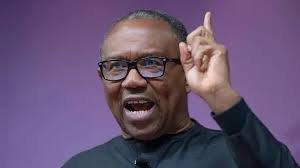
On the other hand, advocates for younger candidates insist that Nigeria’s future depends on fresh ideas and a break from the old political order. For them, figures like Peter Obi represent a new direction, one that resonates with a growing population of young voters eager for change.
The exchange between Momodu and Idris highlights how social media has become a central battleground for political discourse. Platforms like X now serve as arenas where narratives are shaped, alliances are tested, and public opinion is influenced in real time.
Political observers note that while such debates are not unusual in a democracy, the tone and intensity often reflect deeper tensions within the opposition. With the 2027 elections still some distance away, these early disagreements may shape how political camps organize themselves in the coming years.
For now, Momodu remains firm in his stance. By describing the criticism of Atiku as “chicanery,” he signals not just disagreement, but a belief that the attacks are driven more by strategy than substance. Whether this defense will resonate widely remains to be seen, but it has undoubtedly added another layer to an already evolving political conversation.
As Nigeria moves gradually toward the next electoral cycle, one thing is clear: the debate over who should lead and what qualities matter most has already begun. And voices like Dele Momodu’s ensure that it will be anything but quiet.