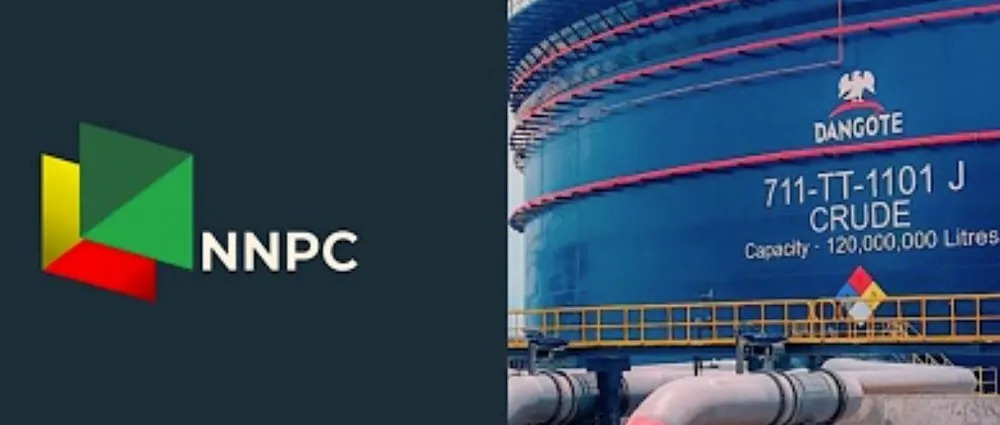
The recent surge in global crude oil prices is beginning to reshape Nigeria’s domestic energy strategy, as the Nigerian National Petroleum Company Limited (NNPCL) moves to increase crude supply to the Dangote Oil Refinery in a bid to boost local fuel production and reduce pressure on petrol prices.
Following the spike in crude oil prices and its ripple effect on both global and domestic petrol markets, NNPCL has allocated seven cargoes of crude oil to the Dangote refinery for the month of May. The move is seen as part of a broader effort to strengthen domestic refining capacity, reduce reliance on imported fuel, and stabilize supply within the country.
According to Reuters, the development was confirmed by two trade sources and a senior official at the refinery, who disclosed that the additional crude allocation would help improve production levels, although it may not fully meet the refinery’s total crude demand.
“NNPC has allocated more cargoes to Dangote Refinery for May,” a senior Dangote official said. “While this will not completely meet our demands, it can help. We are also in negotiation with NNPC for more volumes.”
The decision comes at a critical time when global oil prices have risen sharply due to geopolitical tensions and supply uncertainties in the international market. The increase in crude prices has had a direct impact on the cost of refined petroleum products worldwide, including petrol, diesel, and aviation fuel, leading to higher pump prices in many countries.
For Nigeria, the situation presents both an opportunity and a challenge. As a crude oil producer, higher global oil prices mean increased government revenue. However, the country has historically struggled with domestic refining capacity, forcing it to import refined petroleum products — a situation that exposes the local market to global price shocks and foreign exchange pressures.
The Dangote Oil Refinery, widely regarded as Africa’s largest refinery, is expected to play a major role in changing that narrative. With the capacity to refine hundreds of thousands of barrels of crude per day, the refinery is seen as a strategic asset that could help Nigeria achieve fuel self-sufficiency, stabilize petrol prices, and even export refined products to other African countries.
Industry analysts say the increased crude allocation by NNPCL signals a stronger collaboration between the state oil company and the Dangote refinery, especially at a time when the Federal Government is pushing for increased domestic refining under its energy security strategy.
Energy experts believe that if the refinery receives consistent crude supply, Nigeria could significantly reduce fuel imports, ease pressure on the naira, and improve the country’s trade balance. Increased domestic refining would also reduce shipping costs, import charges, and other logistics expenses that often contribute to high petrol prices.
However, stakeholders note that crude supply alone may not immediately translate into lower petrol prices, as global crude prices still influence the cost of refined products. Nevertheless, improved local production is expected to help moderate price increases and ensure more stable supply across the country.
The negotiations for additional crude volumes between NNPCL and the Dangote refinery are therefore being closely watched by industry players, marketers, and consumers, as the outcome could influence fuel availability and pricing in the coming months.
As global oil markets remain volatile, Nigeria’s strategy appears to be shifting toward maximizing local refining capacity and ensuring that more of its crude oil is processed within the country rather than exported and re-imported as refined products.
If sustained, the increased crude allocation to the Dangote refinery could mark a turning point in Nigeria’s long-standing struggle with fuel supply challenges, potentially ushering in a new era of energy independence, improved supply stability, and economic resilience.