Revenue allocated across Nigeria’s 36 states grew by 93 percent in real terms between 2023 and 2025, but the share of state expenditure directed toward education fell significantly over the same period.
The findings were detailed in the October 2026 edition of the Nigeria Development Update (NDU), released by the World Bank on Thursday, October 8, 2026, during a presentation in Abuja.
According to the multilateral lender, the sharp expansion in state revenues was largely driven by major federal macroeconomic policies, including the removal of petrol subsidies, foreign exchange rate unification, improved revenue administration, higher Value Added Tax (VAT) collections, and increased statutory transfers from the Federation Account. State accounts were further bolstered by federal debt settlements, intervention funds, and refunds.
Reflecting the increased revenue, aggregate state government spending rose by roughly 92 percent in real terms over the two-year period.
Despite the overall expansion in public spending, subnational governments prioritized economic and physical infrastructure over social sectors:
The share of total state expenditure allocated to education dropped from 14.9 percent in 2021 to 12.1 percent in 2025. Capital expenditure accounted for 61 percent of aggregate state budgets in 2025, up from 46 percent in 2023.
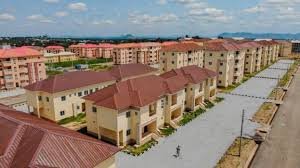
The largest share of capital spending went to transport infrastructure, followed by substantial allocations for housing, agriculture, and other growth-oriented investments.
Healthcare spending remained relatively flat at around 7 percent of total expenditure, while social protection increased from 1.4 percent in 2021 to 4.4 percent in 2025.
Speaking at the report launch, World Bank Country Director for Nigeria, Mathew Verghis, emphasized that while expanded revenue gives state governments unprecedented fiscal space to upgrade infrastructure, stronger allocations toward human capital remain crucial for sustainable growth.
”The increase in public revenue presents an opportunity for state governments to improve infrastructure, education, healthcare, and water services,” Verghis noted. “Greater spending efficiency, accountability, and improved service delivery are essential to ensuring that additional public resources benefit ordinary Nigerians.”
The bank concluded that subnational governments must balance large capital projects with investments in basic education, teacher quality, and skills development to convert ongoing fiscal reforms into long-term job creation and poverty reduction.