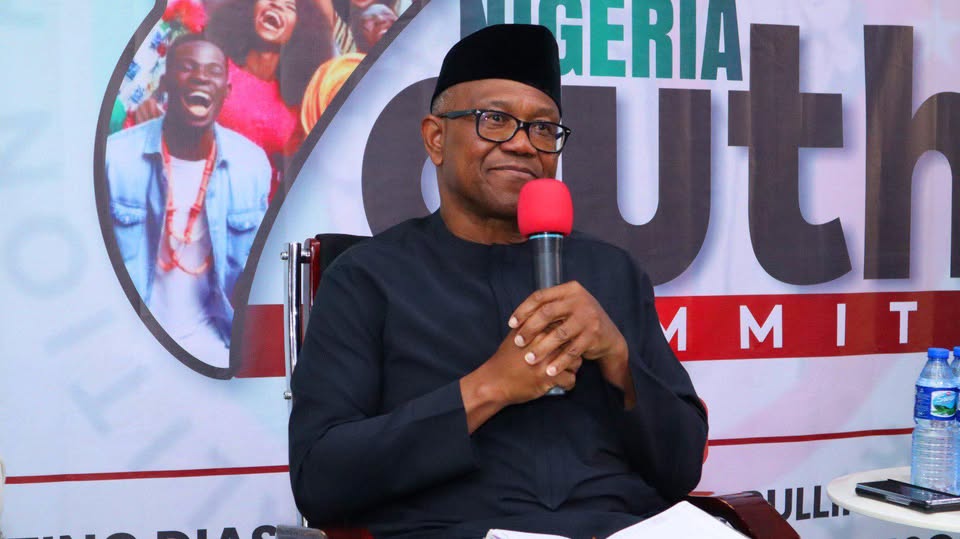
Obi Between Applause and Arithmetic: Lessons from a Divided Debate
By Lanre Ogundipe
AMPLIFIED BY THE GOOD GOVERNANCE GROUP (GGG)
The recent exchange between Azu Ishiekwene and Valentine Obienyem over the political direction of Peter Obi has done more than provoke commentary—it has illuminated the central dilemma confronting Nigeria’s most compelling opposition figure.
At its core lies a question that cannot be avoided: Is Peter Obi consolidating his political gains, or gradually undermining them?
Ishiekwene’s intervention is, fundamentally, a strategic warning. He acknowledges Obi’s stature as a leading opposition voice but cautions that recent political signals—particularly around coalition considerations—suggest a drift that could erode the very foundation of his appeal. His concern is not about Obi’s past, but about his trajectory.
Obienyem’s response is equally forceful. He rejects the suggestion of confusion or inconsistency, pointing instead to Obi’s record of discipline, resilience, and methodical engagement with Nigeria’s political process. He further argues that Obi’s support base represents a genuine democratic awakening rather than an unstable or exaggerated phenomenon.
Both arguments deserve attention. Yet neither fully resolves the underlying tension.
The truth is that Peter Obi’s political project sits at the intersection of two competing realities. On one side is public enthusiasm, driven largely by young Nigerians, urban professionals, and a growing class of politically conscious citizens disillusioned with traditional power structures. On the other side is electoral arithmetic, which in Nigeria still depends heavily on regional spread, entrenched networks, and negotiated alliances.
The 2023 elections demonstrated the strength of Obi’s appeal—but also its limits. His performance was significant, even disruptive, but not sufficient to secure national victory. Since then, the critical question has shifted from whether he can inspire Nigerians to whether he can convert inspiration into power.
This is where Ishiekwene’s caution gains relevance. Nigerian politics has historically absorbed reformist figures into its dominant structure, often diluting their original agenda. Any movement toward coalition with established political actors carries the inherent risk of compromising identity for viability.
However, to dismiss Obi’s engagement with broader political forces as inherently misguided would be simplistic. No presidential contender in Nigeria has succeeded without building alliances across regions and interests. The challenge, therefore, is not whether to engage—but how to engage without losing coherence.
Obienyem is correct to defend the legitimacy of Obi’s movement. The assumption that his support is merely digital or superficial has been disproven. Yet, enthusiasm alone cannot substitute for organisation. Movements that fail to evolve into structured political machinery often struggle to sustain momentum over successive electoral cycles.
What emerges from this debate is not a verdict on Peter Obi, but a clarification of his challenge.
He must reconcile three competing demands:
Preserve the credibility that distinguishes him from traditional politicians
Expand his political reach beyond current strongholds, particularly in regions where he underperformed
Build a functional political structure capable of contesting power at the highest level
Each of these goals is individually difficult. Together, they form a delicate balancing act.
The deeper concern is not whether Obi is making mistakes, but whether his current approach reflects a clear, long-term strategy. Political capital, especially one built on public goodwill, is not inexhaustible. It must be deliberately cultivated, expanded, and, when necessary, protected from premature compromise.
The Ishiekwene–Obienyem exchange, therefore, should not be dismissed as a clash of perspectives. It is a reminder that in a political environment often dominated by loyalty and sentiment, critical scrutiny remains essential.
Peter Obi has altered Nigeria’s political conversation. The question now is whether he can alter its outcome. That transition from symbol to system contender will define his place in Nigeria’s political future.
COMMENT: A mature and objective assessment of the ISHIEKWENE/OBIENYEM exchange on the current political direction of PETER OBI (OKWUTE).