A justice of Brazil’s Supreme Court has reversed an earlier ruling that would have permitted an adviser to United States President Donald Trump to visit former Brazilian leader Jair Bolsonaro in prison, following warnings from the Brazilian government about possible foreign interference.
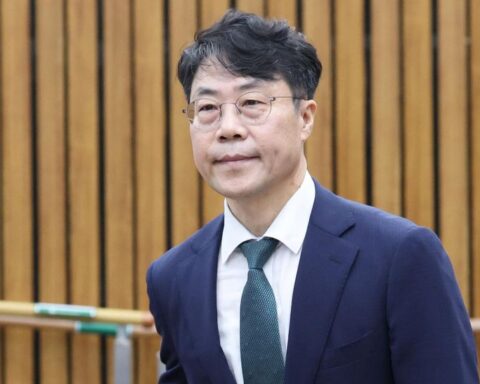
The decision, announced on Thursday by Alexandre de Moraes, halted plans for a prison visit by Darren Beattie, a newly appointed adviser at the U.S. State Department responsible for Brazil-related matters. Bolsonaro’s legal team had earlier requested court approval for Beattie to meet the former president on March 18 while he serves his prison sentence.
Bolsonaro was sentenced last year to 27 years in prison over his role in an attempted coup following his defeat in Brazil’s 2022 presidential election. Prosecutors argued that the former far-right leader encouraged efforts to overturn the election outcome, triggering political unrest and attacks on democratic institutions.
His conviction marked one of the most consequential rulings in Brazil’s recent political history and has continued to stir debate both domestically and internationally. Bolsonaro, who governed Brazil from 2019 to 2023, had maintained close ideological and political ties with Trump during their respective presidencies.
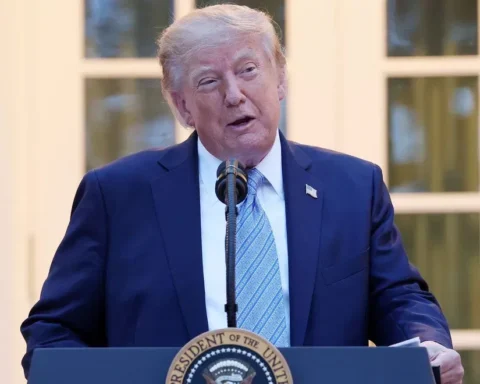
Trump has repeatedly criticized the prosecution of the Brazilian ex-president, describing the case as a “witch hunt” and drawing parallels with his own legal challenges in the United States.
Bolsonaro’s lawyers earlier this week filed a request before the Supreme Court seeking permission for Beattie to visit the former leader in prison. The request was initially granted by Justice Moraes, who oversees several of the legal proceedings connected to the attempted coup.
However, the decision was reversed shortly afterward when the Brazilian government raised concerns about the implications of the meeting.
Officials warned that allowing a foreign government adviser—particularly one linked to the administration of Trump—to hold a private meeting with a jailed political figure could create diplomatic and political complications.
Brazil’s foreign ministry subsequently clarified that Beattie’s visa to enter the country had been granted solely for specific diplomatic and professional purposes.
According to the ministry, the U.S. official was authorized to travel to Brazil to attend a forum focused on critical minerals and to take part in scheduled meetings with Brazilian government representatives. The visa did not include authorization for visits to imprisoned political figures.
Following the government’s warning, Justice Moraes revoked the earlier approval for the meeting, effectively blocking the visit.
The development highlights the continued political sensitivity surrounding Bolsonaro’s imprisonment and the legal aftermath of the 2022 election crisis.
Bolsonaro remains a polarizing figure in Brazil, with supporters arguing that he is the target of political persecution, while critics insist his actions posed a serious threat to Brazil’s democratic system.
Since his conviction, the former president has remained under strict judicial oversight, with courts closely monitoring requests related to his communication and external contacts.
Analysts say the court’s decision to cancel the proposed visit reflects the judiciary’s cautious approach to preventing any action that could be interpreted as external influence in Brazil’s internal political matters.
The move also underscores the lingering geopolitical dimension surrounding Bolsonaro’s case, particularly given his longstanding alignment with Trump and other conservative political movements abroad.
Despite his imprisonment, Bolsonaro continues to command loyalty among sections of Brazil’s right-wing political base, keeping his legal battles and political legacy at the center of the country’s national conversation.
With the court’s latest decision, any meeting between Beattie and the former president appears unlikely to take place, at least under the current legal and diplomatic restrictions imposed by Brazilian authorities.